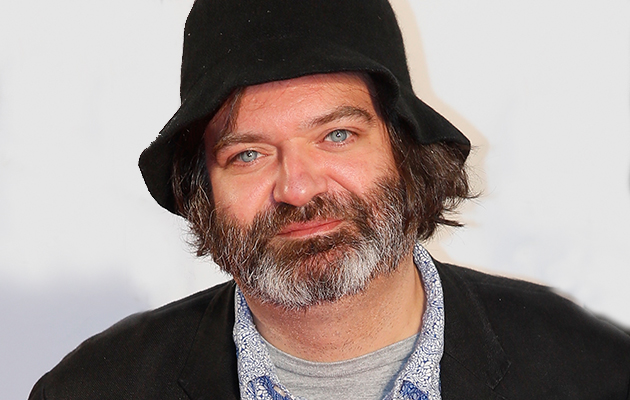
Jim O’Rourke has revealed details of his forthcoming release, To Magnetize Money and Catch A Roving Eye.
To Magnetize Money and Catch A Roving Eye, a four-part box set collection, is one of the Tokyo-based, Chicago-born producer’s largest collections of work this decade. Recordings were captured between 2017-2018 at Steamroom, O’Rourke’s private studio and label headquarters in Tokyo, Japan. Little else is known about the background or creation of the album.
The minimalist presentation of field recordings, noise, and ambient music across To Magnetize Money and Catch A Roving Eye has a delicacy that slowly undulates through each volume. Unhinged textures wrap around the core of beautiful melodies and tones, pulling towards light and dark themes that drift through dimly lit silhouettes of sound.
The release follows a prolific run of releases from O’Rourke this year, including volumes 43-46 of his Steamroom LP series and collaborative albums with CM von Hausswolf, Keiji Haino, Oren Ambarchi, and Phew.
To Magnetize Money and Catch A Roving Eye will release with French label Sonoris on November 8. Meanwhile, an excerpt can be streamed below, with ordering options here.
Tracklisting
Disc 1—Part I Disc 2—Part II Disc 3—Part III Disc 4—Part IV
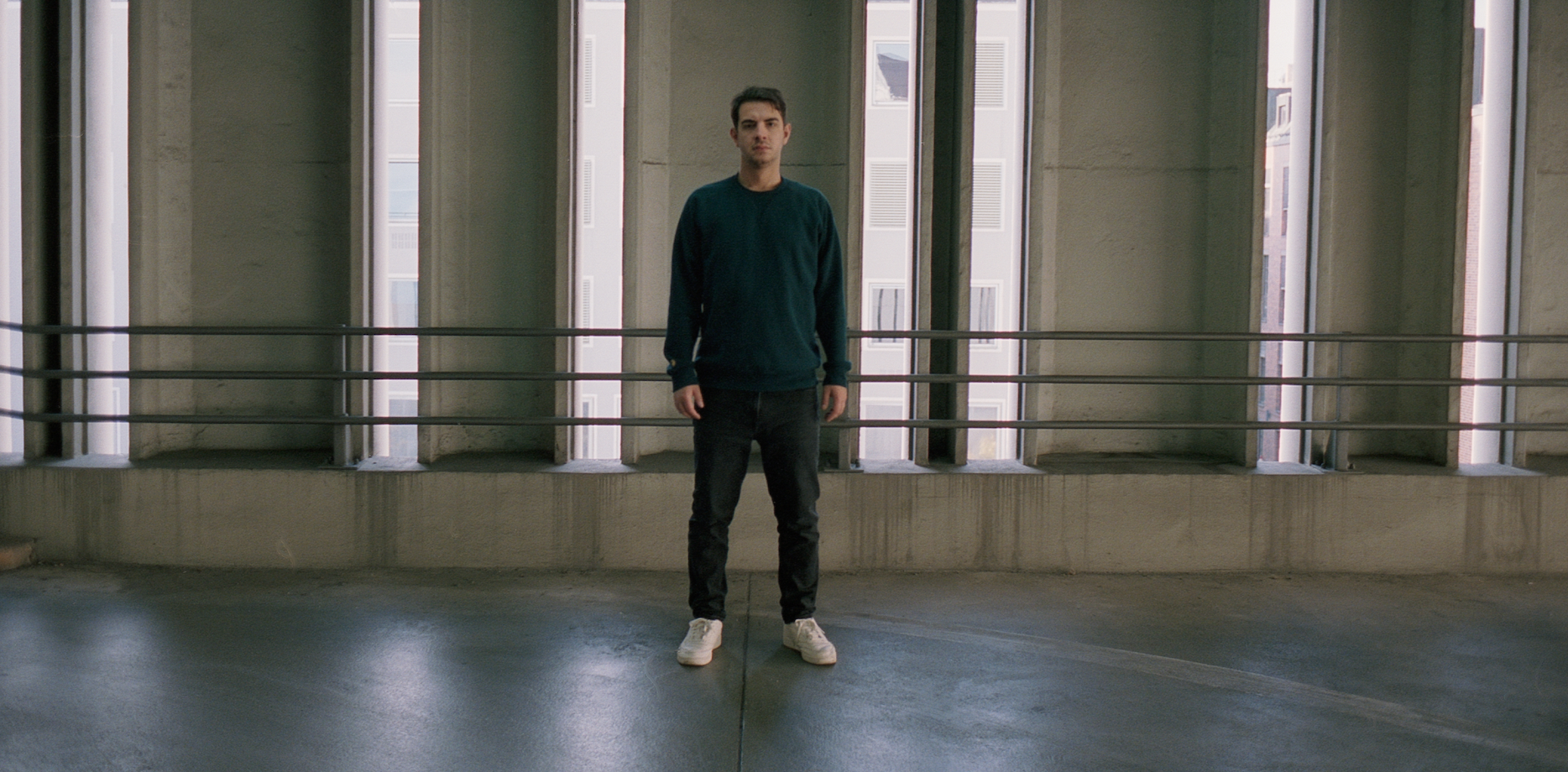
Since debuting on Dario and Marco Zenker’s Ilian Tape in 2012, Stenny, 31, has established himself as one of the central names on the Munich label’s roster. The Italian DJ-producer, real name Stefano (his second name remains undisclosed) grew up on the outskirts of Turin and discovered a connection with electronic music through playing computer games such as “Wipeout 2097” or “Ghost In The Shell,” and began his attempts to replicate these sounds on is first computer around the age of 15.
Later quitting his studies in Architecture, Stenny committed to music full-time, supporting himself by working as an electrician, all the while playing records in his room and becoming better acquainted with the local party scene. “I liked it [architecture] but it was not really what I felt like I wanted to do in my life,” he recalls. “I didn’t take it seriously enough because my mind was constantly on music, and how to earn enough money to buy new gear to make music. It was a struggle, and I wasn’t happy.”
Stenny met the Zenker brothers in 2011 through Doctor Sax, an after-hours spot where he was often booked to play. He was familiar with their label, and he arranged a label night where he played the warm up, after which they began exchanging music. One such track that Stenny shared was “Orbital,” which the Zenkers snapped up for their Bias Jams—1 compilation, released in 2012. Around this time, Stenny teamed up with Andrea to build a studio, and the duo set about making music for the label. One year later, Stenny signed his first solo EP to the label, Solstice Deity.
Stenny EPs have been slow but steady since then. A move to Munich in 2014 held him back somewhat as his adapted to his new surroundings, as have various side-jobs, required to support himself. Now much more settled in his new surroundings, he’s more focused on music than ever, dividing his time between his studio, gigging, and working in Optimal record store. Earlier this year, he released the excellent Stress Test EP.
Upsurge, his debut album, forms the soundtrack to his past three years in Munich, and is his most refined work to date. It falls perfectly in line with the Ilian Tape broken-beat aesthetic, but Stenny contrasts the club-ready moments with more ambient soundscapes, the reflection of a sensitive and rapidly maturing artist adapting to life as a touring DJ-producer. In one of his first major interviews, Stenny sat down with XLR8R to talk us through his story so far.
How are you feeling about your debut album?
I am slowly starting to come to terms with it. After we had completed the final parts, like the artwork, mastering, and the test pressings, I needed to detach myself from it all just to process the whole thing, and so now I am not thinking about all the things that I cannot change or having any second thoughts. I’m now both a little excited and a little frightened, not that I care so much about what people will think about it, but more that I’ll listen to it and regret certain choices and these kinds of things. ….because I was working on it for three years, it was not always easy to maintain an overview, so it feels more like a palette of emotions. This might be the concept.”
Were you working on it for a long time?
Yes, but it’s difficult to really say how long, but I’d guess between two years and three years. I started to have the idea of making music in this format, like an album, about five years ago, but at that point I was struggling. That was a big period of change in my life; I had moved to Munich and it took me a while before I had a proper setting to make music again, because I couldn’t find a space for my setup and I was living in different places. At one point I found a studio space, and that’s when the album really began. I made some of the tracks around three years ago, and I made some of them a lot more recently. The album was made across this time span.
Is there a concept to it?
Not really, it’s not a conceptual album. It’s more my take on different styles of electronic music that I like and feel inspired by. I wanted to create something that I’d like to listen to. Also, because I was working on it for three years, it was not always easy to maintain an overview, so it feels more like a palette of emotions. This might be the concept.
“…..I am not really seeking people’s opinions about my music. It would confuse me more and more, because I have sort of a clear idea of how it has to sound, but often my mind cannot fully translate it yet.”
—Stenny
Have you shown it to anyone for their opinion?
Nope, only to the Zenker Brothers. Some of my closest friends may have heard something here and there, but not the full thing. I hope it doesn’t sound wrong but I am not really seeking people’s opinions about my music. It would confuse me more and more, because I have sort of a clear idea of how it has to sound, but often my mind cannot fully translate it yet. I prefer to sit with myself and process it until I feel it’s ready and then show it to someone. I am open to criticism but I prefer that this happens when the job is done. I am not sure if this makes sense or not but it helps me to deal with self-confidence.
How would you describe your childhood, growing up in Turin?
I grew up in the outskirts of the city, it was quite boring and dark, and there wasn’t much stuff to do.
Why did you decide to move to Munich in 2014?
Before I moved, I was visiting the city pretty often and so I knew I had a community here. I had always planned to leave Italy because I couldn’t find my place there; it was difficult to do what I wanted to do, like to make music and DJ on a regular basis, and so I began thinking of moving somewhere else. In Munich I felt really welcome and so, considering that the label and my friends are there, I decided to move and it’s now become my permanent home. I still miss Turin a lot, and all my friends and my family—this separation is not easy to deal with—but I still try to make it back there as much as possible.
Was it a difficult transition?
Yes, I really struggled with a lot of things when I arrived in Munich in 2014. I had to have several jobs during the day, and it was hard getting my shit together with paperwork. It was a huge weight on my brain, and money-wise I was always worrying. I moved into three different flats in four years, so it was complete chaos. My friends really helped me through and made my life a bit easier. They actually found the studio space we are sharing now and this was a huge blessing, because it allowed me to make music again at any hour of the day. At one point I began to work in a record store and this exposed me to so much music, I think this gave me a lot of input and a consistent financial support.
Can you name some of the records or artists you’ve found that influenced you?
It‘s going to be a long list, but first name coming in my mind are obviously Mike Banks, Shake Shakir, Drexciya, Mark Bell, Photek, Mick Harris, and more recently Lee Gamble or Lanark Artefax.
How much influence have the Zenker brothers had on your music?
Of course, they’ve had a relevant influence on me, but it’s not only them. There’s also the others on the label, like Andrea, Skee Mask, Konrad Wehrmeister; over these years, the label has grown, and Dario and Marco have always managed to bring out something fresh and inspiring, that’s also new to us. I don’t always know what’s in the pipeline, but when I see and hear what’s going on I feel really inspired by it.
“I am a pretty bipolar person; I have to deal with moments of very high energy and incredibly low ones, some days I just can’t move, and my music output has really been affected by that.”
—Stenny
Have they shaped your sound a lot?
They’ve constantly encouraged me to follow my path and stay honest to myself. My sound, I would say, morphs and changes with time but it’s also related to how I feel on a daily basis. I am a pretty bipolar person; I have to deal with moments of very high energy and incredibly low ones, some days I just can’t move, and my music output has really been affected by that. Also, my skills and abilities in the studio have grown as I’ve spent more time in there. On this record, in particular, I wanted to work much more on new techniques to do something new that I haven’t done before. Or at least try.
How exactly were you trying to grow as an artist?
I wanted to work much more on new techniques and to do something new that I haven’t done before, but still trying to sound as myself. Technically, I used more software than ever before. Most of my older tracks were recorded in one take, and they were very impulsive because I didn’t have much time to make music, so I was being a lot more direct. Growing up and listening to more music, I wanted to reach a point where my stuff has the same attitude but it’s more precise, so I tried to use effects in a better way, and to pay more attention to details. I also started to build some of my own chains and M4L units.
What is it that appeals to you about making music?
It’s the art form that touches me in the deepest way. When I was a teenager, I suddenly became interested in making music. To be honest, it was just so natural; I realised that I wasn’t really into other things like football or cars or whatever. I studied at art school so I’ve been exposed to art in many different forms, but I’ve always been primarily a music head. I wanted to know how music production works, and I become really passionate about this. I think it turned into an addiction; it was always in my brain, no matter what I was doing. I just was thinking about making music all of the time. And it’s still like that nowadays!
You’re doing music full-time now, correct?
Basically, yes. I work in a record store twice a week but my whole life is focused on music. With playing gigs and having a job, time for the studio is limited, so I think I’m going to need more of it soon.
How do you spend your free time; what else interests you?
I don’t really have much of it. When I can, I take some days off and visit my family, but otherwise I just stay at home and dig music.
Do you feel satisfied with your music yet?
Not yet. There’s some tracks that I am happy with, but I just don’t feel easily satisfied in general. I like to keep myself motivated and open for challenges. I’m certain that I can grow a lot more this way.
Are you enjoying your life, as you begin to tour more?
I’m feeling quite good right now, but the pressure is starting to increase. I definitely love what I am doing. However, with touring and making music, there are some issues that you aren’t aware of, and I am feeling that I have to be more focused now. Especially with being quite bipolar, because it really affects your life. There are some days where I just need to chill and think about the next step, but there isn’t always enough time.
What are your long-term ambitions with music?
I would like to establish myself as an artist through different projects. At one point, I can imagine running a label and I would really like to develop some skills in the mixing/mastering field. I can’t make too much of a plan in the long term as things are moving really fast and I’m not sure what the near future will look like.
What’s next on your horizon?
I actually just took a small break. I needed to rewire my brain, and I didn’t want to immediately start working on new music. The next step will definitely be focusing on new material and eventually a new album, but I am trying to take it easy right now; touring is becoming more intense but there are still periods where it’s discontinuous, and I will try using those down periods for making as much music as possible.
All photos: Manuel Schuller
Upsurge LP lands November 19, with pre-order here.
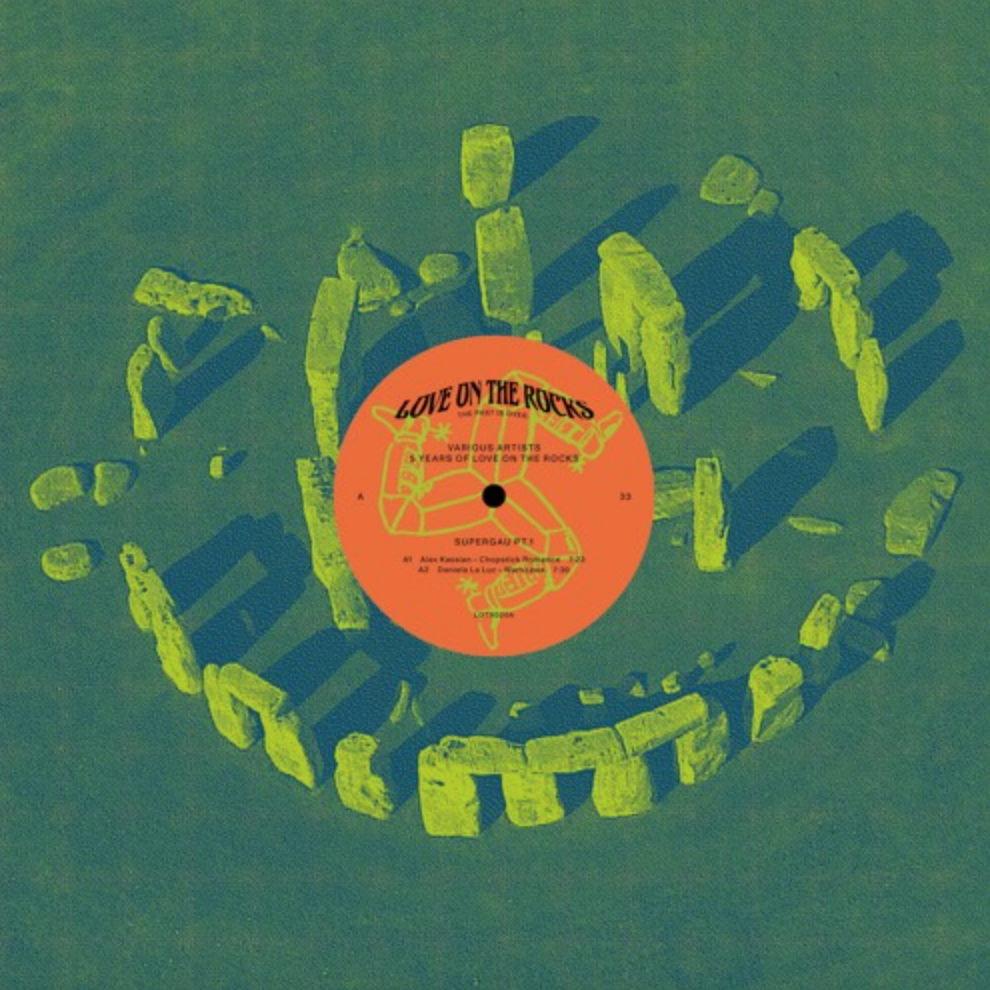
Paramida‘s Love on the Rocks label will celebrate its fifth anniversary with a new V/A compilation, titled Supergau: 5 Years of Love On The Rocks.
Supergau, meaning “A disaster beyond all expectations,” is a four-disc collection that presents “an opportunity for artists to explore the charismatic boundaries between house, disco, new wave, and acid, with the shared goal of sheer dancefloor bliss,” the Berlin label explains.
Some of the featured artists are returning to the label fold, including Fantastic Man, Massimiliano Pagliara, Violet, ELLES, Etbonz, Dirk Leyers, and Alex Kassian. Others are featured for the first time, such as Francis Inferno Orchestra, Bartellow, and Eric Duncan. And others again are a surprise, including Kornél Kovács, Daniela La Luz, and Hermann Kristoffersen.
Paramida has made her name as an integral part of the new Berlin school of DJs embracing a more expansive sound beyond the straight-forward pulse of house and techno. She launched Love on the Rocks in 2014 with an EP from Massimiliano Pagliara.
“Every record I put out felt like a message I’m sending out into the universe. And everyone featured on this compilation is someone I deeply connect with, even though it’s a pretty unexpected mix of artists. Here’s to the next five years.” — Paramida
Tracklisting
SUPERGAU PT. 1
A1. Alex Kassian “Chopstick Romance” A2. Daniela La Luz “Warszawa” B1. Etbonz “Something To Dream About” B2. Fantastic Man “I Love You Baby”
SUPERGAU PT. 2
C1. Warehouse Preservation Society “Loving Touch” C2. Francis Inferno Orchestra “Drongo Bongo” D1. P&D (Paramida & Dirk Leyers) “Deal”
SUPERGAU PT. 3
E1. ELLES “Squirtelle” E2. Bartellow feat Jonas Friedlich “Dogz Out” E3. Kornél Kovács “Mindegy” F1. Violet “Run Free” F2. Eric Duncan “Quick Confused” (Marcelas Edit)
SUPERGAU PT. 4
G1. Ivan Berko “Joule Thief” G2. Massimiliano Pagliara “Cuddle Me Away” H1. Das Komplex “Fala” H2. Herrmann Kristoffersen “Idolon”
Supergau: 5 Years of Love On The Rocks is out November 15, with Violet’s “Run Free” streaming in full below.
The 40-minute ride from Porto airport to the city of Braga is dramatic, moving through steep, wooded hills which, in previous years, have been torched by brutal forest fires. But 2019 has been kind, our driver told me, and the arid roads are lined once more with weathered trees, unscathed. Braga itself is no less impressive, a crucible of Mediterranean history that’s all tight cobbled alleys, medieval courtyards, and so many churches that you’re never more than a stone’s-throw away from salvation.
Braga is also the home of Semibreve Festival, a thoroughly present-day programme of modern electronics and club sounds from the fringe which runs from Friday to Sunday evening. This is edition number nine, with previous years, also attended by XLR8R, featuring heavyweights like GAS and Roedelius. A return visit in 2019 was made compelling by two things in particular. First was the appearance of both Morton Subotnik and Suzanne Ciani on the concert programme, two early pioneers of electronic music and modular synthesis. Their enduring influence is clear from the amount of Euroracks that were on show over the weekend. Second was the club-night lineup, which was certainly the strongest ever hosted by the festival, featuring Avalon Emerson, Kode9, Rian Trainor, and Nik Void.
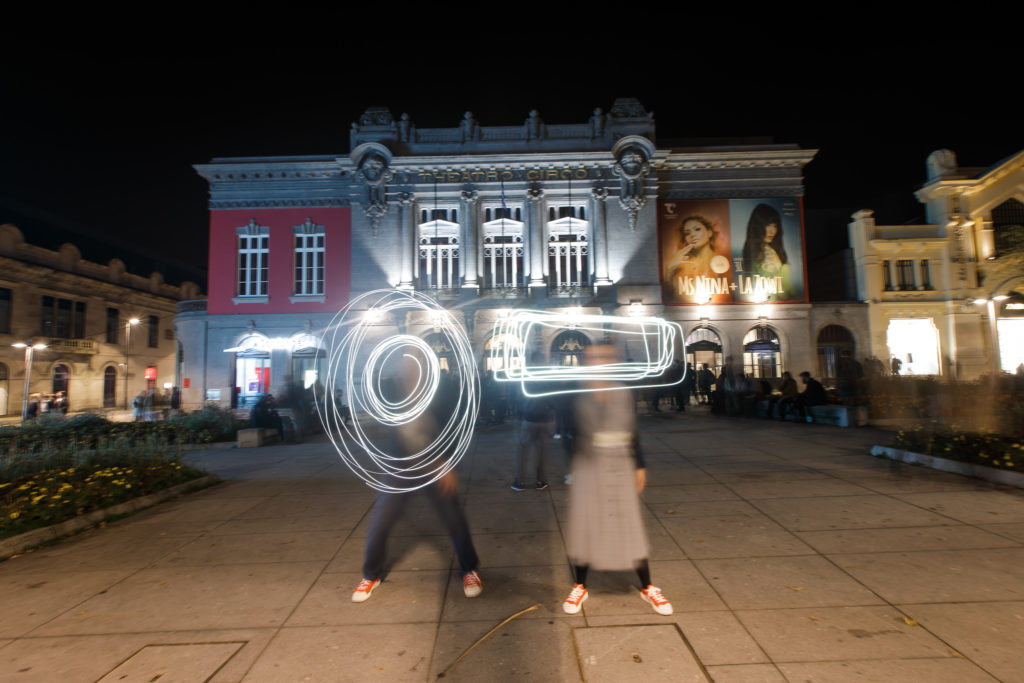
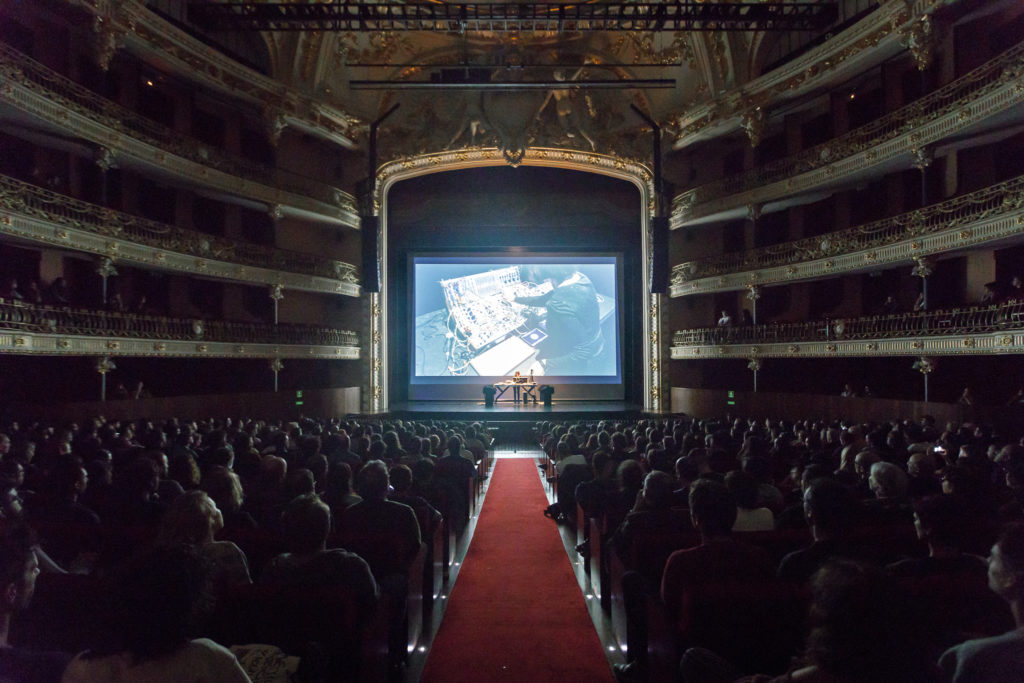
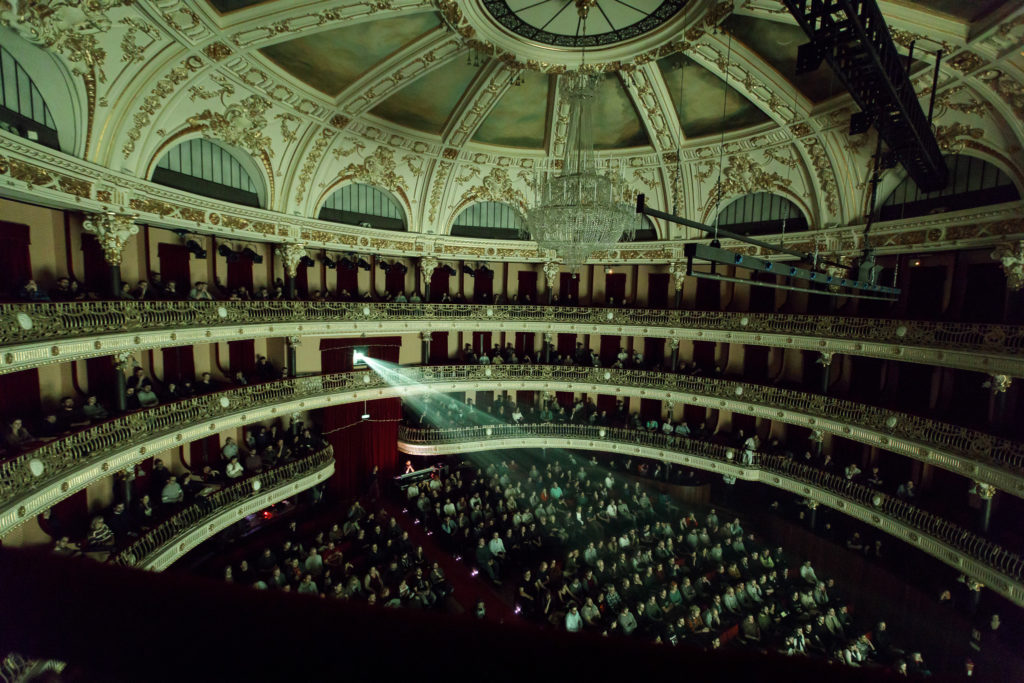
Semibreve is a strange proposition on paper: with a population of no more than 200,000, Braga doesn’t have an obvious audience for underground music. Yet for all three nights, the magnificent Theatro Circo—a large, gilded, red-clothed hall which hosts all of the main evening concerts—was nearly at capacity, and the festival’s two late club-nights (Friday and Saturday) at the nearby gnration arts centre were similarly packed. The night I arrived, a separate but equally adventurous festival, Index, a five-day media arts event, was also just wrapping up.
Theatro CircoTheatro CircoTheatro Circo
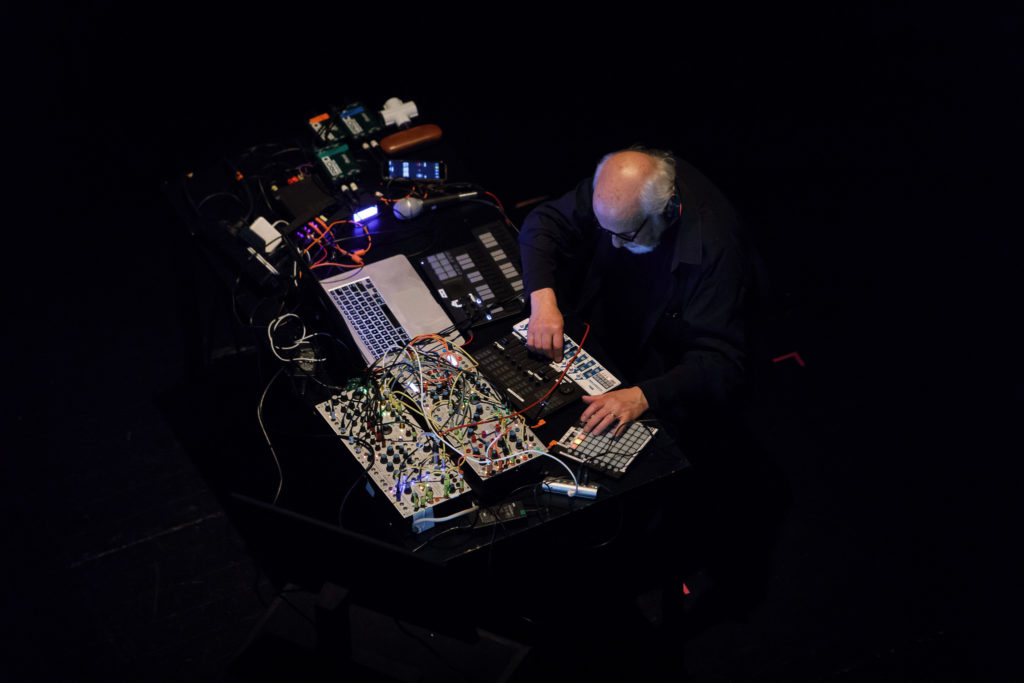
First to perform on Friday evening was Subotnik. Still touring at the age of 86 with an enthusiasm that belies his years, his appearance on stage at Theatro Circo was met with great fanfare. He is a wryly appropriate opener for an electronic music festival: his Silver Apples of the Moon LP, released 1967, is often credited as the first electronic composition released on record, and the modular synth he had commissioned to make it, the Buchla 100, was one of the first commercially available models. It’s an instrument he claims he’s still learning to use.
Subotnik began by flooding the hall with quadrophonic, waterlogged drones which hovered around no note in particular. These were decorated with scraps and bursts of sculpted noise, at times imitating sounds found in nature, like the fluttering of pigeons in a loft, or the sea crashing into the rocks. Gradually it built into gorgeous passages that weren’t far removed from the melodic, kick-drum-free type techno popularised in recent years by Barker and others.
Subotnik
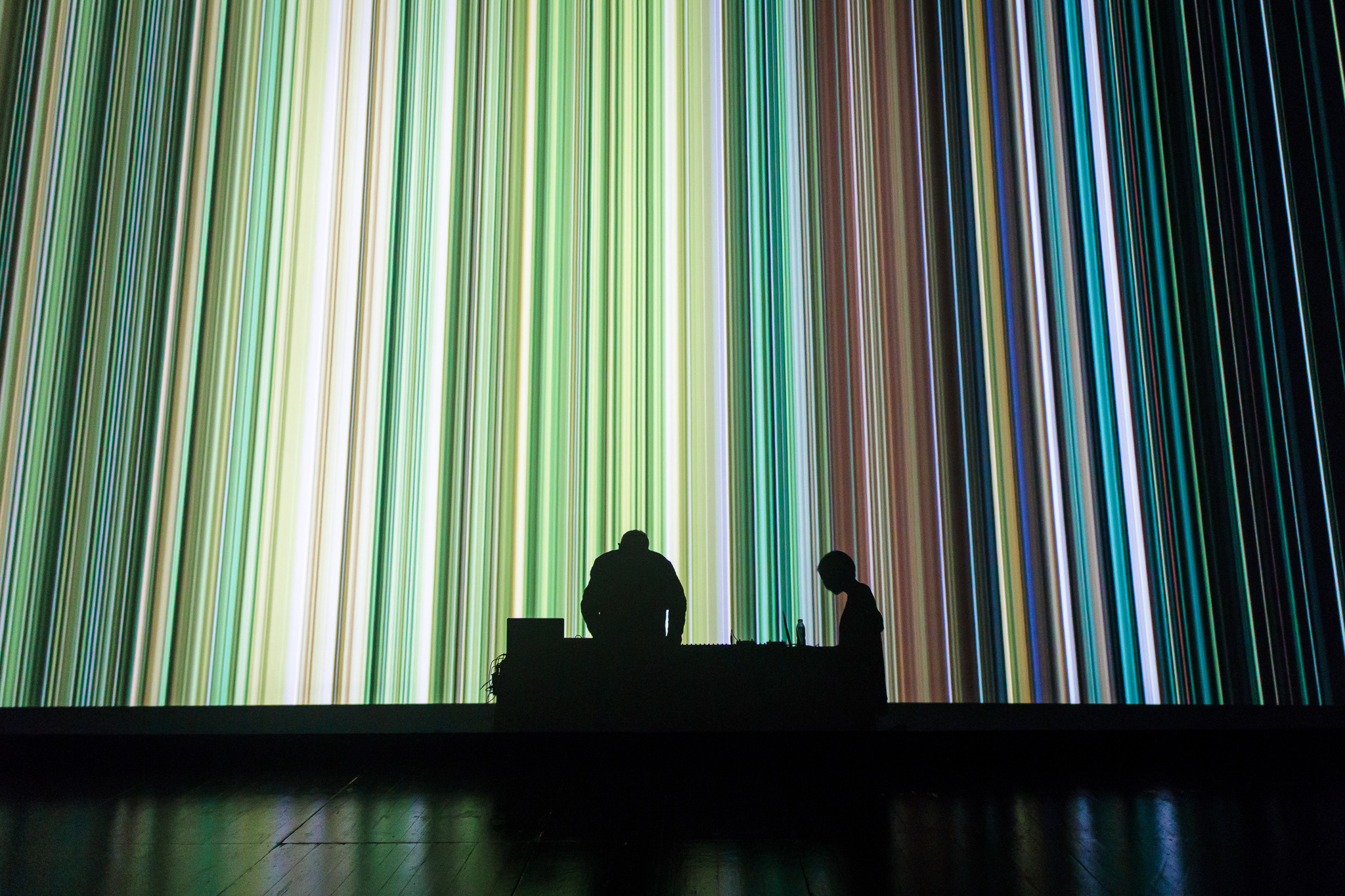
Accompanying Subotnik on stage was Berlin-based video artist Lillevan, which left me with some questions that followed me for the entire weekend: it seems de rigueur for electronic musicians and DJs to compliment their live shows with visuals, but what exactly do these visuals say which the music can’t? And what distinguishes a meaningful visual element from a glorified screensaver?
It wouldn’t be too much of a stretch to say that AV shows were the unofficial theme for the weekend; the organisers told me that this was something they wanted to pay particular attention to and the topic came up a lot in the two talks they did. It was also something most of the audience seemed to notice (e.g the different types, and how Ambarchi and Robert Lowe didn’t use one at all, more on this to come later).
On the subject, however, Semibreve provided more questions than answers. Over the weekend, there were three performances that highlighted the diversity of approaches to AV shows today. The first came from Alessandro Cortini, best known for his synth-work in Nine Inch Nails, but receiving praise in recent years for his solo work. He followed Subotnik at Theatro Circo.
Cortini’s latest release, Volume Massimo, which runs in the same vein as 2017’s Avanti, is a set of slow-burning compositions built from layers of over-saturated, high-emotion synth that sound like they’re being burnt straight to tape. Cortini’s set sounded like a straight play-through of the record, but each song was accompanied by its own short film. Most featured mesmerising choreography, performed across scenes such as a decaying stately house and a warm, pastel-coloured villa. They were utterly arresting, and their combination with the music went straight to my head.
Cortini’s show was akin to a screening, a deliberate pairing of sound and vision to create a singular experience. Contrast this with Sunday evening’s set from UK producer and Warp affiliate Scanner, who performed on a modular system lent to him by a Lisbon-based manufacturer. As he explained in a talk on the Friday night, he arrived in Braga some days before with no idea how the system worked: the modules are pre-release, with no instructions available. During the talk, he revealed he is generally averse to playing alongside images or video. We are more visually literate than we are with sound, he suggested, and images have a habit of dictating the narrative.
That said, on the Sunday, he was joined in Theatro Circo by Portuguese filmmaker Miguel C. Tavares. At the Friday talk, Tavares was similarly unsure what might happen, yet what the pair created was extraordinary. On stage, Scanner visibly wrestled with his machines, eking out sound, perfecting grooves on the fly, and slowly sinking into something lush and dubby. Tavares’s visuals responded in kind, a palette of shapes and textures on which activity peaked and troughed in time with the beat. They were abstract by necessity, an attempt to respond to one of a million performances that Scanner might have produced on his mystery synth. It amplified the possibility of other realities, like if had Scanner been in a different mood, or had played on a different day.
Suzanne CianiSuzanne Ciani
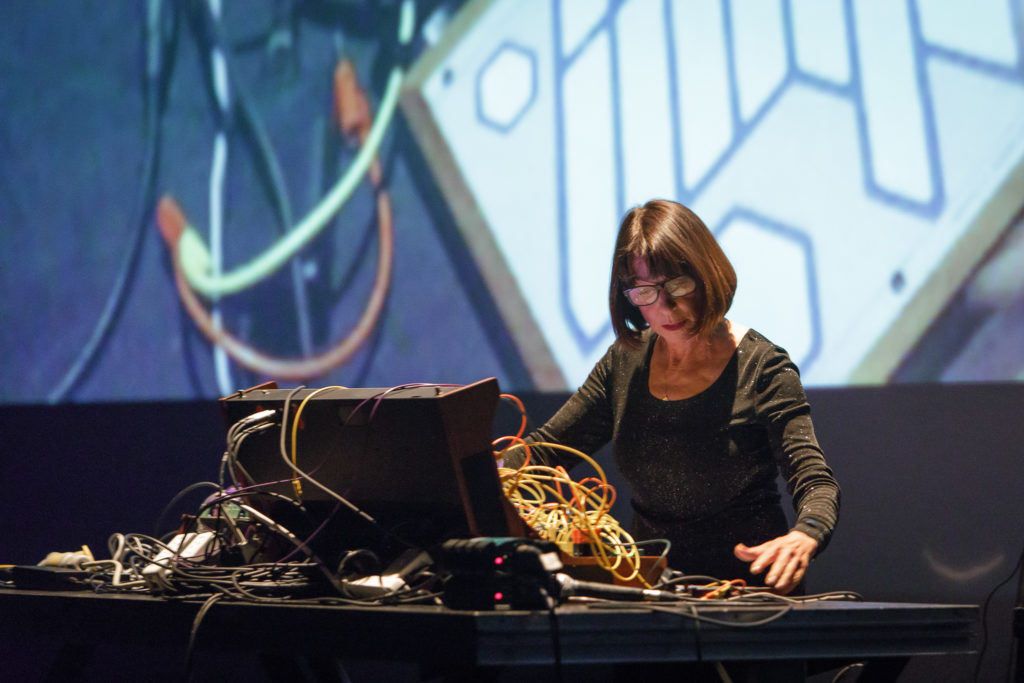
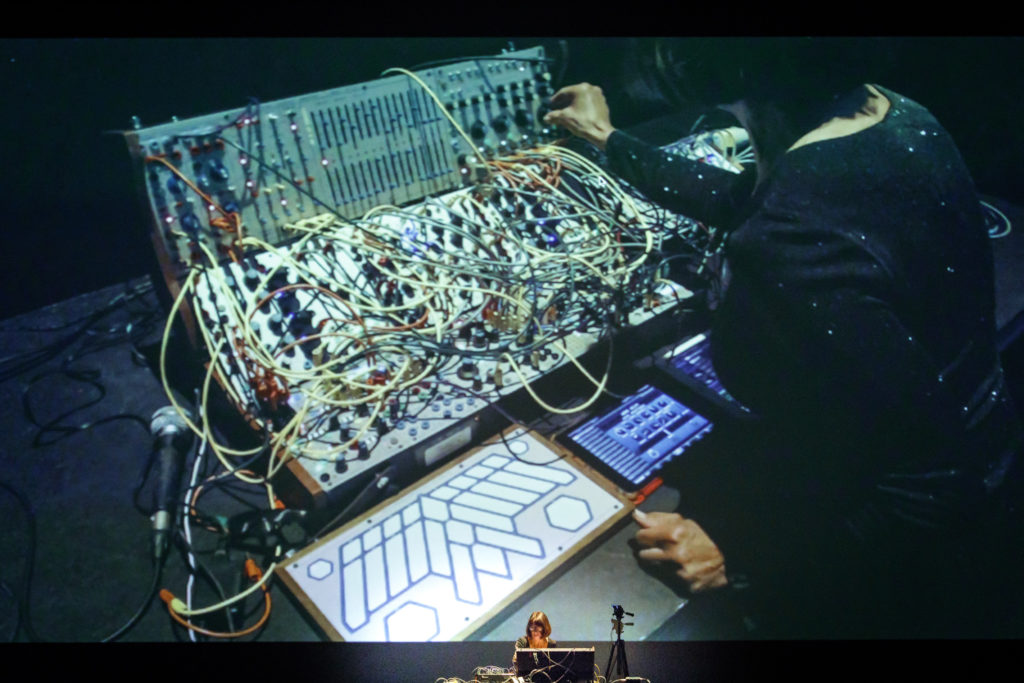
The third AV perspective came from Suzanne Ciani’s weekend finale. Like Subotnik, Ciani is esteemed for her pioneering work on the Buchla. For her visuals, a live feed of her workspace onstage at Theatro Circo exposed an intimidating array of synth modules, sequencers, controllers, and so many patch cables that she often had to fish her hands through the knots to reach dials and buttons.
In this case, the projection opened up the process of the music itself, a refreshing experience when so much is made of what and what doesn’t constitute a “live” show in electronic music. Yet for all the transparency, Ciani’s set retained a sense of the magical: a spellbinding 40 minutes of cascading arpeggios and retro-futurist wonder. It’s always something to watch a master at work, and these prying visuals made things feel very up close.
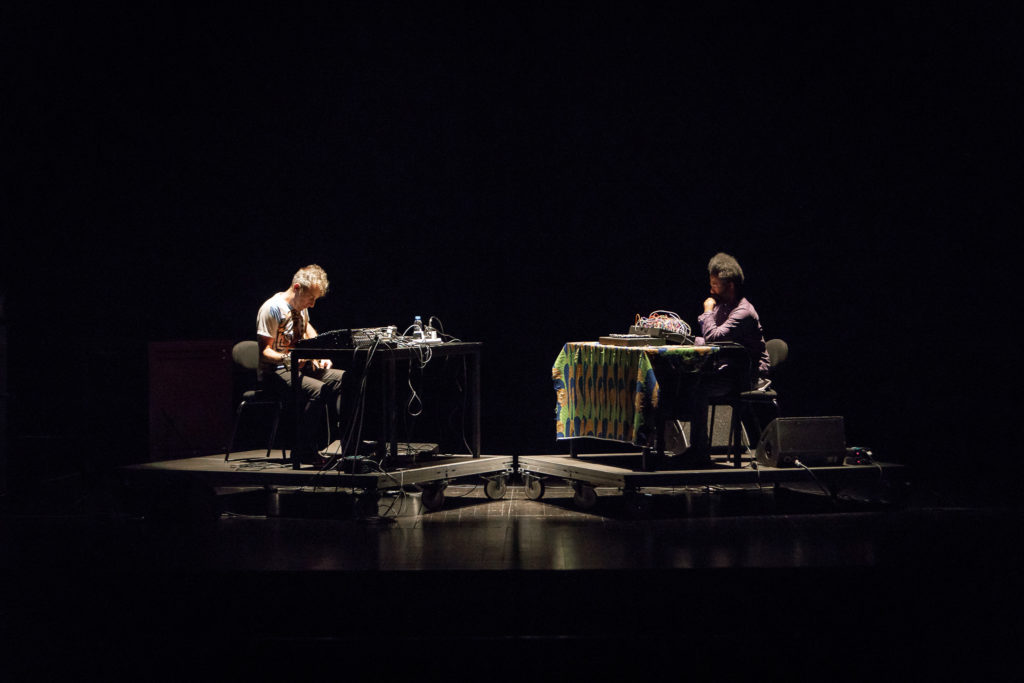
Others that must be mentioned include guitarist Oren Ambarchi’s improvised collaboration with underground mainstay Robert AA Lowe, and a performance of Coil’s 1998 drone-work Time Machines from Scottish-born artists Drew McDowall and Florence To.
The former dispensed with visuals altogether. Speaking at dinner two nights before, Ambarchi said he’s far more interested in immersing people in sound, and on Saturday evening the pair achieved exactly this, delivering the weekend’s most still and delicate set. Theatro Circo, plunged into near darkness, was filled with prolonged silences and faint whispers of sound. These gave way to slightly livelier sections of gentle vocal work and swells of alien guitar, which made for an enjoyably disorientating listen.
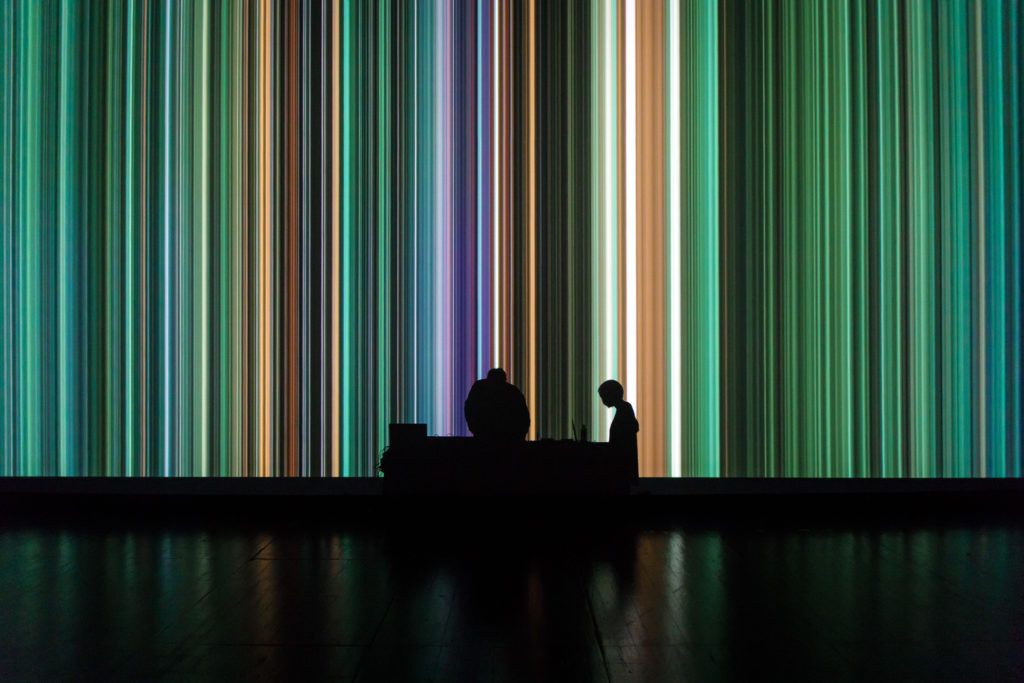
In contrast, following Ambarchi and Lowe, Time Machines proved the festival’s most intense moment. Drew McDowall originally conceived the work in the ’90s before bringing it to full fruition with Coil, and the name is partly a reference to the power of ceremonial music such as religious chanting to displace a listener in time. McDowall is accompanied by Florence To, whose colourful, line-based visuals often seemed to resemble shape-shifting landscapes. Witnessed live, it was overpowering: a loud, superheated sequence of head-melting synth drones which clearly took some audience members to very different places. Afterwards, one was pleased to tell me that, as promised, linear time became all but irrelevant, and that they’d got their money’s worth.
Oren Ambarchi and Robert AA LoweDrew McDowall and Florence To
One of the best things about Semibreve is the curation, which creates a polar opposite experience to that of the bigger experimental get togethers. Not one name on the lineup would have been out of place at Unsound, but whereas the Krakow megafest runs stacked bills across multi-room venues that last well into the following morning, Semibreve is always scheduled such that there’s virtually no crossover between artists. Like previous editions, the evening programme all takes place in the theatre, leaving gaps between shows which, frankly, is a very welcome change of pace. It gives attendees a chance to decompress between the often challenging sets.
Dead Centre
Saturday and Sunday afternoon also featured short afternoon concerts at venues no more than 10 minutes on foot from the theatre. This gave attendees a chance to explore the city, an attraction in itself which can trace its roots to pre-Roman times.
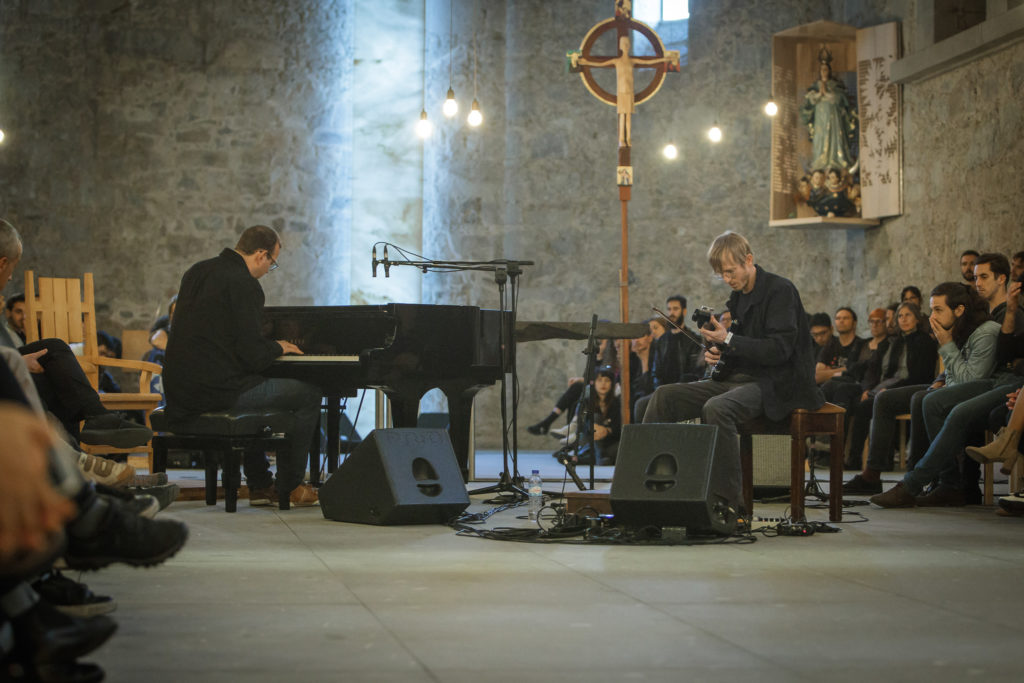
At the Capela Imaculada do Seminário Menor, a beautiful and starkly minimal chapel which contrasts with the highly decorated churches that surround it, the Norway/Berlin-based duo Deaf Centre used a grand piano and fx-heavy guitar, sometimes bowed like a cello, to fill the hall with deep and mournful melancholy.
The next day at Salão Medieval da Reitoria, a restored Medieval hall used by the local university, Félicia Atkinson’s set was like a guided meditation, organ-driven with fractured vocals and scatterings of notes, samples and moods. These short matinees were in keeping with Semibreve’s relaxed air, leaving plenty of time for dinner and end-of-summer beers in the dusty streets before the evening’s main event. Any more would have been too much.
Félicia AtkinsonAvalon EmersonKode9Rian Treanor
The Friday and Saturday programmes included club nights at the nearby gnration arts centre, a former police station and play on words: “GNR” is Guarda Nacional Republicana, the Portuguese cops. Friday saw Factory Floor’s Nik Void go solo, with a raw hardware techno workout that built with a similarly raucous energy to that heard on her recent and final work with Carter Tutti Void. Avalon Emerson followed, opening with what I could swear sounds like a cut-up edit of Gina G’s “Just A Little Bit.” I could definitely be wrong, but in any case it was one of several nods to high-drama trance and eurodance that followed. Naturally, this was a lot of fun. What’s best about Avalon is her off-kilter additions to the mix and fear-free blends: a wild and choppy salsa-style piano solo stands out in particular.
However, Saturday night was arguably the better of the two. Hyperdub bossman Kode9 was on rare form, banging out a typically eclectic mix of footwork and heavy-handed UK fare, before pivoting towards much welcomed nostalgia at the end of the night with Martyn’s remix of “Broken Heart,” a cherished tears-in-the-club classic.
But Rian Trainor was the standout. The Northern England producer belongs to that thrilling strain of producers looking to reinject the ecstatic into club music, with other examples including Errorsmith, Gabor Lazar, Lorraine James, and much of the Nyege Neyge roster. Urgent and complex rhythms, minimal synths and samples, and humour all play a role: halfway through his set came what’s unmistakably an edit of Yello’s “Oh Yeah” (yes, the Duffman theme), albeit heavily sliced and played at some 150bpm. It was a blistering, joyous encounter.
With its 2019 edition, Semibreve once more confirmed its status as one of the finest and most thoughtful of small European festivals, and an essential consideration for anyone who’s felt burnt out by the bigger underground events, so often defined today by their bewildering level of choice, or the long hours hanging around at the rave for your favourite to make an appearance. Whereas they have grown bigger, favouring enormity, Semibreve has kept things intimate, creating an ideal environment to reflect on performances and the festival’s general themes. This year’s questioning of live visuals and their function proved stimulating, and felt overdue at a time when the AV show seems increasingly ubiquitous. It will be interesting to see what subjects Semibreve touches on in future.
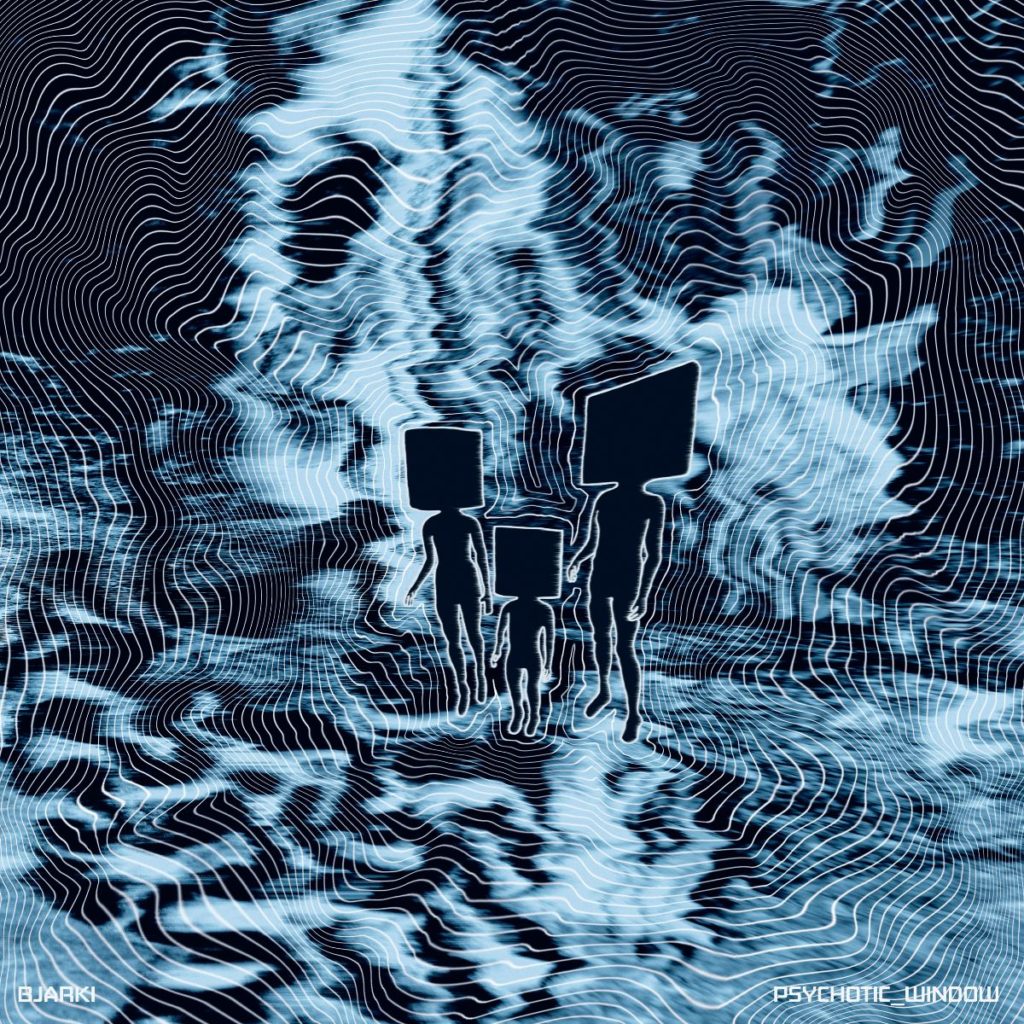
Bjarki will release a new album via !K7 Records in December, titled Psychotic Window.
Psychotic Window is the Icelandic producer’s second outing on !K7 Records, following Happy Earthday, which released in February of this year. It originally landed as part of the limited edition 200 copy box set version of Happy Earthday, and so has been heard before, but this is its first full release on double vinyl and digital platforms.
The label describes Psychotic Window as a “further extension” of Bjarki’s creative vision that continues to to address the same environmental themes as Happy Earthday. It reflects on a particularly tough time for Bjarki, documenting a “depressing” period of his life and marking his final sign off for 2019.
Earlier this month, Bjarki announced a new EP as Cucumb45, coming via his own bbbbbb.
After ‘Happy Earthday,’ people have been asking me about the secret tracks and it made me feel that they deserve a proper release. Each track means a lot to me as I made them during a depressing phase in my life; I was pretty broke, working many shit jobs and also just being super lazy, uninterested in leaving my apartment. Before I started touring, I had these periods where I could write so much music without thinking, pouring my heart out to comfort my thoughts and feelings without trying. I doubt that this kind of window will come back to me anytime soon, my way of music making has changed a lot after going on tour. At that time, I was listening to a lot of Coil, Chris Carter, and Cosey Fanni Tutti. I think every struggling artist goes through these phases of being sleep deprived, staying up and making music all night. This was my psychotic window.”
Tracklisting
01. Utvarp Saga 02. MIRA 03. Coil Opinons 04. <I) 05. Xoxomaa 06. Kitchen Forklore 07. Everyone Is Annoying 08. Psykixk TV 09. Crybaby 10. Track 19 11. Other Stanky Skyline 12. Dark Ride 13. Better Plac4 14. Cool You Peel2
Psychotic Window LP will be released on December 6 via !K7 Records. Meanwhile, you can stream “Coil Opinons” below.
It’s been a quiet few years for Morris Harper, the birth name of DJ Spinn. Alongside the late Rashad Harden (a.k.a DJ Rashad), who tragically passed away in April 2014, Harper began Ghettoteknitianz, a collective of like-minded producers which, in 2010, as the footwork sound was beginning to spill outside of Chicago’s boundaries, became Teklife, the now-global focal point for the footwork sound, with an extended family of artists positioned in all corners of the globe.
Harper has positioned himself at the helm of this expansion for over a decade, while also overseeing the Teklife label arm, launched in 2016 with a posthumous release of DJ Rashad. This doesn’t leave much capacity to release his own music, but the last few years have been especially quiet for Harper; he hasn’t shared anything new since two outings on Hyperdub in 2015. The loss of his debut album due to theft of course didn’t help, but Harper also required some time out to process Rashad’s death, the desperately unfortunate result of an accidental drug overdose. And, of course, there’s also his studio, which was broken into and emptied not too long ago—forcing him into a rebuild of sorts, which is now finally complete.
Alongside DJ Rashad, Spinn had contributed an XLR8R podcast, but this is his first solo effort, put together as a celebration of his latest effort. He compiled the mix in the wake of a Hyperdub showcase in London, and he’s filled it with unreleased and previously unheard solo cuts and many in collaboration with DJ Rashad. At one-hour in length, it’ a treat for footwork heads old and new.
What have you been up to recently?
Recently, I’ve been taking care of my business, you know, running a record label, and just keeping my head above water until the next releases were ready to come out.
How was your trip to London for the Hyperdub anniversary night?
The trip to London was awesome. I got to catch up with some of my closest friends out there, and we all had a ball. We killed the show. I didn’t get to see Scratch’s show as I had to catch a flight at 8am, but we all had a ball.
You’ve been off the grid for some time. Why the radio silence?
I had to basically take a sit down because my studio was broken into in 2017, so I had to get all my stuff back in order for the most part, when it comes to my recordings, and I had to take some time out to raise my kids so it wasn’t all bad.
What’s the story behind your new Hyperdub EP? Tell us about it.
The story behind my new Hyperdub EP, Da Life, is basically like me meeting a female at a show, getting to know her a little bit, taking her for a ride, she like the way I made her hot, and then at the end of it I have to ask her: Is you really about that? We’re from Chicago so I’m going to tell you that you aren’t about that life, but you gotta show me that you aren’t about that life.
When and where was the mix recorded?
The mix I did for XLR8R, I did it at the studio, the “Track Factory,” and I did it right after I got back from London. I was sick as a dog from sweating my ass off but I still got this boy done. I had to put something different together so I included a bunch of unreleased joints and lots of collaborations with me and DJ Rashad that I don’t think a lot of people have heard.
How did you choose the tracks that you included?
I wanted to do some hidden bangers that a lot of people ain’t heard. How does it compare to what we’d hear you play in a club?
When I play in a club, I am going off the DJs playing before and after me. When I do mixes, I try to give people a lot of stuff they haven’t heard, so it’s very different. What’s next on the horizon?
As Teklife, we are just working to keep promoting ourselves. We are working on shows for Chicago, Los Angeles, New York. I got another new EP that’s coming soon, and I’ll have that ready by the end of the year; and, other than that, I am staying in tune with the game and staying on top of the game.
XLR8R has now joined Mixcloud Select, meaning that to download the podcast you will need to subscribe to our Select channel. The move to Mixcloud Select will ensure that all the producers with music featured in our mixes get paid. You can read more about it here.
Tracklisting
01. DJ Rashad x DJ Spinn x Taso “Shine Box” (Unreleased) 02. DJ Rashad x DJ Manny “Over Ya Head” (Lit City Trax) 03. DJ Spinn “Freekin’ U” (Edit) (Unreleased) 04. DJ Rashad x DJ Gant-Man “Pullover Flip” (Unreleased) 05. DJ Gant-Man “Magic Werkz” (Unreleased) 06. DJ Spinn “Already” (Unreleased) 07. DJ Rashad x Chi Boogie “We Break It Down” (Juke Trax Online) 08. DJ Spinn x DJ Rashad “Manifest 13’” (Unreleased) 09. DJ Spinn x DJ Rashad “Take Her Shopping” (Unreleased) 10. DJ Spinn x Moondoctor “TekMoon” (Unreleased) 11. DJ Rashad x RP Boo “Burnin’ Everybody” (Unreleased) 12. DJ Spinn x DJ Rashad “Turn Up” (Unreleased) 13. DJ Spinn “Bang Bang Skeet Skeet” (Unreleased) 14. DJ Spinn “Knock A Patch Out” (Hyperdub) 15. DJ Spinn “The Future Is Now” (Hyperdub) 16. DJ Spinn “I Ain’t Playin’” (Unreleased) 17. DJ Rashad x DJ Gant-Man “Heaven Sent” (Planet Mu) 18. DJ Rashad “Here We Go” (Unreleased) 19. DJ Rashad “It’s Not Rite” (Planet Mu) 20. Dâm-Funk x Snoop Dogg “Do My Thang” (Teklife Remix) (Stones Throw) 21. DJ Rashad “8778” (Unreleased) 22. DJ Spinn x DJ Rashad x Taso “Consequences” (Unreleased) 23. DJ Spinn “Bootydoo” (Unreleased) 24. DJ Spinn “Feelin’ U” (Unreleased) 25. DJ Rashad x Freshmoon “All We Came To Do Is Party” (Unreleased) 26. DJ Rashad x DJ Spinn “Always Come Back” (Unreleased) 27. DJ Spinn “4 Da Ghetto” (Ghettophiles) 28. DJ Spinn “Make Her Hot” (Hyperdub) 29. DJ Rashad x DJ Spinn x Taso “She A Go” (Hyperdub) 30. The Era x DJ Spinn “Elevated” (Unreleased)
Forever with Violet is full of purposeful basslines, breaks, and garage drums perfect for the rave and a must-have for all the garage and dub heads out there.
Jack Michael, real name Jack Ayre, has been making some serious noise recently with several contributions to V/A compilations, and his outings on Orbital London. He also contributed a track, titled “From London,” to the latest edition of XLR8R+, which you can hear at the bottom of this article.
Born in 2018, Orbital London has now released three EPs, all from Jack Michael, one split with Harry Wills. The UK label has had support from Vera, Binh, DJ Masda, Craig Richards, Nicolas Lutz, Herodot, Alexandra, and more, and the first two EPs have sold out in stores, so be sure to get your hands on this one quick.
Tracklisting
A1. Bad Bwoi Sound (Original Mix) A2. Bad Bwoi Sound (Desert Sound Colony Remix) B1. Menace B2. On The Block
Forever with Violet EP is out now on vinyl only. You can hear clips of the tracks below.
The 16th edition of XLR8R+ is a UK edition featuring cuts from Leif, Jack Michael, and Alec Falconer. Download them by subscribing to XLR8R+ here.
Liz Harris, also known as Grouper, has released vinyl reissues of the companion albums A I A: Dream Loss and A I A: Alien Observer.
Originally released in 2011 on Yellow Electric and long out-of-print, the new pressings are available via Chicago-based Kranky. They feature a stunning package design, with photography from Sarah Meadows and artwork/layout direction from Eric Mast. Included are double-sided picture and tracklisting inserts.
Returning after engineering Grouper’s 2008 LP, Dragging A Dead Deer Up A Hill, engineer Timothy Stollenwerk mastered both these original releases. His work has been preserved here for this reissue.
A I A: Dream Loss and A I A: Alien Observer are gorgeous and emotionally vivid albums that incorporate the vast spectrum of experimental music that Grouper has become known for. From reverb- and hiss-drenched ambient to richly sustained solo guitar and majestic vocals, both records exemplify the type of foundations and progressions Grouper was infusing into various works at the time and continues to carry forward.
Along with the new vinyl reissues on Kranky, Harris has also announced a reissue of Roy Montgomery’s 1995 debut LP, Scenes From The South Island, on her label, Yellow Electric. Harris and Montgomery first collaborated on Grouper’s 2010 LP, Vessel. Available November 29, the new pressing of Scenes From The South Island can be pre-ordered here.
12″ reissue ordering options for A I A: Dream Losshere and A I A: Alien Observerhere.
To accompany the announcement, Kranky has released a previously unheard live version of “Alien Observer,” recorded at the Emanuel Vigeland Mausoleum in 2009.
Artwork, ‘A I A: Dream Loss’Artwork, ‘A I A: Alien Observer’
On October 19 and 20, 2019, something really special happened in Los Angeles. Genevieve Medow-Jenkins and her team brought together 200 people for their Sonic Sleepover, called Secular Sabbath. The event was a 12-hour affair that took place in the Mystic Dharma Buddhist Temple and was meticulously curated with cutting-edge ambient and experimental music, plant-based food and drink, and other surprises that included reiki readings, tea ceremonies, and facials for those who chose to fully indulge.
Having been curious enough to attend a few sound baths in the past, we have been consistently disappointed with the locations and especially the typical predictable plodding music being played. But Secular Sabbath was different, and it was the unexpected music programming that lured us there in the first place. Most of the artists chosen to play the event were not the typical ones that you would expect to see playing at an all-night chill-out, including Rhye, Daedelus, Madame Gandhi, DNTEL, Joel Shearer, Illangelo, and Ooah.
These were artists who broke out of their usual music genres to put together some of the best ambient and experimental music we have heard in a long time. The sets played throughout the night and into the morning, blending trippy ambient, moody, and deep experimental, plus some subtle but hypnotic percussive sounds and some beautiful vocals. What we heard was a collective effort by the group talented and diverse artists, dormant of egos, who came together to produce their very best downtempo music experience that left us with a feeling of what community, collaboration and doing a cool project with friends really meant. The line up included Rhye, Daedelus, Madame Gandhi, DNTEL, Joel Shearer, Illangelo, Ooah, and several other artists.
Rhye Photo: Alex Free
From our perspective, the standout performances came from Daedelus, Madame Gandhi, and Joel Shearer. Unfortunately, we had to leave the event two hours early to catch a plane to London, but we heard the sunrise closing dual performance from Rhye and Illangelo was another magical moment of the experience.
Daedelus Photo: Alex Free
Other well-curated elements at Secular Sabbath were the vibrant psychedelic visuals by Jen Stark that were displayed on the ceiling, visible for all who were in horizontal positions for hours at a time. We appreciated Medow-Jenkins’ decision to limit the number of attendees to create the right amount of space and energy for everyone to enjoy the experience and not feel too cluttered and crowded.
There were a few minor things we noticed that may further improve the next sonic sleepover. The room was generously equipped with comfortable beds, some high and some low. In a few locations of the room, the high beds were blocking the view of the beds on the floor and it was difficult to see the music performers, and this may have left a few people feeling visually disconnected from the music performers. The experience is meant to be a sound experience so this really is not an issue and should be understood as a personal preference from us. Parking around the venue was a challenge so we suggest you arrive early to the next event.
Photo: Nicole Mangiola
In a recent Instagram post we read from Medow-Jenkins, she talks about her dream of having one big sleepover with her friends as her inspiration for creating Secular Sabbath. There is no doubt she accomplished this. But intended or not, Medow-Jenkins and her team also created an innovative music and artistic platform allowing its participating musicians to feel totally comfortable to deviate from their norm and create something new and different.
XLR8R is looking forward to the next Secular Sabbath. If you happen to be in Mexico City on November 4, Secular Sabbath happens again. More information can be found here: Secular Sabbath Mexico City.
Flora & Fauna collects music recorded since 2018, stitched together as a “conceptual ride into barrier-breaking pathways of sound,” the label explains. Casey, from Pretoria, South Africa, was looking to create something beyond anything he had before—”a journey where preconceived notions of what should be cease to exist and the ride is all the matters.” It features contributions from Dabow and Chee.
Casey’s career has expanded rapidly over the last few years, gaining recognition from artists such as UZ, GTA, and The Glitch Mob. He’s previously released music with Borgore’s Buygore, UZ’s Quality Goods Records, Craze’s Slow Roast Records, as well as RL Grime’s Sable Valley.
Ahead of the release, Casey is presenting the album’s first single, “Banga” (feat. Dabow), which releases worldwide across streaming platforms on November 5.