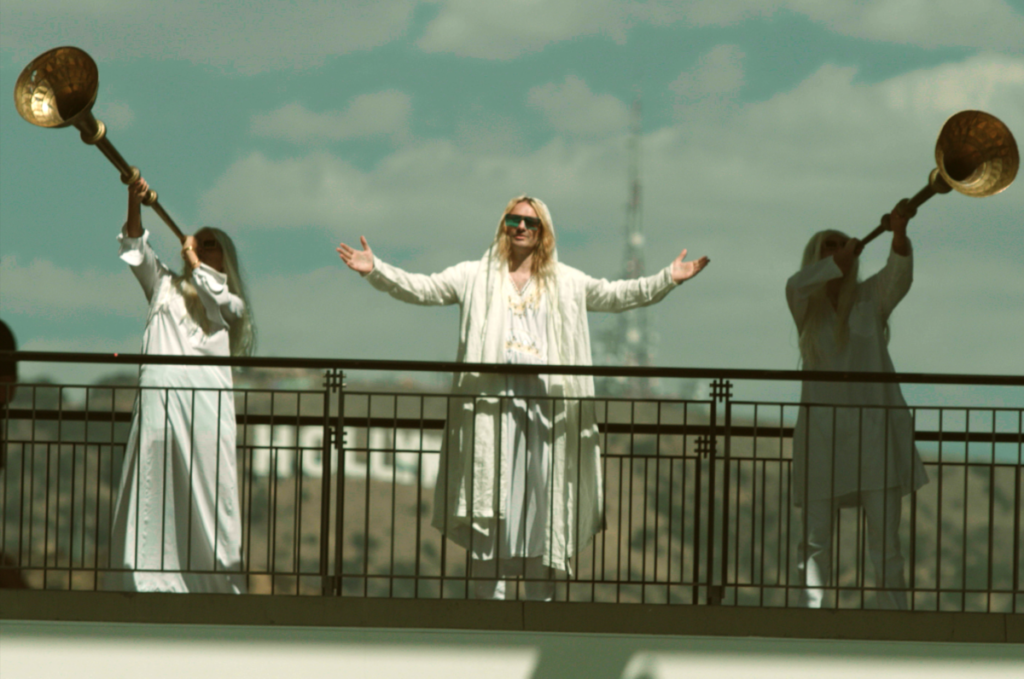
Traumprinz, the artist also known as DJ Healer, DJ Metatron, Irini, and Prince of Denmark, has released a new mix.
“Life,” available now through the mysterious artist’s Soundcloud page, spans 16 original cuts. It’s the first mix he’s shared in more than a year, since 2021’s lost in dreams. Last year, he also released “to all dreamers” and “to all dancers.“
Traumprinz remains anonymous, but he has amassed a cult following for his hypnotic techno mixes.
Tracklisting
01. im rausch der tiefe 02. the day after tomorrow 03. about leaving 04. elevate this 05. floodgate 06. the luring of the beyond 07. closedgates iii 08. take your time 09. psi 10. trippyaf 11. upstairs 12. climber 13. light flooded 14. life (beautiful (no matter what)) 15. broken home 16. outro
Claudio PRC, real name Claudio Porceddu, hailing from Sardinia, Italy, is a relentless sonic explorer who fuses techno sounds with electroacoustic experimentation. (You can see that in his latest release, available on Delsin.) Growing up he was always involved in other forms of art like painting or graffiti but became attracted to the idea DJing when he began clubbing with his friends. (He also learned a lot from his father who too was a DJ.) His affections with techno began in the early 2000s when he heard the percussive rhythms of “Panikattack” by Plastikman, leading him down the wormhole that is early M_nus and Richie Hawtin. Each Saturday he’d take the bus to a nearby town to go to buy records.
Across his discography, which covers labels like Prologue, Semantica (where he’s released two albums) and his own TGP, you might also hear the fingerprints of Robert Hood, Mika Vainio, and Donato Dozzy He’s been actively touring since 2006. In 2020 he founded 012, a platform dedicated to art and sound research. Ahead of some intense touring, Porceddu pieced together an XLR8R podcast filled with some of the go-to tunes from his latest club sessions. You’ll hear music from Etapp Kyle, Mary Yuzovskaya, Luigi Tozzi, which gives you idea for the style, plus a taste of his recent Delsin EP. Press play for a brooding mix of deep and atmospheric techno that’ll can either wind you down as the year draws to an end or perk you up—enjoy as you will.
01. What have you been up to recently? Recently I’ve been playing quite a lot. The last months have been very intense for me, traveling and performing in many cities. In November, my EP called Challenger Deep came out on Delsin Records, and I’ve been doing some remixes for some dear friends like Andrea Ferlin and Fabio Caria released on the Berlin label DeepnosiS. I am also investing a lot in the curation of my label 012. we just released a new compilation called Systema Naturae with the participation of several new emerging artists and some established ones.
02. What have you been listening to? I am mostly listening to electronic music every day, ambient especially; it helps me to relax and to concentrate for my work. Recently I came back home to listen to the old albums from Desolate on Fauxpas Musik and some trip-hop stuff like DJ Krush’s Jaku.
03. How has your 2022 been artistically? And what are your goals for next year? My 2022 was really exciting. As I said in the first question, I’ve been playing in many countries and in some of the most important venues in our scene like Berghain. Those gigs helped me with my creative processes when I produced my last records, bringing to me so much inspiration. Next year is going to be even more exciting. I want to keep this rhythm and reach as many people as possible with my music.
04. Where and when did you record his mix? I recorded this mix especially for you, some weeks ago in my house, using the tracks that I am playing regularly at my gigs.
05. What setup did you use? My set up is very basic. At home I’ve two XDJ-700s and one Allen & Heath XONE:23 mixer.
06. How did you go about choosing the tracks you’ve included? I’ve checked on the playlists that I use for my gigs, selecting new releases and old ones in the field of deep and hypnotic techno. Not so fast, trying to create an homogeneous flow.
07. How does it compare to what we might hear you play out? I tried to create a possible sequence that I could easily propose in a club. There are millions of combinations that can be created using tracks, always different, always exciting.
08. What’s next on the horizon? In the short term, I am going to play all night long in Barcelona. Then I have to go straight back to Berlin. I can’t wait also to be back in February in Colombia to play again for Freedom Festival in Medellin and at Tunnel in Pereira. Regarding releases, I’ve just finished a new EP which I will reveal very soon!
XLR8R Subscribers can download the podcast below.If you’re not an XLR8R subscriber, you can read more about it and subscribe here.
Finn McCorry, known just as Finn, has released a Christmas-themed album via his 2 B REAL label.
No More Coal, which spans nine ravey house tracks with club-ready charm and a bittersweet feel, includes collaborations with I. JORDAN and Martyn Bootyspoon. He began working on the record in August. It comes both digitally and as a limited-edition red or green cassette.
01. Wonderful Time 02. Babybell feat. I. JORDAN 03. A Christmas House Track 04. Angels 05. Dreams Of Santa Anne 06. This Time Of Year feat. Martyn Bootyspoon 07. Rudolph 08. No More Coal! 09. Some Things I Can’t Choose
No More Coal (A Christmas Dance Record) LP is available now. You can stream it below and order it here.
What is the formula for making a hit record? Is it a balance of talent, inspiration, and years of practice? Or is the process simply a matter of luck, or perhaps even the result of some higher powers at work? Romantic poets such as Coleridge and Shelley believed that in order to receive artistic visions, the soul had to be attuned to divine or mystical “winds.” The ancient Greeks believed that unconscious bursts of creative genius came from Muses—the goddesses of literature, science, and the arts. Whatever the truth is, it’s clear there is no definitive answer to this age-old question.
So what if we instead tried to recreate a record that was already a hit? If we endeavor to do exactly what was done before, would the results be the same? Can we capture lightning in a bottle twice? We asked Aril Brikha if he wanted to give it a try. The Iranian-born producer does, after all, know a thing or two about making hits. He’s the man behind one of Detroit Techno’s most iconic anthems—”Groove La Chord.”
In partnership with Ableton, we interviewed Brikha about the making of “Groove La Chord” and his experience recreating it—this time using Live and Note. Plus, he has shared a download of his Live Set and Note Set for a direct look into his process.
*Requires Note, on an iOS device running iOS 15 or higher. Alternatively, you can open the Note Set with Live 11 Suite or the free trial.
Please be advised: This Live Set and Note Set and included samples are for educational use only and cannot be used for commercial purposes.
Thanks for taking on this challenge, Aril. Before we dive in, can you tell us how you first got into music-making?
My father was really interested in music. He gave me a keyboard when I was seven years old. Well, I think he actually got the keyboard for himself but it was meant to be for me! By my early teens, I was mainly listening to ‘80s pop music on MTV. But it was always the electronic music that I liked. “Behind the Wheel” by Depeche Mode was the first track I clearly remember where there was a prominent kick drum.
Growing up in a small city called Jönköping outside of Stockholm I didn’t really have other people to bounce ideas off and learn from. There was no internet back then, and hardly any magazines so I just learned to make music on my own. But I did have a few friends that were regularly buying records. Eventually, they pointed out that the music I was creating was called Detroit Techno.
So you were making Detroit Techno before you’d even heard of it?
I definitely wouldn’t have heard of it because, in Jönköping, we just had a state-owned radio channel called P3, which would only sometimes play club music. So in those early days, I was referencing the melancholic vibes and melodics of Depeche Mode and the energy of Nitzer Ebb and Kraftwerk. I don’t have an exact timeline. I’m not going to say I invented Detroit Techno. There was a lot of EBM around then. And I would still say EBM was very much the early days of techno, without the melodic aspect. This was what I was trying to recreate. I didn’t DJ, I didn’t collect records or sample them. I came from the background of just having a sequencer and gear and trying to make something with those machines.
What synths and drum machines did you first lay your hands on back then?
The first synth I had was the Ensoniq SQ80. I was trying to learn how to program it before knowing anything about electronic music, really. I was just trying to recreate what I thought I might have heard on records or at parties. I seemed to be gravitating more toward the minimal sounds of artists like Robert Hood or Basic Channel. The SQ80 wasn’t really a hands-on synth like a Roland Juno. You really needed to dive into menus. When I told people what synth I was using, they would go out and buy it. But they would throw it away after a week and say, “how do you make any sense of the menus?.” But that was the beauty of learning how to program a synth which seems to be impossible to learn. Through either faith or destiny, I ended up with it. I think Adamski might be the most famous person who used the Ensoniq SQ80. I remember hearing “Killer” and I thought “wait a minute! I know those stabs”.
Along with the SQ80, I had a Roland R8 digital drum machine, which had 808 and 909 kits. And at some point in the mid-nineties, I saw an ad from a guy who was selling a Roland System 100, a Roland 808, 303, and a Yamaha CS-5, along with an electric guitar. And I got all of that for $400. This was at the end of those days when you could still manage to hit the jackpot like that, and I definitely did.
“Groove La Chord was all recorded live. If I had not pressed record on my DAT machine that day it wouldn’t exist.”
What was your first record release?
My first release was on a label from my hometown called PTS. Later, I tried to get my music released on Swedish labels like Svek. And I sent demos to F Communications and Soma. None of them wanted them. So as a last resort I thought fuck it, I’m just going to send the demos to Detroit where this music is meant to be. 430 West and Transmat both got back to me within three days, which was shocking after three years of trying to release my music in Europe. The first release came out on Fragile; a subsidiary of Transmat. It was called Art of Vengence EP and featured “Groove La Chord”.
Did the subsequent success of “Groove La Chord” surprise you?
I had no clue. It wasn’t like “I know this track, once it finds its way home people will understand.” I didn’t even believe in the track. So when the label got back to me and said it was the one they wanted I was very surprised. I thought they didn’t know what they were talking about. But, I let them choose the A-side and I chose the B-side. Nobody remembers the B-side of course. They all remember the A-side.
What was the B-side, sorry?
Haha, exactly! It was called “Way Back.” It really felt like the sound I had aspired to achieve then. It was a repetitive track, like “Groove La Chord,” but “Groove La Chord” was, to my mind, like a silly, simple coincidence. “Groove La Chord” was all recorded live. If I had not pressed record on my DAT machine that day it wouldn’t exist. It’s just a miracle that it even made it on a demo. I couldn’t hear its commercial potential then and that clearly says everything about me as a DJ or an A&R person. So I said to the label, “yeah cool, you chose the A-side, I will choose the B-side and we will see which one is going to be the hit.” They were right.
In hindsight, what do you think it was about “Groove La Chord” that made it so successful?
It’s the complete simplicity of it. It’s so stripped down. Everything you hear was made on a Roland R8 drum machine. The beats and the bassline. The chord is the only thing coming from the Ensoniq SQ8. I felt almost like I was cheating. It’s the same way I felt when recreating this track recently in Live and Note. It’s so simple that I would never in my life just settle with something like this. And I think this was my problem before and after this track. I’ve always overworked my music or added too much. I’m sure everyone making music knows how that is. I think it’s just having the courage and ear to know when you don’t need anything else—this is all that this track needs. “Groove La Chord” literally just builds on tension by opening the filter and closing it, as well as adding the ride, and removing it. It’s these very basic tricks that maintain its momentum. If I would have just one bar of it playing on repeat, it would be so boring. It’s the tactical part of actually playing the track in real time that makes it sound interesting.
How do you think “Groove La Chord” complimented other records being released at that time?
“Groove La Chord” was a crossover hit at a time when everything was either like New York house or techno. I wasn’t trying to bridge a gap. I’ve loved house music and I’ve loved techno and everything in between. But I realized house DJs were playing “Groove La Chord” pitched down and techno DJs were playing it at its original pitch. In Detroit, there’s this genre called ghettotech, and they were playing “Groove La Chord” at 45 rpm! So somehow everybody was playing this track. It took over a year for me to realize this, until I read some reviews. Back then this was the amount of time it would take for a magazine to pick up a single and then review it. And then more people would buy the track.
So I think the simplicity was the winning concept and perhaps the crossover of genres. François K and other artists were playing it back-to-back on vinyl. I heard they would have two copies of it and would just keep playing it for half an hour. And with recent DJs as well, I hear them play the track and add other things on. It works really well with other tracks. It’s like a tool.
“I didn’t care, I pushed everything into the red.“
How did you record the parts in “Groove La Chord” back then?
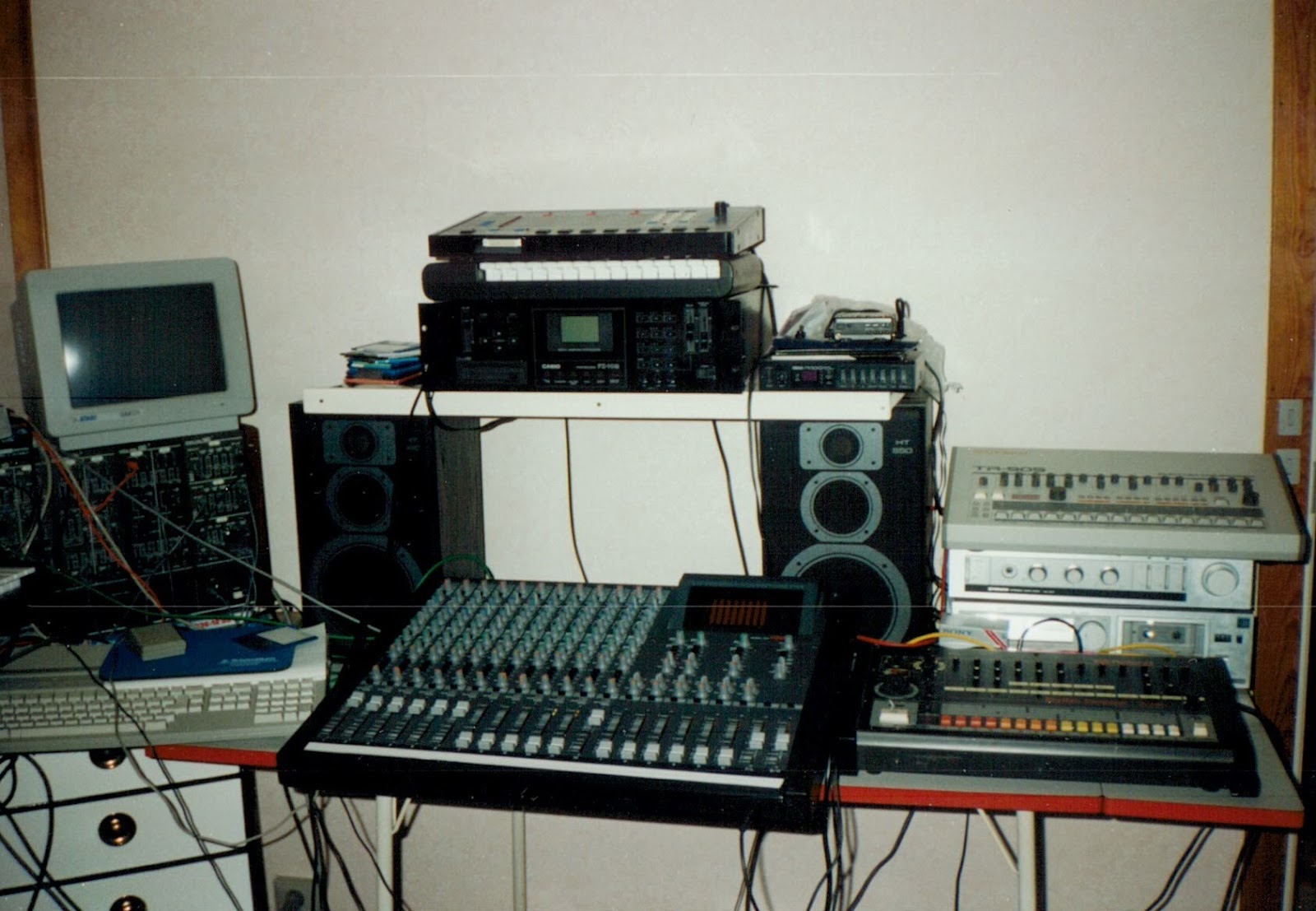
In the studio, there was no DAW, and there was no way to recall a mix. It was all about capturing the vibe in the moment. Especially if you don’t make any arrangements. I did not back then and I still don’t work in a linear way today. I always work in Live’s session view. The setup back then was simple. It was my Fostex 812 mixing desk, an Alesis QudraVerb, and a Yamaha R100 delay. The Roland R8 had a group of sounds going into one channel on the mixer. In this case, it was the 808 kick tuned down along with a clap and the ride. And this channel was super saturated so once I bought in the ride everything was crunchy and nice.
Were you achieving that saturation simply by overdriving the channels on your mixer?
Exactly. And I would overdrive signals into the delay unit just to give it a certain texture. I basically didn’t look so much, I just tweaked things by ear until I found an interesting sound. I remember Jesper Dahlbäck passing by one day and seeing everything on my mixer running in the red. He said, “you can’t work like this”, and I said, “but it sounds good.” “Yeah, but you shouldn’t do that,” he said. I didn’t care, I pushed everything into the red.
Brikha’s bedroom studio setup in 1995.
You mentioned building tension on the chord by opening and closing the filter. What other parameters did you tweak in real-time to keep the track interesting?
I’m very much into sweeping the mids on the EQ. I would manipulate them to create movement in the chord. I got the Fostex 812 mixer specifically because it has sweepable mids. I also filtered out the kick’s sub-frequencies for a while. I think it takes two or three minutes into the track before the sub of the kick actually drops. And it was on purpose that I kept it like that. It sounds good being mixed in, and then three minutes later it just goesboom. And in a club, it’s just crazy to see that actually happen. Back in the days when nothing was super well mastered or really loud, it really made an impact.
How many takes did you need to record before you were happy with the track?
I think I recorded two or three takes. But it’s the first one that I kept. No edits and no post-production. It’s just recorded straight onto DAT. I thought maybe I should give it another go to make it tighter. Because I could hear I wasn’t dropping the ride or tweaking the filters after specific bars or intervals. When you actually listen to the record and count things in, none of it makes sense. So I tried to re-record it. But nothing came close to the energy of that first take. It’s a giant fluke really that this thing even came to the point where I would waste ten minutes on a DAT to record it. But it’s the luckiest ten minutes I’ve wasted.
After the success of Groove La Chord, you also started to tour and perform the track live, right?
Yes. So basically, Transmat asked me to join them on an American tour and a European tour. I ended up buying an Akai MPC 2000 and put all of the drum sounds from the Roland R8 into it. The Ensoniq SQ80 came with me, and I just played it the same way as I played it at home. And from the MPC I eventually moved to Ableton Live, before it supported MIDI. So I recorded everything from my hardware. Thankfully “Groove La Chord” is arguably the most well-known track I’ve made, so most people recognize it when I play it out. After playing it for 25 years of course I try to do different versions of it. I slow it down, I do mashups of it. But to actually play it back the same way as the original is very hard. And I felt the same way recreating it recently with Live and Note. When I’m limiting myself to those same three channels it’s quite hard to make it sound interesting for more than two minutes. You have to keep creating small little changes to the sound, or at least I do, so I don’t get tired of just hearing the same chord over a beat.
When you’re playing live on stage what’s your setup?
For years now it’s been a strictly Ableton Live setup. I also have a Roland TR8, a Livid Code controller, and a Launch Pad. That’s pretty much it. Within Live, I don’t launch any kind of arrangement. Each song is one Scene in the Session View. Everything is separated: the kick drum, hi-hats, bassline, percussion, and chords. I’ll have two or three VST channels open for certain tracks. I don’t use recordings of the VST instruments. As much as I can, I try to perform in the same way the tracks were originally made.
I think half the people that see me perform don’t even realize that I play live vs DJing. And I still insist on having no pre-made arrangements or build-ups. There are no Scenes where I cheat or make life easier for myself. Sometimes I mess up—if the whiskey is too good. Sometimes the whiskey is so good that I play the best set ever.
How easy or difficult was it to recapture the sound of the hardware you used on the original “Groove La Chord” when remaking it with devices in Live?
It was in some ways difficult and in other ways actually quite easy. The 909 and 808 kits on the Roland R8 drum machine didn’t sound completely authentic. And I was gutted back in the ‘90s after I bought it. But I think somehow in the end it played in my favor. You could manipulate the drum sounds not only by detuning but also by dialing in the different nuances and character settings. I didn’t try to re-create that in Live. I just used the classic 808 and 909 kits that are included with the software. They sound more like real 909s and 808s than the R8 did.
The first thing I did in Live was basically the same thing I did when I created the original. I just played in the 808 kick and clap. There’s not much EQing. Most sound shaping is happening in the Saturator device. Of course, the Saturator is not going to sound the same way as my old Fostex mixer is going to sound. So instead, I just tried making it as good as I could with what I had, rather than trying to do a complete clone of the original. I pushed the Saturator’s drive to get those overtones and create a similar effect. I also decided to group the channels in Live to mimic the main outputs of the R8. Originally the kick drum came out of the main left and right outputs of the R8. Everything else came on another output and got the same distortion and saturation because it was gained on the Fostex mixer.
On the original, I also had a cheap Behringer compressor on the master. I barely knew what a compressor was or did then, but everybody had one. I’d heard that Daft Punk had them, all the top techno guys had them, and you needed them for that pumping sound. So, fine I thought. I bought one, and I put it on the master. A sound engineer would probably be laughing or telling me it was an insane setting, but I just tweaked it to the point where everything glued. In general, in a DAW I’m having a hard time getting things to glue. With the Behringer compressor on my master, I could just push everything to where it hit this sweet spot. That’s what gives this tension between the sounds.
When the 808 bass kicks in the 909 rides seem to duck in volume. Is there some kind of sidechaining process going on?
Nope, this is exactly what I was talking about with the whole gluing thing. And it’s purely because the ride is fighting for its space with the bass. Because it’s all going into one Group channel with saturation. This is what creates the ducking. There was nothing in the original or in this project that is being side-chained.
How did you recreate the infamous chord in Live?
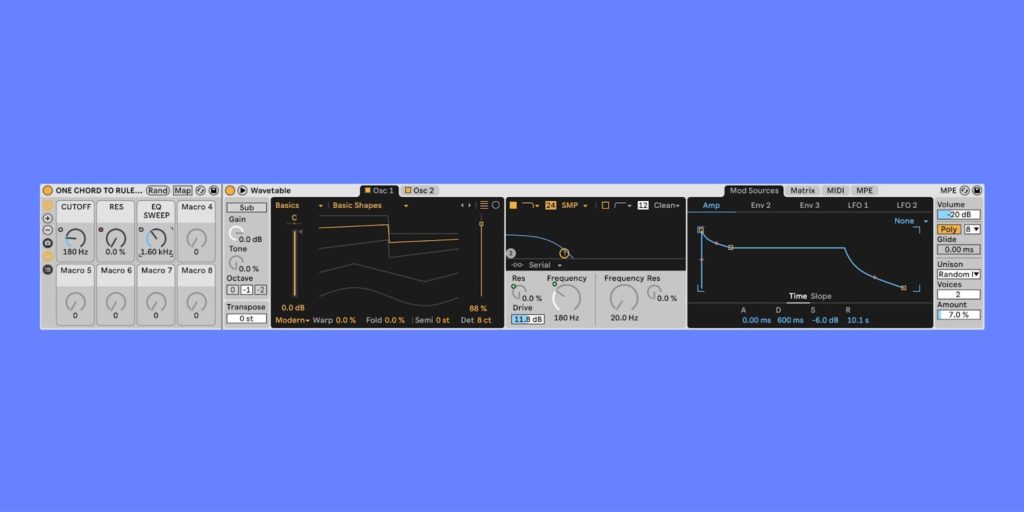
I used Live’s Wavetable synth to remake the chord. If you look at Wavetable, Oscillator 2 is detuned by seven semi-tones, which means it’s not just a minor chord, it’s something with a seventh. It’s exactly the same way that I did it in the Ensoniq SQ80. I had no music theory background then, it was just a case of experimenting. The SQ80 was not the easiest or most logical synth to learn, but it taught me the importance of knowing what your synth sounds like. I could tweak it in my sleep now. I know exactly where to go to achieve something.
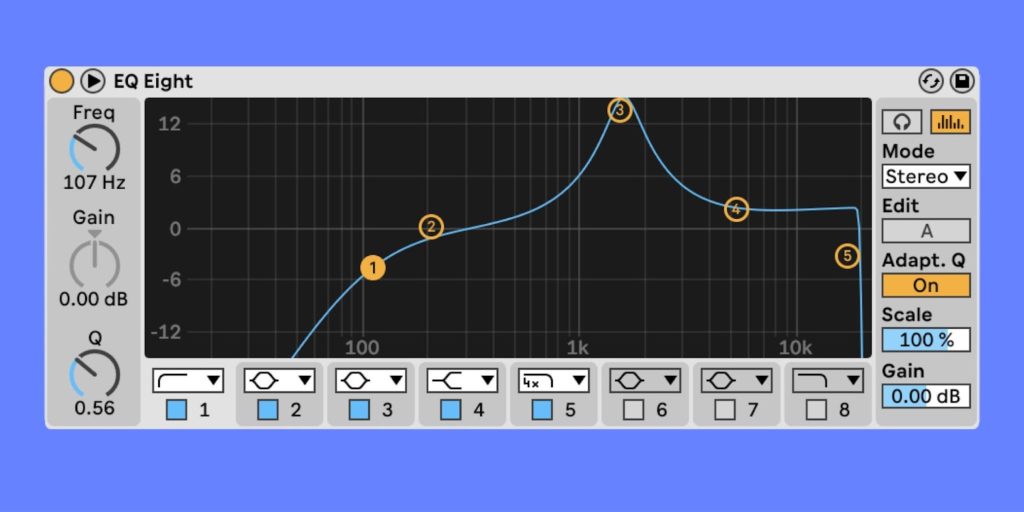
If you go into my Live Set and look at my chords, I’ve also set up EQ Eight so that I can sweep my mids. I usually crank up filter number three on the EQ Eight and map it to a Macro. Then I can just sweep the frequency and create these dub chords. It’s all in the sweepable mids.
To add movement to his chords, Brikha sweeps the mid-range using an EQ Eight filter assigned to a Macro.
Recently I also managed to re-record the chord pattern on SQ80. I’ve included it in the Live Set so that you can hear the difference.
In Live, the chord sounds like it’s routed to a filter envelope because the notes get shorter when the filter is closed. Can you walk us through what’s happening here?
The envelope and the filter play a key role in the shaping of this sound. Actually, I would still like to tweak the filter envelope and how it reacts; to try and get even closer to the original. I’m 85% happy with the way it turned out. When you only have two hands and you’re meant to play everything live, you don’t want to be changing lots of things. So I don’t play with the decay or release settings of the envelope in real time. I would literally only be opening the filter cut-off and adding resonance. To achieve that I need an envelope that makes the chord sound exactly the way I want it when cut off and fully closed. I couldn’t replicate this exactly in Live. But the beauty with Live is that I can limit the minimum value of the cut off frequency on a Macro. This helps a lot.
You can hear the movement on the envelope and how it rolls on the original when the filter opens. There’s also an after-release on the chord which affected the filter. And when you opened the filter you got a very sharp attack. So it’s all these little things that make the sound.
Brikha controls the sound of his chords using Wavetable’s filter envelope and Macro Controls.
Did you use a controller to record all your automation in Live?
Yes. In this case, it was an Alesis keyboard with eight pads, sliders, and knobs. In Live, I assigned the sliders to the volume on the three channels as if it were a mixing desk. So I could just fade up the beats.
What effect is the Auto Pan device having on your chord track?
The Auto Pan is there to recreate some of that movement, so your ears don’t get tired of hearing the same chord played over and over again. On the Ensoniq SQ8, I would put an LFO on the amp to create this kind of width and movement.
What effect is the Phaser device having on the Reverb return track?
I was trying to recreate the Alesis QuadraVerb effects from the original. If you listen to the original intro you can hear them clearly. It’s on both the bass and clap group and on the chord. This was to give it that movement once again. It was the QuadraVerb that gave the sounds a shifting slow modulation. I think originally it was a reverb, chorus, and some kind of phaser or flanger. To recreate this I used Live’s Phaser on the return track with the Acoustic Cascade preset.
Let’s look at the version of “Groove La Chord” you recreated in Note. How did you find the process of programming the beats with the app?
In Note, I set the metronome slightly slower because 133 BPM—which was the original speed—was a bit too fast for me to play the beats in with my iPhone. And again, where possible, I tried to replicate the process of making the original. That being said, I just punched in the bassline, the 808 kit, and clap, and built it up the same way.
Why have you added a delay to your 808 Kit FX in Note?
Because the delay also gives the kick drum that modulation and rhythmic groove. On the original, I would have used the Yamaha R100 delay. But in Note, this delay, in particular, was me just trying to use the app as it was intended—as a sketching tool to either achieve an idea that you have or, in this case, recreate a 25-year-old idea. It was just about finding a rhythm. I know how the original kick drum pattern is played. If you remove the dry/wet it has no groove. It’s about finding the balance between how much delay you add to create enough rhythm without taking away the substance and the punch.
What drew you to using the Mellow Tine Keys preset for your chord sound in Note?
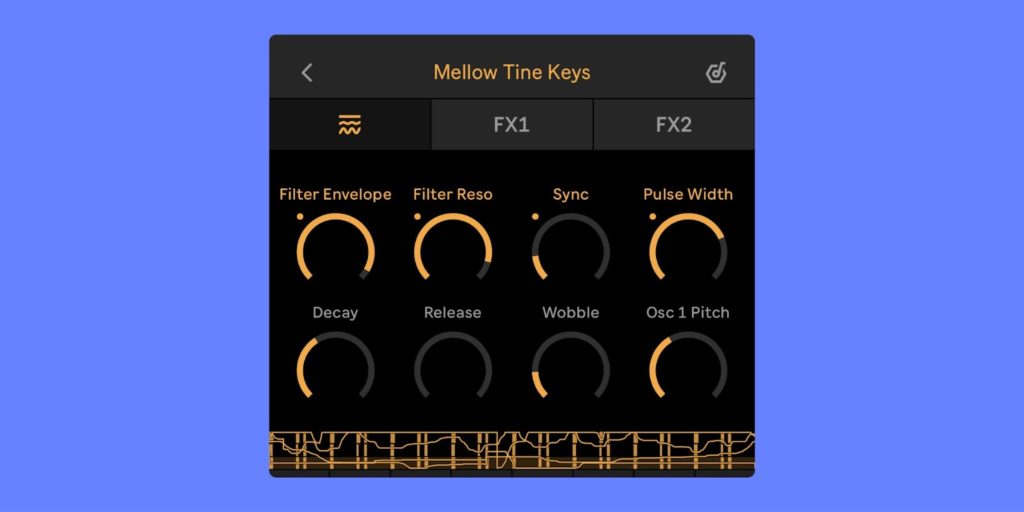
I wanted a synth preset that had either a five or a seven-semitone detuned oscillator. The filter envelope on the preset doesn’t have the same Macros that I would have used in Live, but by tweaking the decay and release settings I got a similar effect.
Brikha used the “Mellow Tine Keys” preset in Note to recreate his chord patterns.
How did you find using Note’s Flanger effect on your chord?
As before, I was trying to find the right balance between the speed of the Flanger’s modulation and the balance of dry/wet. In a mixing desk situation, I would have had my effects units on 100% wet, using sends, that was always the way. I guess I’m used to the old dub way of mixing.
In Note, you have different Scenes with slightly different Clips on your chord track. What’s happening there?
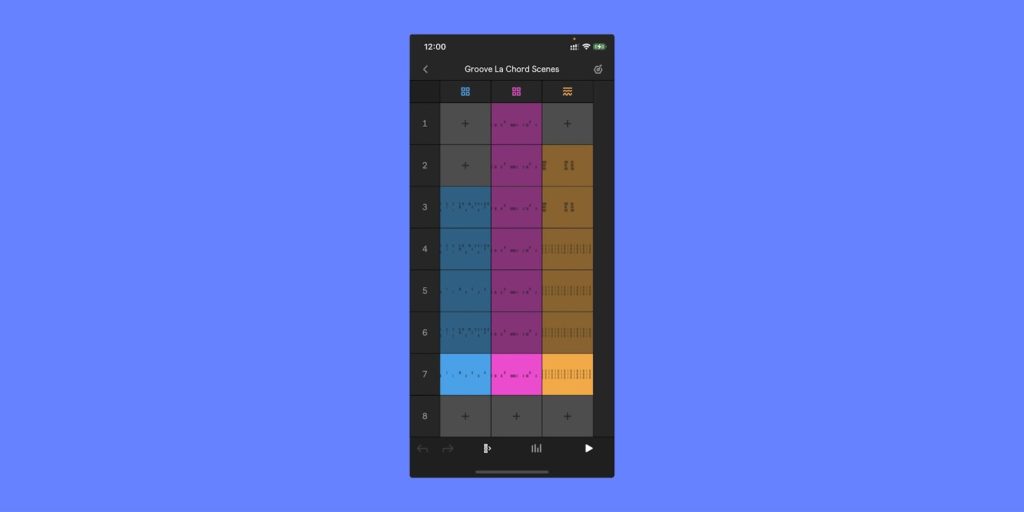
In the first Scene, the Clip doesn’t have any automation. But in the second Scene, I recorded automation where the chord opens up. I’m going to create another Scene later where the pulse width is going to move up and down slowly; as if I would be tweaking the sweepable mids. I will create more Scenes as if they were in Live’s Session View. Scene one will be the intro with just the kick. The 808 and the chords will get introduced in Scene two. In Scene three everything will play. Then, in the following Scenes, the filter will be opened and then closed.
Using Scenes in his Note set, Brikha recreates the arrangement of “Groove La Chord.”
Aril, thanks so much for sharing the amazing story of “Groove La Chord”. What’s on the horizon for you in 2023?
After opening a restaurant right before the pandemic and having recently left it, I’m just looking forward to getting back into my studio and making music again. I’ve not released anything since my last two albums Dance of a Trillion Starsand Prisma. They came out on Mulemusiq in 2020. But they were released into a pandemic void and lost in space.
I rarely make music these days. I personally have to be in a place where I do it without any pressure or intention. The older I get, one would assume that the knowledge and the years of practice would have made things easier. But I feel it’s just placed more barriers in the shape of “you can’t do this or you should do that.” So my aim in the future is to once again find the pleasure of just making noise for myself with no expectation of what the outcome might be. That’s basically what I did as a teenager when I had no clue what I was doing. That’s how I made “Groove La Chord,”, in my bedroom, on my headphones, just for me.
True to form, K E K K A N comprises 10 high-energy experimental club tracks. It comes off the back of several EPs earlier this year, including FINAL_, TYPE_, 22122, and TIER.
Slikback, real name Freddy M Njau, is based in Nairobi, Kenya. His 2018 debut EP, Lasakaneku,launched Nyege Nyege Tapes’ offshoot label, Hakuna Kulala, and he has become one of the label’s biggest success stories.
The EP, titled Do You Want Gold, features two originals from Lord Fascinator and three remixes, arriving from Simple Symmetry, Warbly Jets, and Out of Orbit label head, Alain de Saracho. Lord Fascinator delivers an energetic set on the originals, from the warped madchester grooves of the title track to the three-part tribal drum workout on the b-side (“The Search Continues”). On the remix front, Warbly Jets turn their hand to the title track, twisting it into an acid roller, while Simple Symmetry and Alain de Saracho provide reworks of “The Search Continues,” with the former offering an Underworld-esque techno stomper and the latter a groove-laced house interpretation.
In support of the EP’s release, the label has offered up a free download of Simple Symmetry’s remix of “The Search Continues,” available to XLR8R subscribers below.
With the EP release, Lord Fascinator has also shared the weird and wonderful music video for the EP’s title track, which you can watch in full via the player below.
Do You Want Gold can be purchased here, or streamed here.
XLR8R Subscribers can download“The Search Continues” (Simple Symmetry Remix) below.If you’re not an XLR8R subscriber, you can read more about it and subscribe here.
Grace Lee, who releases as GRACE Ø, has released the first single from her upcoming debut album.
Lee, a New York-bred interdisciplinary artist, spent her formative years in South Korea, raised by her mother’s family, an 11th generation of healers, alchemists, botanists, and sages dating back to Korea’s Goryeo period. She graduated from the renowned Professional Performing Arts School of New York City and The Juilliard School and took her first steps in music under the mentorship of Giovanni James, The Twilite Tone, and Illmind. In 2010, she formed Liaison Femme, a collective of female DJs, producers, and creatives.
Her work on GRACE, her debut album of “psychedelic hip-hop,” began in 2011 in collaboration with Illmind, and it was initially called God Save The Arts. It will be a five-volume series, inspired by sacred geometry, mysticism, shamanism, sufism, and the human potential movement. She describes it as “medicinal music,” in that its mission is to “harmonize and unify humanity.”
The debut single, “Céleste : Bhairavi Purple,” comes in two parts: the seven-minute original plus an extended 16-minute piece. Lee will release each volume of the album in par to its related season—winter, spring, summer, and autumn—according to the cosmic calendar system. The next single will come in Spring. To accompany the release, we chatted with Lee to learn more about it.
01. You’ve spent more than a decade working on your debut album. What’s the concept behind it?
This album was not a concept; it was a mission. It’s been a mission of mine since I was 13. Back then, I started to practice a very ancient method that runs in Tibetan tradition, which in the modern world is called lucid dreaming. It’s all about being open consciously to receive messages from the outer realm. When I was 13 I had three significant dreams and one of them was me being in a geodesic dome shaped like a sound chamber and I saw as far as my eye could go just people gathering together and we were all in reverence, singing together, and the dream stopped. At the time in my life I didn’t know how to translate that, but that was the moment I became more aware of my purpose: I was called to be a sound artist, or a sound healing artist. Then, when I was 16, I met two of my mentors, Giovanni James and The Twilite Tone. I told The Twilite Tone Tone that I had this clear vision that I need to create an album, to provide healing for other people who are suffering. Not just by their mental state but their energy. So, at the age of 20 I decided to officially begin my album, and at that time I was working closely with Illmind, who initiated the album with me. We called it God Save The Arts. The whole mission was to harmonize and unify humanity. For the album, I have been the executive / creative producer for 10 years but I have had visits from mentors.
02. When you say “harmonize and unify humanity,” how exactly can the album achieve this?
The album involves real tools that can transport your mental and emotional state. I have been experimenting for years with close peers of mine who have been experiencing “healing” when they hear specific parts of my songs, whether it be a sense of transcendence, a sense of safety, or a sense of feeling oneself on a deeper level. I have studied algorithm patterns of sound signals to test myself how the neurosis responds to negative pitch. Here we are, where this album not only stands to prove the science of sound, but the actual contents that can explain and recover our connection to sound on a cellular level. Our biology is able to alchemize cancer cells to healthy living cells, just by the ordinance of a specific pitch or tone. If an opera singer’s crescendo can break glass, if Tibetan monks’ mantras can awake someone from a coma, if chemotherapy can destroy cancer cells, let’s tap more into how sound is impacting our current modern world, and bring a better resolution!
03. Can you talk more specifically on the role lucid dreaming plays in your music?
I can hear melodies in my dream states, so I actually look forward to napping. In one day I will have five lucid naps and I’ll be given 10 to 12 melodies when I wake up. I had a recorder in my bed for like 10 years because these melodies would be given to me and I’d wake up and go to the piano and record. For 10 years I’ve been doing this same very intimate creative process. (This is also a remedy for me because I was born with synesthesia.)
04. Today you’re releasing “Céleste,” the album’s first single. What can you tell us about it?
It started as an improvisation in Austin, Texas. Then the following week I was invited to Sonic Ranch in Tornillo, Texas. It’s the world’s largest recording studio. The last artist that was there before the pandemic was Bon Iver, so the energy when I arrived was quite beautiful. I was invited before Summer Solstice and that’s where the beginning of the track came about. One day I was driving to El Paso, to where the studio is, and I was listening to QAWWALI and I heard this melody. I stopped the car and I went to the studio and I told my engineers that we were going to sample this record: Manqabat In Raga Bhairvi “Maulah Ali Maulah Ali by Nusrat Fateh Ali Khan.” They looked at me strangely and I told them to just let it roll. Exactly from 10pm to 11pm I was housing improvising vocals, in total one-ness.
05. How much more music do you have?
For 10 years I have been developing records and I have more than 50 now. Each record teaches me what it wants to become. I never create out of my will.
06. Can you tell me more about how the album is structure?
The entire album is exactly 12 records, or singles, running until December 12, 2023. 12 is a significant number of mine. Each volume will come out seasonally, based on the cosmic calendar. The next one is called “Rainbow Tape,” coming out in Spring.
On SPINE, Ryberg, a Danish producer, moves through techno, experimental ambient, and soundsystem-vibrating bass music. The album is the inaugural release on her own label, Arterial, and stands as a “thematically dense statement of intent.”
Ryberg released her first solo album, Entangled, on Shifted‘s Avian imprint, and it was praised for its sensitive approach to noise and abstracted techno. She followed it with WHYT 030 on AD 93.
Tracklisting
01. Unfolding 02. Spine 03. Sensuous sky 04. Mirrored Madness 05. We tumble on the edges 06. Phosphorus cycle 07. Desert bloom 08. Where do we go from here 09. Out of the Shadows 10. Levitating Fluid
SPINE LP is scheduled for February 7 release. Meanwhile, you can stream “Spine” in full below and pre-order here.
Very little is known about Dylan Henner, who appeared on the experimental-ambient scene in 2020, when he released his first full album, The Invention of the Human, on Nic Tasker’s AD 93 (f.k.a Whities).
What we do know is that the elusive English artist became obsessed with music at an early age and released his first record, A Reason for Living, in 2019. He connected to Tasker, who in 2019 was working at Bleep, around the time of his second release, Stormbird Brother in the Dusk, and proceeded to send him demos of The Invention of the Human. Luckily, Tasker liked them, and the album landed: a collection of gauzy, transient soundscapes built from synthesized vocals and field recordings.
Since then, Henner has released a love letter to a train journey through rural Pennsylvania, plus some cassette and digital records for Brighton, England-based Phantom Limb, Belgian label Dauw, and AD 93’s tape-only imprint, Syon. But more recently he’s released You Always Will Be, his second album, telling the story of a single life from birth to death. “I’ve been thinking about the passage of life a lot recently as I lost all four of my grandparents but celebrated the birth of my daughter all within a short period of time,” Henner told XLR8R. “The brevity and preciousness of being really hit me.”
Alongside the album, Henner has prepared an XLR8R podcast, filled with the music he listened to while making it but also that has inspired him across his whole career. Beyond the XLR8R favorites, Sarah Davachi, Roméo Poirer, and Ulla, you’ll hear music from Tom van der Geld, Venus Ex-Machina, The Isolation Choir, and more. Dial up for a pensive mix of cyclical melodies and hypnotic loops in celebration of a blissfully poignant record.
01. What have you been up to recently? Lately I’ve been really excited about my new album, You Always Will Be. Creating the project has been a really emotional experience, following the passing of my grandparents and arrival of my daughter. All I can ever do with life changes like these is to write about them in music. It’s the way my mind or soul makes sense of them. So I put them into this record. It was devastating, but it was real.
02. What have you been listening to? Joe Rainey, Lucrecia Dalt, Suicidal Tendencies, Rosalía, Sade, Ulla, Sarah Davachi, and Klaus Wiese.
03. Yes, you’ve just released a new album. What can you tell us about it? My new record is a single, 40-minute piece of music telling the story of a single life from birth to death. It’s not my life, it’s the life of an imaginary character. But the record is underpinned with audio from my family’s home videos, especially in the childhood movements of the piece. The song titles listed on Bandcamp refer to the various ages the piece portrays. It goes from infancy to childhood to adolescence to young adulthood to parenthood to middle age to old age to death. I got pretty deep with it, especially given that it came from such an emotionally annihilating period in my own life.
04. Where and when did you record this mix? I created this mix shortly before the release of the album. It’s on a similar theme: tying together the experiences of childhood with those of adulthood, experienced through different lenses. I was really inspired by the innocence and playfulness of Hermeto Pascoal, for example, and I loved offsetting that against the grittiness of the Benedetto Ghiglia track and the beauty of Qu Xixian’s. I made it in my studio, between my newborn daughter’s naptimes!
05. How did you go about choosing the tracks you included? There’s a mix of music chosen instinctively for the mix itself and music that has lived with me for the duration of creating my new album. But I won’t say which is which.
06. What can the listener expect? Music in search of meaning. That’s all we want, isn’t it? To understand what we’re supposed to be doing. I don’t have any answers, but I think it’s important to ask the question.
07. What’s next on your horizon? As always, writing more music. And performing more. And remixing some friends. And trying out collaborations with other artists. And pursuing my dream of writing music to film. Lots!
XLR8R Subscribers can download the podcast below.If you’re not an XLR8R subscriber, you can read more about it and subscribe here.
Tracklisting:
01. Etnia “Eew’ran” (Self-Released) 02. Tokio Ono “Niko” (Not Not Fun) 03. Omeed Norouzi “Shell of Light” (Self-Released) 04. More Eaze “Low Resolution at Santikos” (Leaving Records) 05. Sarah Davachi “First Cadence” (Late Music) 06. Tom van der Geld “Small Mountain” (edit) (Black Sweat) 07. Benedetto Ghiglia “El Suplicio” (CAM Records) 08. Hermeto Pascoal “Música da Lagoa” (Self-Released) 09. The Isolation Choir “Wild Mountain Thyme” (Self-Released) 10. Venus Ex-Machina “The Abyss” (AD 93) 11. Nadeen “Summer Day” (Seydenfaden) 12. Unknown “Unknown” (Unknown) 13. Qu Xixian, China Central Philharmonic Orchestra & Choir “Wait For You Til The Break of Day” (China Record Corporation) 14. Dylan Henner “Today I Taught Them How To Skip Stones Across the Lake” (AD93) 15. Ulla “Foam Angel” (3XL) 16. Ibukun Sunday “Purport” (Phantom Limb) 17. Roméo Poirer “Muscle de Sable” (Fatische) 18. Raymond Scott “Little Miss Echo” (Basta)
Jonnine Standish (a.k.a Jonnine), the vocalist from HTRK, will release a new solo album called Maritz.
Maritz takes its title from Jonnine’s mother’s maiden name, “the most haunted word I know,” she says.
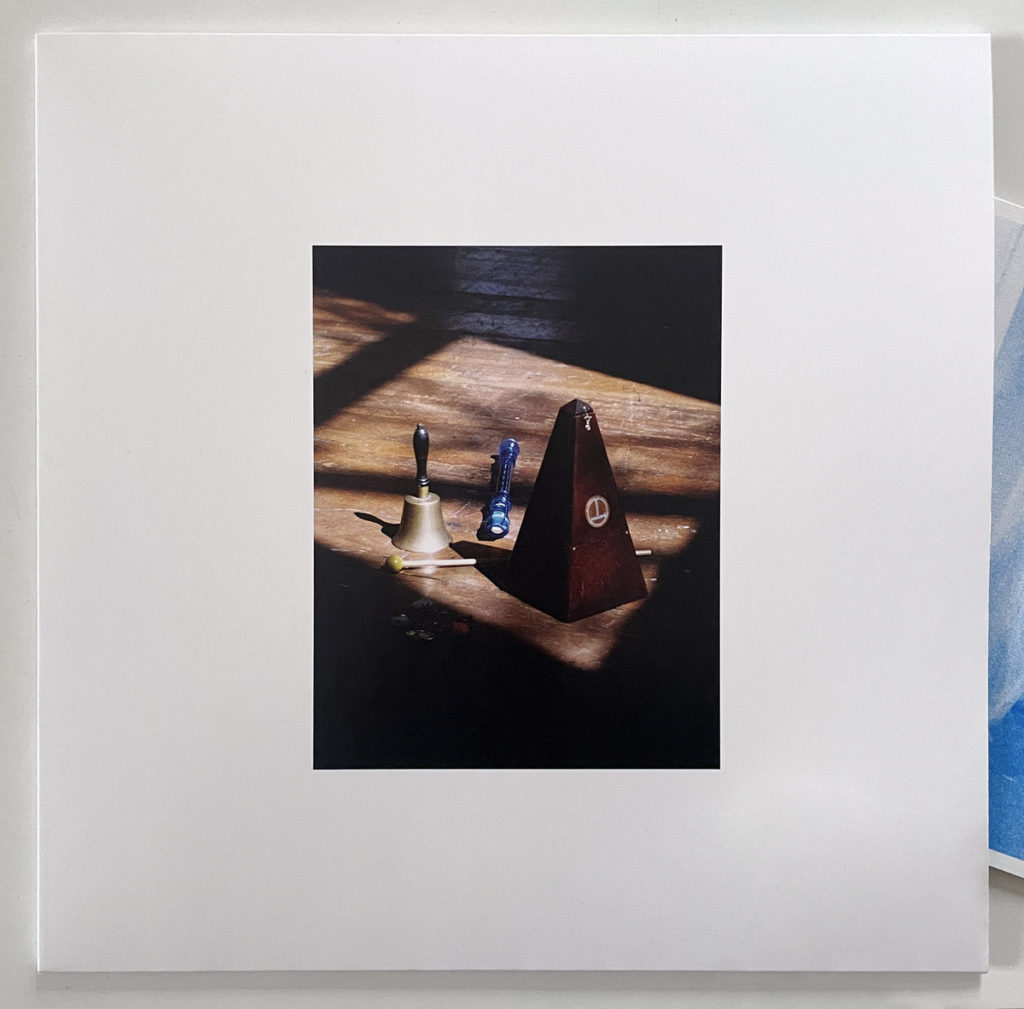
The collection’s eight tracks deploy an eclectic array of scavenged instruments: bass guitar, a broken Swiss metronome, oddly tuned strings, recorder, Halloween charm bracelets and a homemade glockenspiel found at an abandoned high school in the hills.
Sonically, we’re told that the release “captures a versatile artist at a widening crossroads.”
It’s scheduled to come out via DJ Sundae’s Idle Press imprint.
Tracklisting
01. I Put a Little Thing In Your Pocket 02. Tea for Two (Boo) 03. Portrait 04. Can I Trust the Flowers 05. There’s Nothing There 06. Three Spider Bites 07. Blissfully Unaware (Of You) 08. Maritz
Maritz LP is scheduled for February 16 release. Meanwhile, you can stream “I Put a Little Thing In Your Pocket” and “Three Spider Bites” in full via the player below.