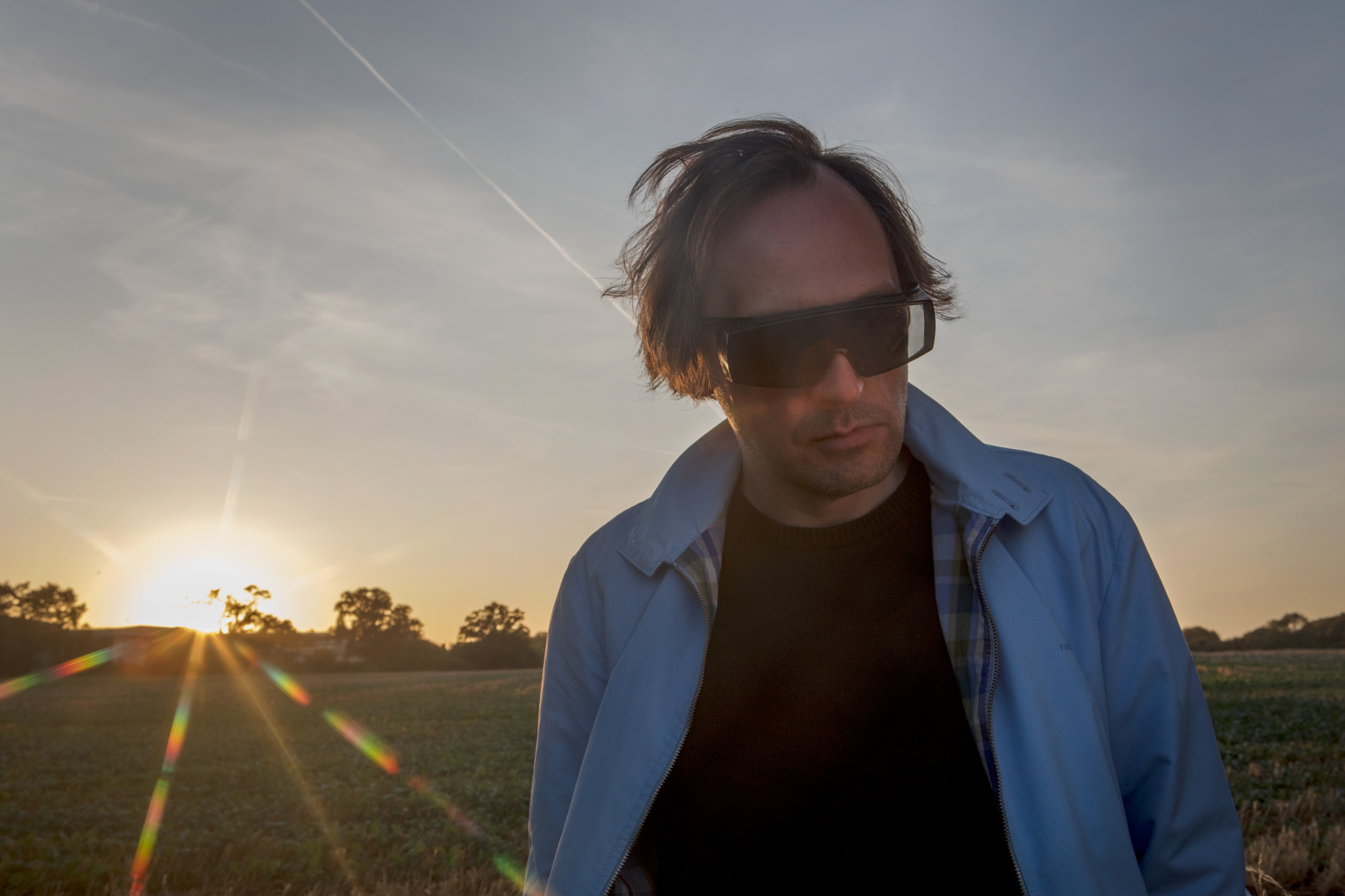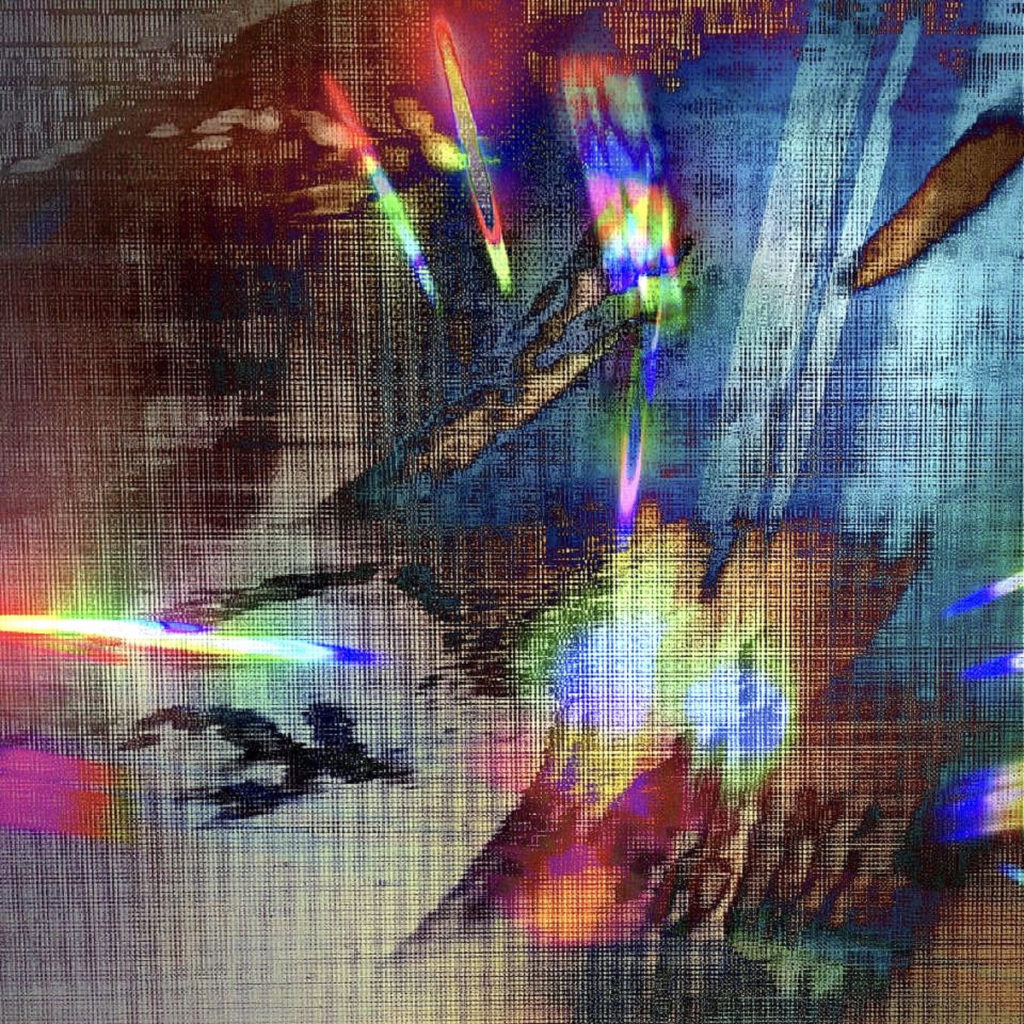


Lamental follows Squarepusher’s first album in five years, Be Up A Hello, released on Warp in January. It reveals a contemplative side to the music the UK artist, real name Tom Jenkinson, has been making over the last few years.
Jenkinson composed “MIDI Sans Frontières,” track three, in response to the EU referendum in 2016, and made the stems available to all, encouraging remixers to participate as a form of “internationalist collaboration with sound makers, irrespective of what kind of music they make, where they live, their background or their age.” Also included on the EP is Jenkinson’s own “Avec Batterie” deep breakbeat rework of the track.
The squelchy synth techno of “The Paris Track” is an accelerated interpretation of “Detroit People Mover,” which is taken from Be Up A Hello.
Squarepusher will embark on a world tour, taking him to Japan, Canada, the United States, and Europe, ending back in England in August. His May 15 show at London’s The Roundhouse will feature Paranoid London, Scalping, and Ray Keith.
Read more about Squarepusher in our XLR8R feature here.
Tracklisting
A1. The Paris Track A2. Detroit People Mover B1. MIDI Sans Frontières (Avec Batterie) B2. MIDI Sans Frontières
Digital:
01. The Paris Track 02. Detroit People Mover 03. Les Mains Dansent (Digital only) 04. Midi Sans Frontieres (Avec Batterie) 05. Midi Sans Frontieres
Lamental EP is out on April 10 via Warp. Pre-order is available here, with “Midi Sans Frontieres (Avec Batterie)” streaming below.
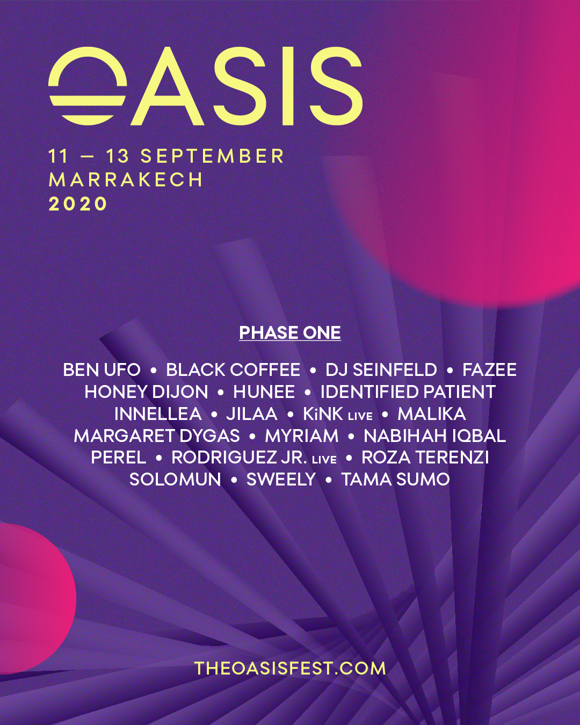
Oasis has revealed the first wave of acts to play the Marrakech festival’s sixth edition in September.
Since its inception, Oasis has established itself as North Africa’s premier electronic music festival. The annual event’s lineups have always blended international headliners with rising names from Africa, including Moroccan talents like Fazee, Jilaa, Malika, and Myriam. In doing so, the festival has been a catalyst for the local scene, exposing international audiences to African artists, labels, and collectives.
Included in the first round of names are Black Coffee, DJ Seinfeld, Identified Patient, Tama Sumo, Nabihah Iqbal, Roza Terenzi, and Margaret Dygas. Among the local artists are Jilaa, founder of the Raw Origins label; Fazee, whose genre-bending sets have earned her slots at Concrete and Rex Club in Paris; and Malika, who made her MUTEK debut in 2018.
Oasis takes place a short drive from Marrakech, perched beneath the Atlas mountains. Away from the music, attendees can get lost amidst the date palms, villas, and cactus gardens of the festival grounds while enjoying on-site swimming pools and yoga sessions. You can also enjoy ancient local traditions such as tea ceremonies and hookah, as well experiencing the local cuisine served by handpicked local vendors.
This year’s edition takes place from September 11 to 13. Meanwhile, you can read more about the event here, where you can also buy ticket packages. The full list of first names is below, and more will be announced soon.
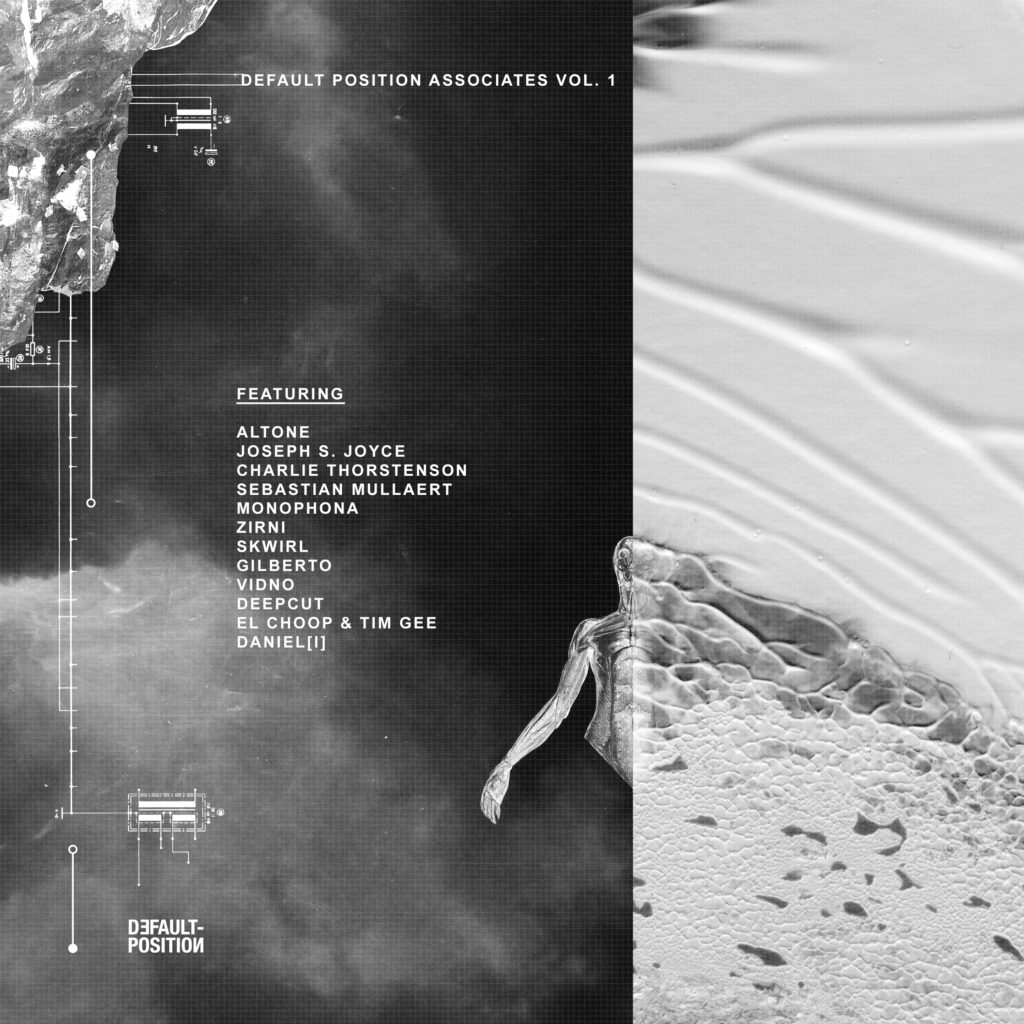
Default Position will release its first various artist compilation later this month.
Default Position, launched in London in 2013, has released the work of a “beautiful collective of artists,” including Sebastian Mullaert, Terry Francis, and El Choop, and the Default Position Associates Vol. 1 compilation aims to bring them together under one release. Mullaert and El Choop both feature, as do a number of lesser-known names who fit in with the label’s deep electronic sounds.
One such name is Gilberto, an emerging artist from Johannesburg, South Africa, who makes his first ever release with “Importance.” In support of the compilation, we’re streaming the track in full below.
Across the compilation, you will hear a broad cross-section of emotive dance music, from classic dub techno, through to deep house and downbeat electronica, crafted by some of the label’s closest.
Tracklisting
01. Altone “Floating Fog” 02. Joseph S Joyce “Tokyo Walking”EL 03. Charlie Thorstenson “February” 04. Sebastian Mullaert “Samunnati” (Wa Wu We Dub) 05. Monophona “Shades of Grey” (Chook Rework) 06. Zirni “Ode” 07. Skwirl “Ossa” 08. Gilberto “Importance” 09. Vidno “Launch” 10. Deepcut “Absence” 11. El Choop & Tim Gee “Mitchell’s Fold” 12. Daniel[i] “Lutkeni”
Default Position Associates Vol 1. is out digitally on March 20. You can read more about it here, where pre-order is also available.
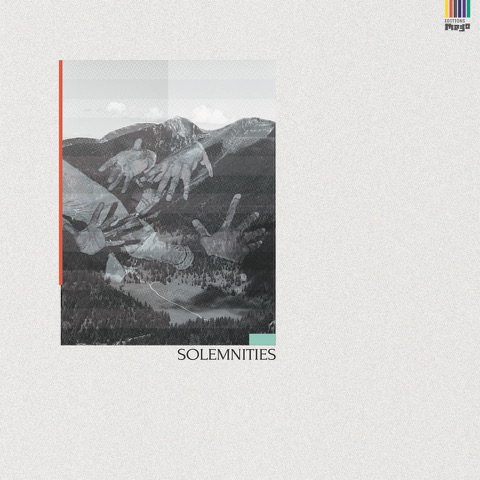
Solemnities, Shakespeare’s second album for the Austrian label, comes a year afterDomestic Economy. It’s more gritty than his previous outings as he grasps a more raucous industrial edge to his electronic pop leanings.
“Covering a wide range of emotional states, from anger to euphoria, this is a wild complex dip into one man’s world perfectly crafted into an external release,” the label explains.
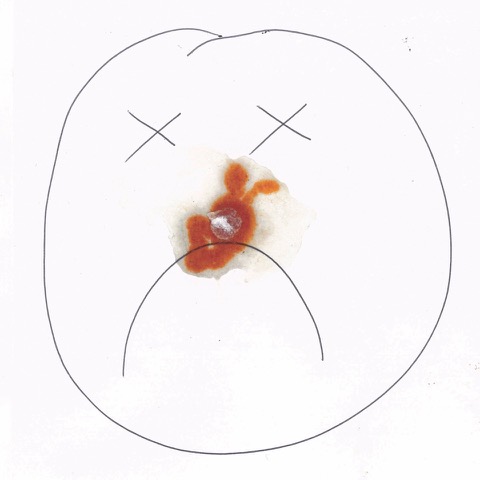
Ewa Justka is a Polish-born noise artist and self-taught instrument builder. Upside Down Smile is her third album and her first on Editions Mego. She made it “in the depth” of thoughts of “imitation in synthesiser design and filters and VCOS and formants and acid and hardcore music and twin-T filters and operations amplifiers” while at the Edinburgh College of Art, where she’s studying for a pHD.
Solemnities and Upside Down Smile are following Jasmine Guffond and Electric Indigo albums due out via Editions Mego on March 6 and March 13 respectively. They will both land on vinyl and digitally on April 24. You can preorder here and here, and stream the album openers below.
Tracklisting, Solemnities LP
A1 / 1. Occupation A2 / 2. Fortune A3 / 3. The Information A4 / 4. Second Try B1 / 5. Crisis B2 / 6. Fantasy B3 / 7. She Says Nothing Ends
Tracklisting, Upside Down Smile
A1 / 01. Mindless Cycles A2 / 02. Problems With Limits A3 / 03. Scralatti’s Saw A4 / 04. Something Alive But Unevolvable B1 / 05. Hello? Stella? Artois..? Artaud? B2 / 06. The House Covered In Grape Leaves B3 / 07. We Tend To Underestimate The Forces That Distort Our Imagination 08. Eeny, Meeny, Miny, Moe (digital & download card only) 09. As Simple As This (digital & download card only) 10. Slippery Slide (digital & download card only)
Burnt Friedman will release a new EP with João Pais Filipe, titled Eurydike. The EP comes with two unreleased jams from Friedman and Jaki Liebezeit, otherwise known as Secret Rhythms.
João Pais Filipe, born 1980, is a drummer and percussionist from Porto, Portugal. Across two tracks, he works with Friedman to “hypnotize” the listener by activating cosmic mechanics,” developing immersive, archaic next level dance music deeply rooted in natural laws of motion.” The two refer to it as “automatic music,” yet their focus is on playing and exploring rare rhythmic modes. In Friedman’s terms: “We organize pressure mediation according to mother nature.”
On the B-side are two new Secret Rhythms, tracks from Friedman and the late Jaki Liebezeit, and a Nonplace trademark. Liebezeit numbers among the world’s foremost drummers. Between 1968 and 1978, playing as a founding member of the legendary Can, he produced rhythms to be heard nowhere else. By the early 1990s, he felt he had exhausted the possibilities of conventional drums and so he began to re-define what drumming was about. These two Friedman and Liebezeit studio tracks were recorded in 2016 and were played lived frequently.
Tracklisting:
A1. Burnt Friedman & João Pais “Out Of Ape” A2 Burnt Friedman & João Pais “Fibres Of P” B1. Jaki Liebezeit & Burnt Friedman “Eurydike” B2 Jaki Liebezeit & Burnt Friedman “Star Wars”
Eurydike EP is out on March 27 on vinyl and digitally via Nonplace. You can read more about the release here, where you can also hear clips of the music. Pre-order is available now.
Experimental Housewife will release her new album on Wednesday, titled D i g i t a l B e a c h.
D i g i t a l B e a c h is Evelyn Marie Malinowski’s fourth album as Experimental Housewife album and follows Place Writer on Jacktone. It’s the San Francisco artist’s first outing on True Indigo, a little-known San Francisco collective.
“They transformed these techno-leaning experimentations into unique undulating art and facilitated a conversation between me and my grief process,” Malinowski explains.
The grief that Malinowski refers to results from her friend’s passing in 2016 after the two had spent “a sunny day blasted by winds at Ocean Beach,” she recalls. “My friend and I strolled in the dirty sand wondering what the future would bring. Little did we know that she’d be gone in two weeks.” The album is a “representation” of Malinowski’s “desire to relive that day so that I may spend time with her again and save her from harm.”
“Distorted, decayed, and dismayed experimental dance music is the best description of Experimental Housewife’s first full-length since 2016,” the label continues. “The music takes audible breaths as it tells the story of a wish to turn back time, to return to an acute moment that at first seemed insignificant but later became eminent and painfully finite.”
Malinowski also has a track coming out on a 12″ compilation organized by Chicago’s Acid Daddy. You can check out the first volume here.
To learn more about Experimental Housewife, check out her XLR8R podcast here.
Tracklisting
01. D i r e c t O c e a n 02. E u r e k a 03. S c r i m s a v e r 04. W a s h 05. A q u a m a r i n e 06. U p d a t e R i p C u r r e n t 07. W e S h o u l d ‘ v e S a i d G o o d b y e 08. A s k T h e C y p r e s s W h y (f e a t. J o s e y R o s e)
D i g i t a l B e a c h LP is out on cassette tape and digitally on March 4. Meanwhile, you can stream previews below and pre-order the album here.
Hypnotherapy, an eight-track album, spans dub techno and hazy ambient and traverses through different moods. It follows It Never Ends, Nthing’s debut album in 2017, but the elusive dutch DJ-producer has also put out material on his own label, Transatlantic, plus the likes of Delsin and Mörk. His latest release came in 2019 with Shine. There’s nothing else disclosed about the music itself but there are clips below.
The album is Lobster Theremin’s 66th release.
Tracklisting
A1. 50 Flower A2. I Just Am B1. Heitt B2. Beautiful Love C1. Wave Return C2. Spirit of Ecstasy D1. Hypnotherapy D2. With You Digi only: And Then There Was Light
Hypnotherapy LP drops on April 24 on vinyl and digitally via Lobster Theremin, with pre-order here.
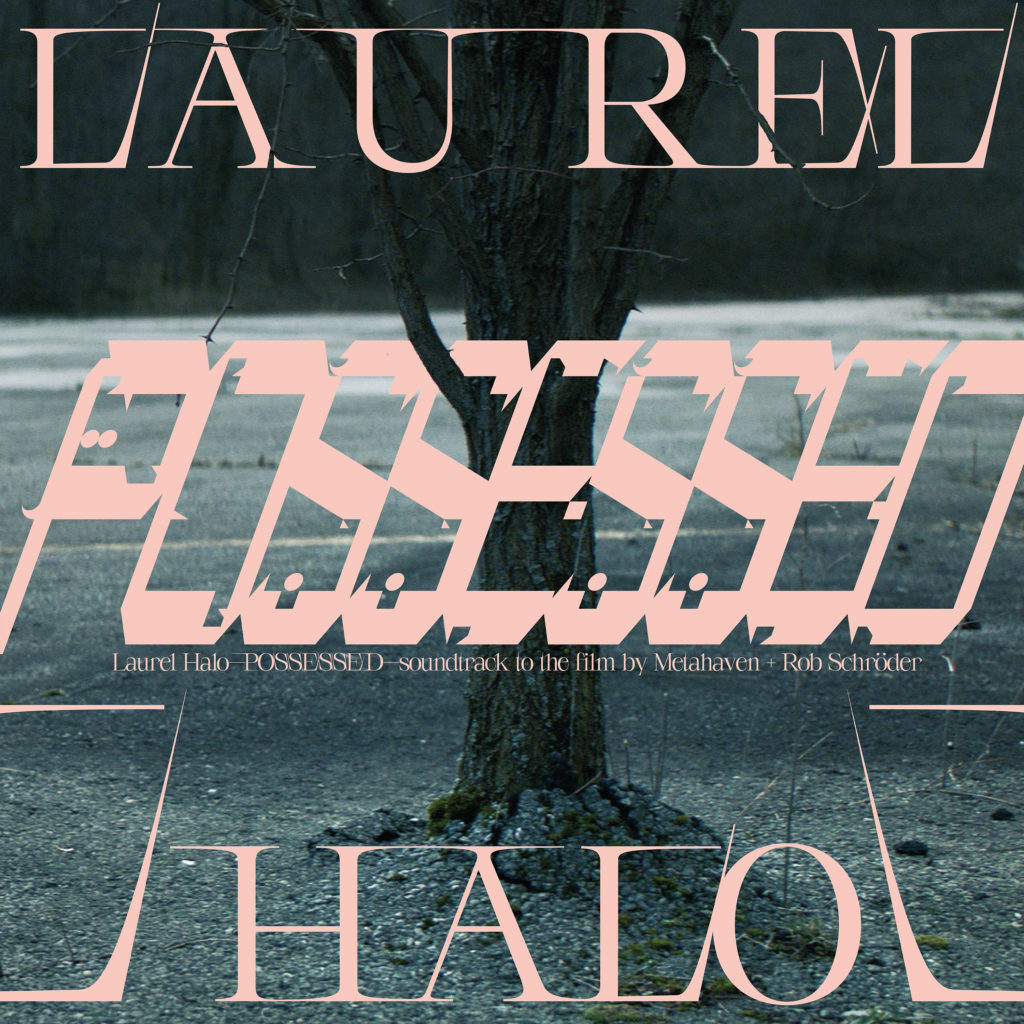
“Possessed,” released in 2018 and the work of artist collective Metahaven and Rob Schröder, produced by Dutch Mountain Film, was nominated for the IFFR Tiger award and the CPH:Dox New Vision Award. It was Halo’s first foray into writing music for screen, and London label The Vinyl Factory will now release it as a 13-track album. Note that the digital version has only 12 tracks, leaving off the reprise of “Last Seen.”
The soundtrack traverses both the synthetic and acoustic, providing a rich variety of sounds, from aqueous, subterranean drones, to plaintive folk pieces for violin and cello, and uncanny pseudoclassical piano mutations. Violinist Galya Bisengalieva and cellist Oliver Coates also contribute, and renowned engineer Paul Corley lends additional production.
Halo has released on labels including Hyperdub, Honest Jon’s, Latency, and Livity Sound.
Tracklisting
A1. Hyphae A2. Rome Theme I A3. Breath A4. Lead A5. Marbles A6. Rome Theme II A7. Zeljava B1. Last Seen B2. Rome Theme III B3. Cave Walk B4. Stabat Mater (Excerpt) B5. Masks B6. Last Seen (Reprise)
Possessed LP is out on April 10 on vinyl and digitally through The Vinyl Factory. Meanwhile, you can pre-order here and stream “Hyphae” below.
Vaagner will launch A Sunken Mall, a vinyl series featuring new releases presented with bespoke, handmade covers. The first release will come from Brooklyn’s Jeremiah M. Carter, titled Rejoice!, next month.
To celebrate the occasion, Vaagner has teamed up with Opal Tapes on a limited edition cassette edition of the release. Additionally, PTP affiliate Dis Fig and New Mexico native Angelo Harmsworth have revisited Carter’s previous outing, Their Arms Surround Me Like Chains Made of Velvet, out on sub-label VAKNAR, and prepared two remixes that Vaagner will release as a companion to the album.
Rejoice! is the debut vinyl release of Carter, whose works are often defined by a pastiche of neo-ambient and classical influences.
Vaagner is the Berlin-based outlet focused on reissuing rare cassette-based music from around the globe. Launched in 2018, it has put out music from Acronym, Korridor, and Ekin Fil among others.
Tracklisting, Rejoice!
A1. Rejoice! A2. A Pale Cloth That Covers the Eyes A3. Like a Command (the Life of the Imperative) A4. Like a Waltz B1. Perfectly Red Ochre B2. Over Your Cities Grass Will Grow Abandonment Veil B3. A Few Freed Memories That Lay Bare (feat. Kelby Clark) B4. Five Vases That Mark the Breasts B5. Silence Belongs to Us
Tracklisting [Companion Release]
A1. One Another’s Geography (Dis Fig’s Terminal D Remix) B1. A Lover’s Discourse (Angelo Harmsworth Revision)
Rejoice! LP is out on March 13 on vinyl and cassette tape. Meanwhile, you can stream “A Pale Cloth That Covers the Eyes” below.
On first sight, John Tejada and Reggie Watts, together known as Wajatta (pronounced wa-HA-ta) feel like an unlikely pairing. The former, a regular on XLR8R, is a techno producer found at the vanguard of the West Coast scene since 1994, while the latter positions himself closer to the mainstream with his current work as the bandleader for CBS’ The Late Late Show With James Corden. Uniting them is a shared love of ’90s house, and upon this they’ve prepared two albums, the latest coming via Brainfeeder on Friday, titled Don’t Let Get You Down.
Wajatta came together in an underground warehouse party in 2016, where Tejada was playing a late-night DJ set and Watts, a long-time fan, came to watch. From there, a friendship blossomed, formed over strong coffee and a common interest in ‘80s sci-fi films and old-school hip-hop. Eventually, they made a decision to enter into the studio together, and Wajatta, a mash-up of the artists’ last names, was born.
Broadly speaking, the project blends Tejada’s propulsive techno productions with Watts’ vocals, fully improvised and blissfully soulful, to create spontaneous musical inventions that are funky, hypnotic, and often hilarious. The duo build tracks from scratch, bouncing ideas off one another from initial spark to finished product, and it’s all done face-to-face. They also try to keep their sessions as spontaneous as possible, in a never-ending quest to “capture the freshness,” Watts explains.
The result, Don’t Let Get You Down, is a feel-good album that brings the fun back to electronic music, crackling with the energy of fresh ideas captured at the moment of inspiration. To learn more about it, we dialed in Tejada and Watts one afternoon from Los Angeles, California.
01. What have you been up to recently?
We’re both busy with our solo live sets. Reggie is working on several yet-to-be-announced projects, including his Late Late Show with James Corden, and John is preparing a new single. We both have our own individual tour dates as well. We actually have to try to not get in the studio together because we’ll end up making tonnes of content and it’ll just end up sitting around, so we’re going to save our energy and get back to it later, in not too long a time, hopefully.
We’re also doing a remix of Pépé Bradock’s new project on Circus Company, called Brigitte Barbu “Couvre chef en peau de taupe” (Wajatta remix). We won’t do many remixes, there’s a long story as to why, so we’re going to save them for people who are like heroes to us, like Pépé Bradock! So we’ll normally just do remixes separately. Reggie has also started remixing indie bands. Then the album is out on February 28—tomorrow!
02. Where did you both meet?
JT: We met about three years ago, maybe a bit longer than that. Reggie came to one of my underground warehouse parties in Los Angeles, thinking I lived in Europe, as many people do. We have a lot of mutual friends, and once in a while I’d hear a little glimmer that Reggie wanted to get in contact but there’s a lot of people out there, and it just never happened. When I saw him at the party, I went up to him. He was there quite early as well, and he wanted to keep in touch. We didn’t initially plan to do music; often people will collaborate just to elevate themselves and I didn’t want to come out of the gate with that, so we didn’t actually work on anything for a while. Eventually it got to a point where it was silly not to do much together! Doing music together is kind of how I hang out with my friends, as a lot of musicians do, so there are many people I make music with because that’s how we hang out.
03. Describe Don’t Let Get You Down in no more than two sentences?
It’s a positive affirmation of a hopeful state that exists independent of time.
“When we play live, it’s like Reggie is doing an imitation of what our songs are, which makes it interesting. It’s funny because Brainfeeder asked for a lyric sheet for Apple Music and we were laughing because Reggie’s style of performance is playing with phonemes and words.”
— John Tejada
04. How does Don’t Let Get You Down compare to your first album, Casual High Technology?
It’s a bit darker and more varied. There’s also a bit of a melancholic tone throughout. As we’ve put in more time in the studio, we’ve learned more about the process, and so this time we were both involved in the songs from start to finish. The initial idea for the project was to gather content and then John would work on editing and then Reggie would add something, but now it feels a little bit more like a duo, where we’re starting things together and even finishing things together, which wasn’t one of Reggie’s favorite things to do! Because of this, there’s a little less random in it, and some of the songs have perhaps a deeper soul, even if it still has a positive feel. Tracks like “Realise” and “Don’t Let Get You Down” have a more melancholic vibe, but with a little hope sprinkled in. The title track was made on a rainy Los Angeles Sunday evening, trying to keep a broken oscillator in tune, a whistle, and a few beats, and there we were!
05. Where did you record the album?
JT: At my place, where I have an extra bedroom setup and I’ve collected some fun synths. We use a not-very-fancy microphone. Reggie holds it, even if he’s not supposed to! He sits on a beanbag and off we go. There’s nothing fancy when it comes to the tunes. Everything he does is improvisational. It is just the way he is, and how he works. Even he has trouble remembering what he’s said!
06. How does this improvisation translate to the live performance?
JT. It’s not really possible. Anything you’ve seen Reggie do is improvisational. When we play live, it’s like he’s doing an imitation of what our songs are, which makes it interesting. It’s funny because Brainfeeder asked for a lyric sheet for Apple Music and we were laughing because Reggie’s style of performance is playing with phonemes and words. It’s a style influenced by early Liz Frazier, who in the beginning kind of made up her own language, and that frees him because he can express himself without forcing meaning into something. He plays around with this language, like an alien imitating language, and even with that there’s emotion in it. I’ve even caught myself finding meaning in sections where there isn’t really anything there! It’s abstract in that way.
So yeh, I do what I do when I do my live set. I have these machines, and I loosely improvise the structure, because when playing live, I don’t want things to sound finished. He wants to be able to improvise so it’s like he’s doing an imitation of what we did before, and at this point in our evolution, now it’s really starting to click in. Even though he can go different ways with it and so can I, there are these moments where we know we’re going to change it to go into this bit or we’re going to go into a more chorus-y bit, or he’s going to dance around and I am going to tweak some synths. Our unspoken timing is really clicking in, which I think will be a cool thing for when we make the next batch of tunes.
07. From the outside, you seem like two different characters—one extrovert and one introvert. How does this work as a collaboration?
We’re actually quite similar. Reggie has a dimension of a performance persona but when it’s just the two of us in a room, we’re both pretty similar; we both have a similar attitude towards music and approaches, and we actually have quite similar influences. I think this is why we’ve developed such a strong connection; one thing Reggie has been saying from the beginning is that making music is not supposed to be painful, and that’s something we both agree on. We had a general idea of what we would do together before we even started, so it just comes naturally to us, whether it’s in the studio or on stage.
08. What are the musical touch-points for the Wajatta project?
JW & RW: We come from different influences but we do have some which are the same. We’re both aware of the other’s influences even if we didn’t grow up with them. John came up with everything ‘80s New York, where there was like club music and hip-hop, and also Chicago and Detroit, and the UK swirled this around to make the most interesting music in the late ‘80s and early ‘90s, and so he was influenced by that. For Reggie, he caught a bit of that but he didn’t have a hip-hop moment like John did.
JT: What I liked about these styles was their misuse of technology. They figured out new genres by limitations of gear that wasn’t made for that purpose, and that’s what was magical for that area. Now, everything is geared for a purpose and so it’s tough to invent something new.
RW: I spent a lot of time in Seattle, so the whole Soundgarden and that sort of thing is an influence. Vocalists like Chris Cornell are really great. I’m also into the Nitzer Ebb type of electronic music, that’s a little chunkier, but I’m not so well-versed in the Chicago and Detroit stuff. Depeche Mode is a thing, too.
JT: All this stuff is definitely related, and it fits together. There’s an unwritten rule that we just let the other do what they do. In the beginning, it was going to be as simple as me sending him a clock, because he has some gear, and so he could just do what his solo performance is and I could do what my solo performance is, and we could clock them together and it would sound the way we sound. Nothing is ever forced, and some of the tracks flow into different genres, but somehow it is all connected. That’s important.
09. How important is having fun in making good music?
Very! We don’t think there’s much point otherwise. If something takes too long or isn’t inspiring, we quickly move on to something that might inspire us.
10. What was the last film that impressed you and why?
We kind of just keep returning to the classics, just as we do with music. There’s a lot of new stuff, but we don’t know if it’s overproduced, or people don’t get to make the films they want to, so we always go back to older films and records. From last year, there are the obvious things, but there’s one tiny indie called “Fast Color” that was really cool for what they’ve done with the budget. They gave a different twist to a superhero story, and made it about a different family.
11. What’s the secret to a successful collaboration?
RW: Listening to and seeing the vision collectively.
JT: I find it quite important to collaborate in person. There are so many magical moments that happen while one of us is on their way to figuring out the next step. Something might be happening and the other person might say “Hey, what was that?” Those are sometimes the magic moments that make the core of the new idea. Those ideas just don’t happen working remotely.
12. If you could invite anyone in the world to dinner, who would it be?
RW: Very close friends.
JT: Yeh, it’s a tough one because I don’t believe in ever meeting your heroes. I actually met one the other day and it went horribly wrong so it reinforced that. He just blew me off in the worst way, because that’s what happens when you approach someone at the wrong moment!
I feel like as soon as you meet these people then you can’t help but tell them that they’ve changed your life, and at that point, there’s no possibility to be friends because you’ve changed the dynamic and it’s uncomfortable, more for the person who is getting the compliments! That’s why I thank good friends, too. When working from home, my reward in the evening is to have dinner with my wife or to meet with someone else who is also into music, and we have a music nerd-out, and we enjoy a meal and a beer. I like to leave people I admire at a distance!
13. What constitutes your perfect day?
Cool weather, some inspiration, friends, and a nice meal.
14. If you could have one superpower, what would it be and why?
Teleportation. Because traveling is just not that fun after so many years. The gigs are great but if you’re traveling all day to get there, and then your luggage is lost, it’s not easy. Being alone is not easy either. Traveling together is much more fun, because emergencies became funny, and that’s certainly not the case when you’re alone! There’s also so much time spent traveling. We manage our lives that way, where everything is shortened to be efficient, and teleportation would make us much more efficient.
15.Name three records that stuck with you from 2019?
RW: Trust Ruins All Your Sisters; Oncle Jazz Men I Trust; Flat Worms Into The Iris.
JT: The Future Sound Of London Yage 2019; Plaid Polymer; Robag Wruhme Venq Tolep.
16. Who the most underrated artist out there right now?
RW: Moses Sumney!
JT: It’s almost an insult to call someone underrated. There’s a limitless treasure trove of independent artists that inspire, who can’t be bothered to do a major press campaign. But these are the fun artists to find seemingly on your own and to turn on to other people.
“We have these kinds of influences that don’t totally work for some of the people we’ve worked with, and so with Brainfeeder that doesn’t need to be explained to them, and that’s pretty rare.”
— Wajatta
17.What books are on your nightstand right now?
JT: “Sweat the Technique: Revelations on Creativity from the Lyrical Genius” by Rakim. Just because I am so enamored with this period. I love anybody telling those stories because in those days we didn’t have YouTube, and we didn’t have people filming everything constantly, so anything from that era must be actually heard in person. If they don’t bother to tell the story then nobody knows. That stuff is important to me. Next on the list is another Robert Erwin book!
RW: I haven’t read a book since 1998!
18. What are your favorite lyrics of any song and why?
RW: Depeche Mode “Somebody”
JT: I’ve always tended to really go for the instrumental side of things, hence my own usual output. I feel this way it’s left up more to interpretation rather than someone singing about an emotion or something that’s happened to them. However, I’ve always really loved great MCs. While I’m failing to find a favorite, probably something early by Eric B and Rakim, as his style is just incredible!
19. How do you envisage the Wajatta project developing from here?
That will really be determined by how the album is received. This time around we’re on a proper label that can represent us the way we want, and they’re good because they have the range of styles, which is where we’re coming from. We have these kinds of influences that don’t totally work for some of the people we’ve worked with, and so with Brainfeeder that doesn’t need to be explained to them, and that’s pretty rare. We hope that people like it, and if there is a demand for more then we’d be happy to make more! We’re just finding our groove and there are a lot of things we want to do with the live show if we can, and that all depends on demand, too. We’d actually really like to do a proper show one day with more design for the stage.
20. What’s the first thing you’ll do after answering these questions?
Eat some hummus!
Don’t Let Get You Down is out on February 28, with pre-order here.