Thundercat has released“Dragonball Durag,” the second single from his fourth studio album, It Is What It Is LP, out April 3 on Brainfeeder.
The new track, produced alongside Flying Lotus, encapsulates Thundercat’s love of humour in music and his passion for the cult Japanese animé Dragon Ball Z.
“I have a Dragon Ball tattoo….it runs everything. There is a saying that Dragon Ball is life,” he explains.
As for the durag: “There are two types of people in the world, the guy with the durag and the guy who doesn’t know what a durag is. The durag is a superpower, to turn your swag on… it does something, it changes you. If you have one in the wardrobe, think about wearing it tonight, and it may pop off because you never know what’s going to happen.”
“Dragonball Durag” follows previous single “Black Qualls,” which featured Steve Lacy and Funk icon Steve Arrington. The forthcoming album, It Is What It Is, is co-produced with Flying Lotus and also features musical contributions from Ty Dolla $ign, Childish Gambino, Lil B, Kamasi Washington, BADBADNOTGOOD, Louis Cole, and Zack Fox. You can read more about it here, with pre-order available here.
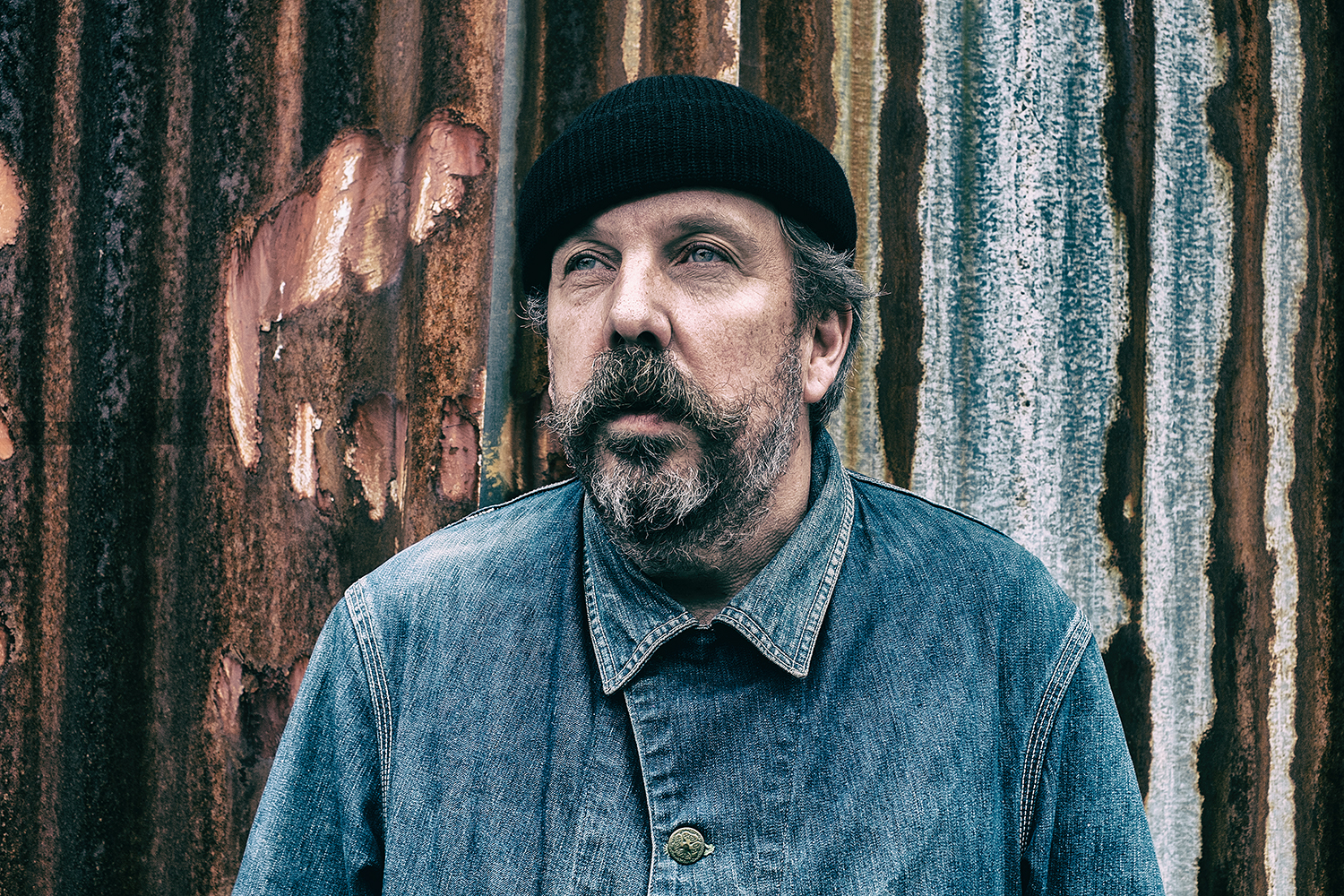
The British musician, DJ, and record producer, widely known for his production work on Primal Scream’s 1991 album Screamadelica, passed away this morning, Monday, February 17, at London’s Whipps Cross Hospital, having suffered a pulmonary embolism. His death is said to have been “swift and peaceful.”
We will update this story as and when we have more information. Meanwhile, you can read the statement in full below.
“We are deeply sorry to announce that Andrew Weatherall, the noted DJ and musician, passed away in the early hours of this morning, Monday, 17th February, 2020, at Whipps Cross Hospital, London. The cause of death was a pulmonary embolism. He was being treated in hospital but unfortunately the blood clot reached his heart. His death was swift and peaceful. His family and friends are profoundly saddened by his death and are taking time to gather their thoughts.”
Management and family have asked to have their privacy respected at this time. Further announcements regarding funeral arrangements will be made in due course.
Update: On February 18, the Weatherall family added the following statement: “Lizzie, Bob, and Ian would like to thank everybody quite literally everywhere for their lovely messages and tributes to Andrew. We know what a special person he was and are overwhelmed at the number of people who knew this too… and to hear their stories and how he influenced them is a real joy at such a raw and dreadful time. Please do what he would have wanted… creating, listening, dancing, but above all pushing boundaries.”
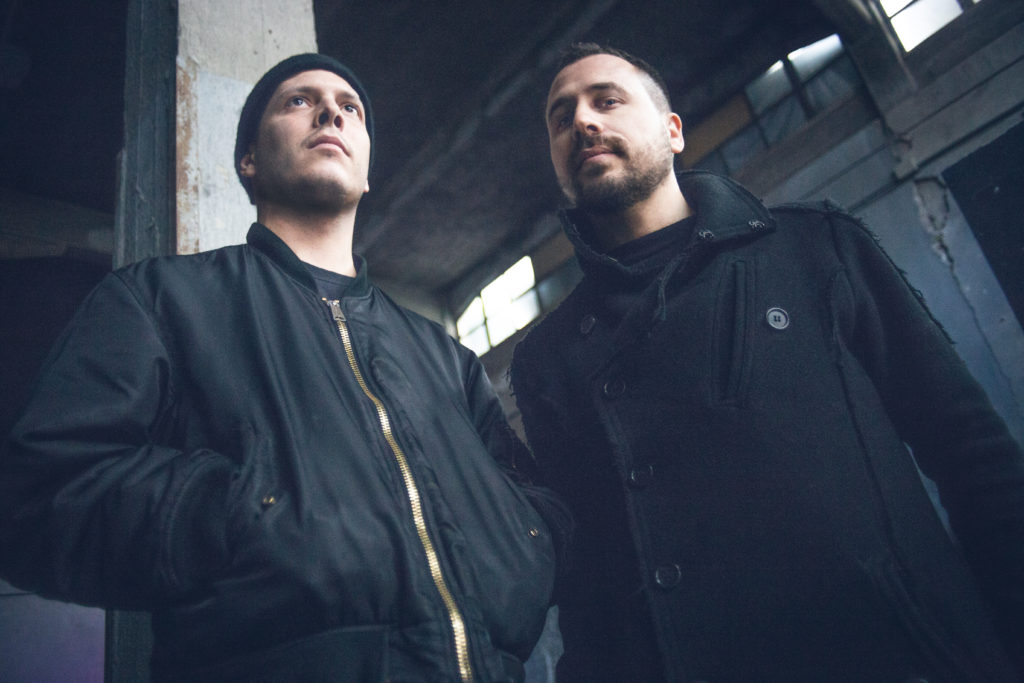
Neel, real name Giuseppe Tillieci, is one half of Voices From The Lake with Donato Dozzy and has released on labels such as Editions Mego, Semantica, and Token. He began working with Scorcucchi in 2015, and the duo founded the live ambient electronic project LF58. They presented their first release on ASC’s Auxiliary imprint in 2017, titled Late Night Innominate, Volume Two.
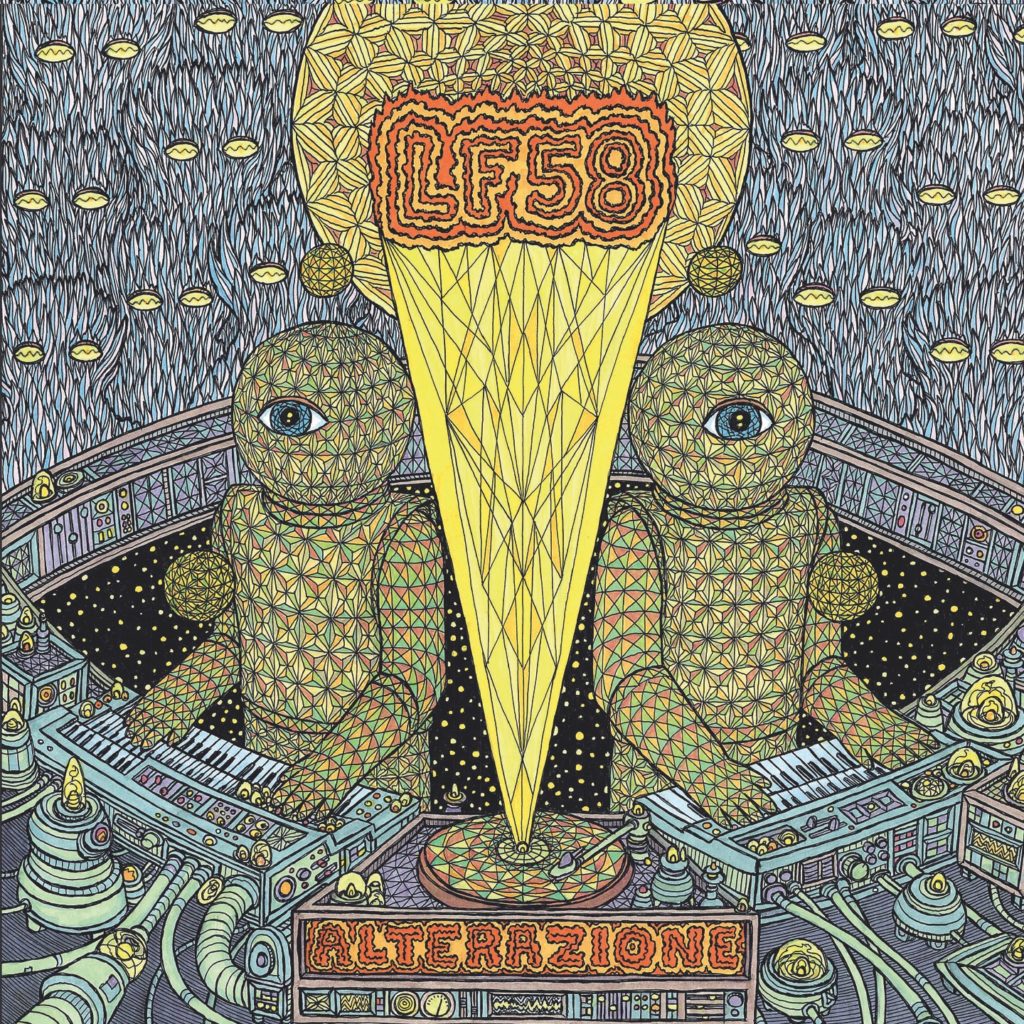
Alterazione presents a “critical statement,” we’re told, and it’s “distinguished by its technical execution and breathtaking artistry,” the label adds. Both cerebral and meditate, it’s presented in four movements, one track per side, and together “they extend as a transportive experience of evolution for the listener.” The album was mastered by the legendary sound engineer Noel Summerville.
To celebrate the album’s release, LF58 will throw a launch party at Pickle Factory, London on March 13.
Tracklisting
A / 1. Iniziazione B / 2. Rituale C / 3. Metamorfosi D / 4. Evocazione/Contatto/Risveglio
Alterazione LP is out April 6 via Astral Industries. Meanwhile, you can stream a teaser below.
NastyNasty has today shared his new double-single, Loner / Starcrossing, available now on all digital platforms via Dome of Doom.
NastyNasty, real name Jasper Reeder, self-released “Loner” on SoundCloud and Bandcamp last Valentine’s Day as a gift to his fans, celebrating 10 years of the project with the “most nostalgia-inducing song he’s written in years,” he explains. He now shares “Starcrossing,” available as part of a double-single alongside “Loner.” He left the track off Hideous Mask, his most recent album, because its hopeful tone contrasted the misanthropy and frustration expressed via the long-player, even though “I’d always known it to be a strong song through crowd reactions,” Reeder says.
Explaining why he’s released it alongside “Loner,” he continues: “The two songs balance each other nicely, ‘Loner’ brings overt emotional tones in the form of a sweeping chord structure giving way to a big sawtooth bassline, relenting only for vocals to peak out and disappear into the sea of delays. The B-side, “Starcrossing,” begins in a much more emotionally cold tone, establishing its environment of filth before exclaiming ‘It’s…over’ through its granulated vocal utterances.”
Tracklisting
01. Loner 02. Starcrossing
Loner / Starcrossing is available here, while you can stream “Loner” and “Starcrossing” below.
XLR8R‘s monthly radio show launched in January in support of our curated music subscription service and community, XLR8R+. Up first, we had Evan Baggs and Silverlining, who each played for one hour, and you can revisit their sets here.
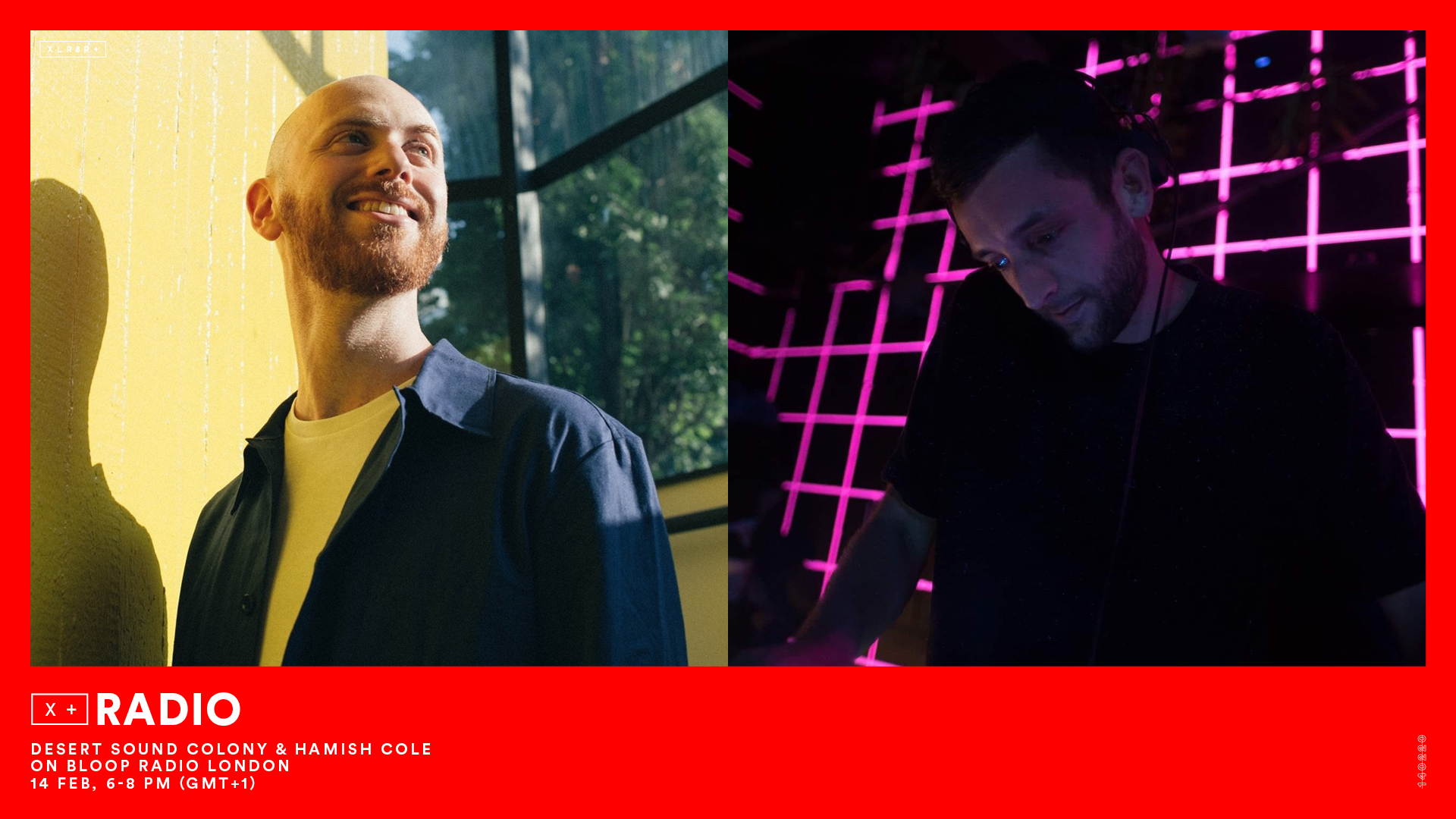
Up this month and playing tonight are Desert Sound Colony, the alias of Liam Wachs, a master in deep house and breaks whose XLR8R podcast you can hear here, and Hamish Cole, a rising London artist, founder of Butterside Up, and one half of Hamish & Toby.
Bloop London is a radio platform with state-of-the-art equipment. Each show will be streamed live from the Bloop website and YouTube, and will then be shared directly on our Facebook. The XLR8R+ show will also be uploaded onto our YouTube channel.
For those unfamiliar, XLR8R+ is a member-supported music community and subscription service. Every month, subscribers receive at least three exclusive tracks—sometimes more—by artists that XLR8R has supported over the years, as well as exclusive editorial content, exclusive mixes, FREE passes to music festivals and events, curated music playlists, and much more. You can find out more and check out the music here.
Angel-Ho will self-release her new album, Woman Call, on April 24.
Angel-Ho is the alias of Angel Antonio Valerio, a South African producer and vocalist who draws inspiration from powerful women like Cleopatra or Maya Angelou. Woman Call is her second album after 2019’s Death Becomes Her for Hyperdub. Across eight tracks, she dives into an enchanting rapture of electro-pop, jazz, hip-hop, and r&b, exploring themes of love, fame, LGBTQIA empowerment, feeling under-appreciated as an artist, and “kisses that taste so good that they could be honey,” she explains.
“I wanted to create music that I wish I heard growing up and now I think I have achieved this,” she explains.
Tracklisting
01. Fame 02. Spell On You 03. Woman Call 04. Rewind 05. Kisses Taste Like Honey 06. Golden 07. Let It Go 08. Tough Love
Woman Call LP is out on April 24. Meanwhile, you can stream lead single “Kisses Taste Like Honey” in full below, and order it here.
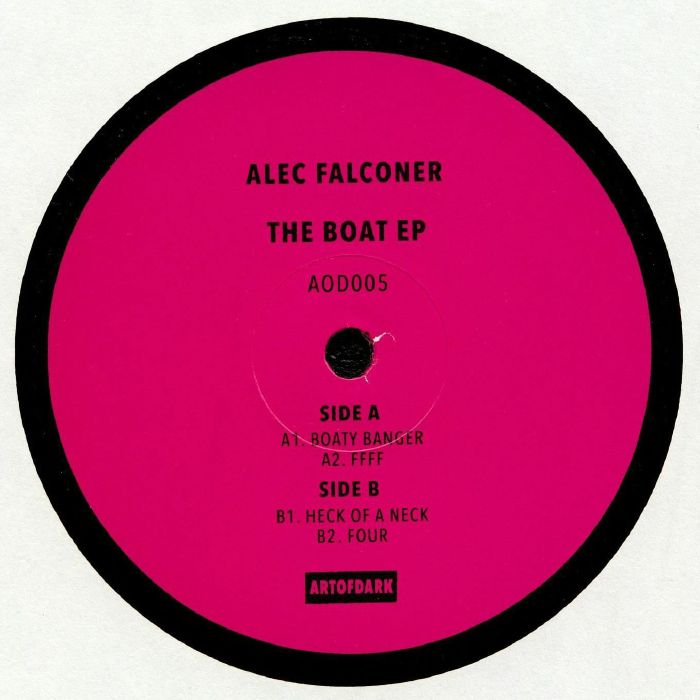
Art of Dark is known for bringing some of the world’s leading DJs to the U.K. capital, and the label has released music from Evan Baggs, Omar, Z@p, and more. This is the label’s fifth release, and the first of 2020.
The Boat, a four-track outing from Falconer, is a versatile record with house, garage, and electro elements, finished off with the classy “Four,” a standout track that Evan Baggs closed his set with on XLR8R Radio last month.
The Boat EP is out now on vinyl. Pressing are limited to just 500, so be sure to move quickly. You can order here, and read more about Falconer and the gear behind his work here, in his XLR8R feature.
Tracklisting
A1. Boaty Banger A2. FFFF B1. Heck Of A Neck B2. Four
Moussa released his first full-length album, Issrar, in October 2014 as radiokvm, and he now drops the alias with Imbalance, on which he revisits the soundscapes of his childhood—from the echoes of political unrest, to Greek-Catholic chants, and the quiet nights of a secluded Southern village. The album combines sound design with intricate melodic arrangements to create a choir of synthesizers and noise singing in and out of sync.
In addition to his solo work, Moussa has also composed music for theatre and dance performances, short films, and museum installations.
Imbalance follows an EP feat FKA Twigs and Lydia Lunch and an album by Nicolas Jaar’s A.A.L. (Against All Logic) project on Other People, and the works of Tomaga & Pierre Bastien, Patrick Higgins, Lucrecia Dalt, Darkside, Ezekiel Honig, Vaghe Stelle, Nicolas Jaar himself, and more.
Jaar is going to showcase Other People in Beirut on March 20, where Moussa will present Imbalance live alongside Jaar and Hyperdub’s Mana.
Tracklisting
01. In Praise Of Shadows 02. Figure 03. Distance 04. Rest 05. Weight 06. South 07. Tides
Imbalance LP is out March 6 digitally only. Meanwhile, you can stream “In Praise Of Shadows” below, and more information here.
Portuguese composer Afonso Ferreira (a.k.a. FARWARMTH) will release his debut album through Planet Mu, titled Momentary Glow.
Ferreira is known for his work in duos HRNS and PURGA, and as part of the collective 00:NEKYIA. He’s been working on Momentary Glow for over four years, sourcing recordings of friends and family in improvised sessions with cello, flute, and accordion, while he played on keyboards.
Ferreira’s music is made by carefully processing and rendering this source material. He talks about the compositions in terms of emotional resonance, the construction of “connections between time, people and sound,” and the sessions which make up this album being about “emotional exchange, that gave away to something I did not imagine I could’ve reached alone.”
“The music here can seem alien—recognisable sounds turned unrecognisable, channeling raw emotion by building layers of sound in unusual ways into huge, energetic sculptures,” the label adds.
Tracklisting
01. Shadows In The Air 02. Below The White Sky 03. Across The Black Sand 04. Into The Grey Sea 05. To Heft The Weight Of Memory 06. Sunlit Mirroring 07. Shadows Through Time
Momentary Glow LP is out April 3 on CD and digital. Meanwhile, you can stream opener “Shadows In The Air” below, and pre-order here.
Donato Dozzy has teamed up with Retina.it, the collaboration of Lino Monaco and Nicola Buono, on a vintage-styled minimal wave record, titled Psycho Romance & Other Spooky Ballads and filled with icy synths, shuddering bass, and anthemic vocals to sound like a lost gem unearthed from 1982. The drums hit hard, the synths soar to emotional heights, and the vocals intone rhythmically. All of it’s coated in the warm fuzz of analogue tape.
The alias is Men With Secrets, and the label is The Bunker New York. The three Italians first came together as Le Officine DiEfesto, releasing an EP of murky left-field techno on Dozzy’s own Spazio Disponibile, and in doing so they unearthed a shared love of classic post-punk, wave, and synth-pop, engendering the birth of this latest project, its name borrowed from Richard Bone, an early New York electronic musician and minimal pop pioneer.
Dozzy and the Buono brothers created the album remotely, working from their respective studios in Rome and Pompeii. They selected machines from the ’80s, and used an array of other gear, including some bespoke hardware, in new ways to create the feeling of their favourite records from this era. To learn more about this, we dialled in Dozzy and Retina.it one afternoon, when they explained what they used and why.
We are huge aficionados of the post-punk, wave, and synth-pop era; we talked about it for a long time then at some point we just knew it was time to act and create our own take on things. We own separate studios, because Donato lives in Rome and Retina.it in a town close to Pompeii, in southern Italy, and we produced the record remotely. So we were constantly in contact, and we were all involved each step of the way, even on the minor details, despite the distance between us.
We had no real plan for what we were going to use, and we didn’t think about it too much; instead, we just took it step by step and used what we needed from our collections at any given moment. We leaned towards instruments that best represent the ‘80s because we wanted to achieve the same feeling of some of our favourite records that were produced during this period, like the works of British Electric Foundation, The Normal, Fad Gadget, The Human League, He Said, John Foxx, OMD, and Soft Cell.
The instruments we mention comprise all the machines we used for this record. It’s a mixture of our respective collections of instruments that we’ve owned for a long time. Retina.it’s studio is based around a big modular system built by Nicola Buono, and Donato has a different collection of synthesizers, including some Roland classics and an EMS Synthi AKS.
We commonly use all these instruments with a few others we own to do our respective work, but we used them in new ways across the Men With Secrets record. In particular for this work, we tried to build songs using arpeggios and pads that follow a melody, whereas when we work on techno or experimental stuff it’s different. We were building songs built on successions of chords with different layers of instruments, whereas with techno and ambient this is not necessary, because you’re arranging music with just a few elements, like concrete recordings or noise to create the right atmospheres.
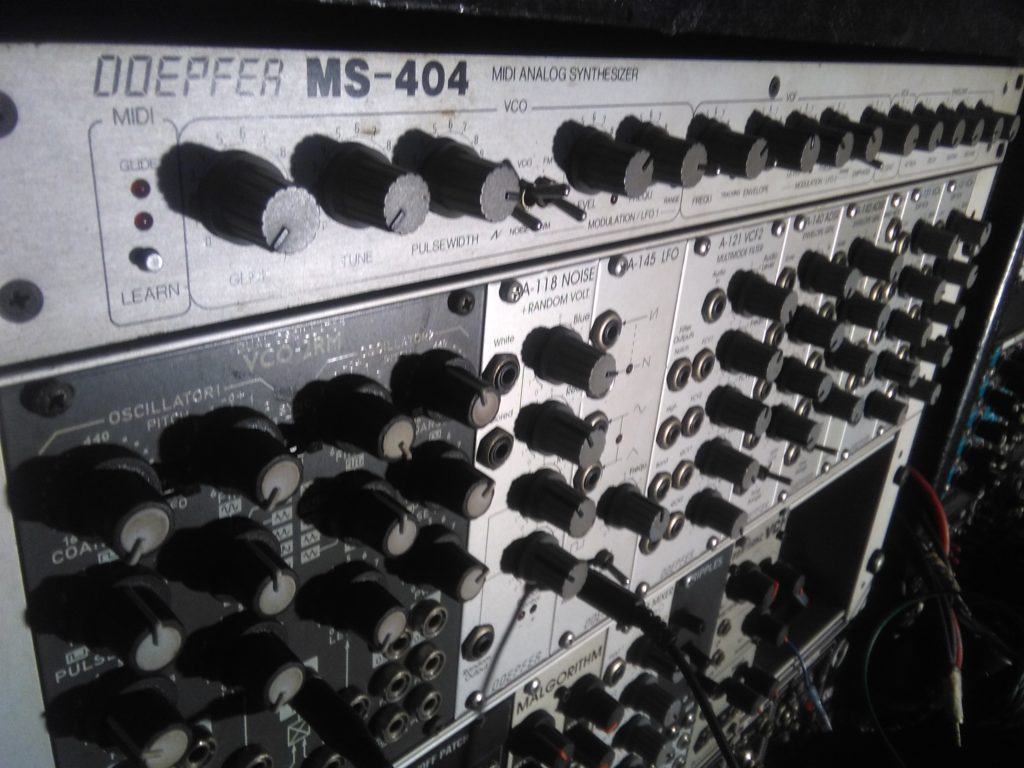
Doepfer MS-404 [Retina.it]
In making the record, we used a variety of synthesizers and drum machines that are still common nowadays, like the Roland TR-808, the Juno 60, a Doepfer MAQ16/3, and an MS-404 for some arpeggio and basslines. These are all outboard instruments, controlled by a MIDI sequencer, and they’re all good for different things, for example the Juno 60 is good for making basslines and also for nice atmospheric pads as texture. However, we used the Doepfer MS-404 as the lead synth. Built in ‘94, it was one the first to clone the sound of the Roland TB-303, but Doepfer added two extra lfos.
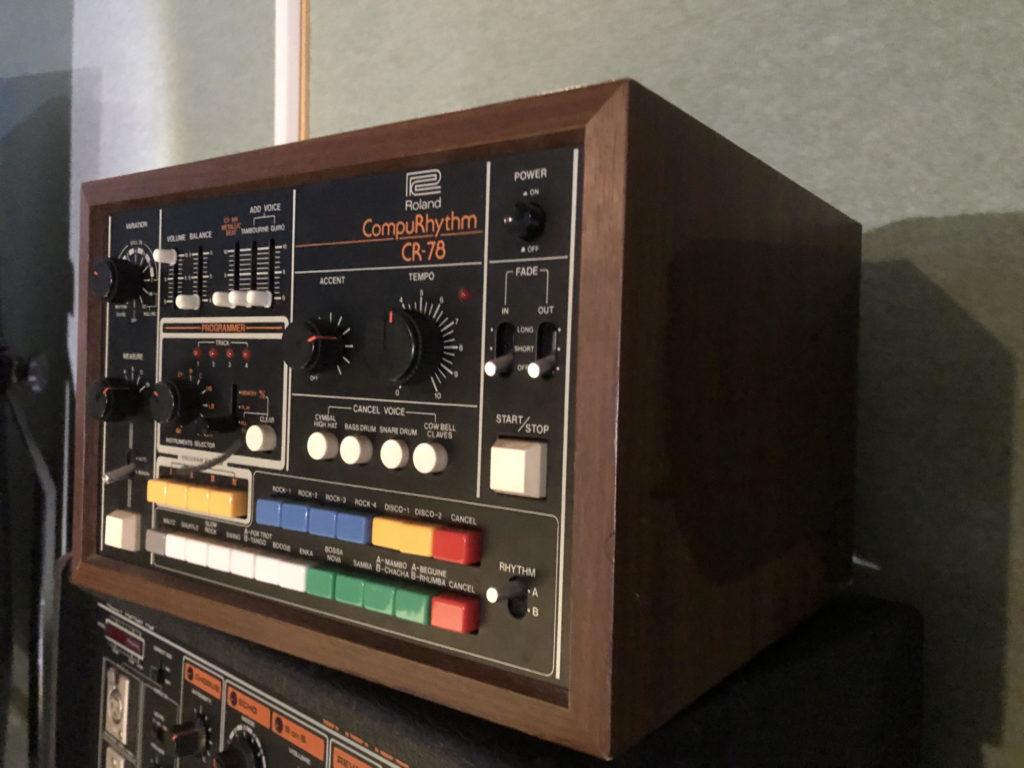
Roland CR-78 [Donato]
This CR-78 drum machine has a really characteristic sound and it was used a lot through the ‘80s, so that’s really why we used it. The machine features a microprocessor for storing patterns, and it offers 14 drum tones that feel electronic but analog. Its sound is unique and warm, and this gives a nice mood to the music you are working on, especially if you intend to make stuff that sounds like that decade. If you are familiar with John Foxx’s debut solo album, Metamatic, or Visage’s albums, you can understand the feel of this machine. We wanted to create this mood, and since Donato has one in his own studio, he said: “Well, I guess I’ll turn on my CR-78, because it needs to be included in this work!”
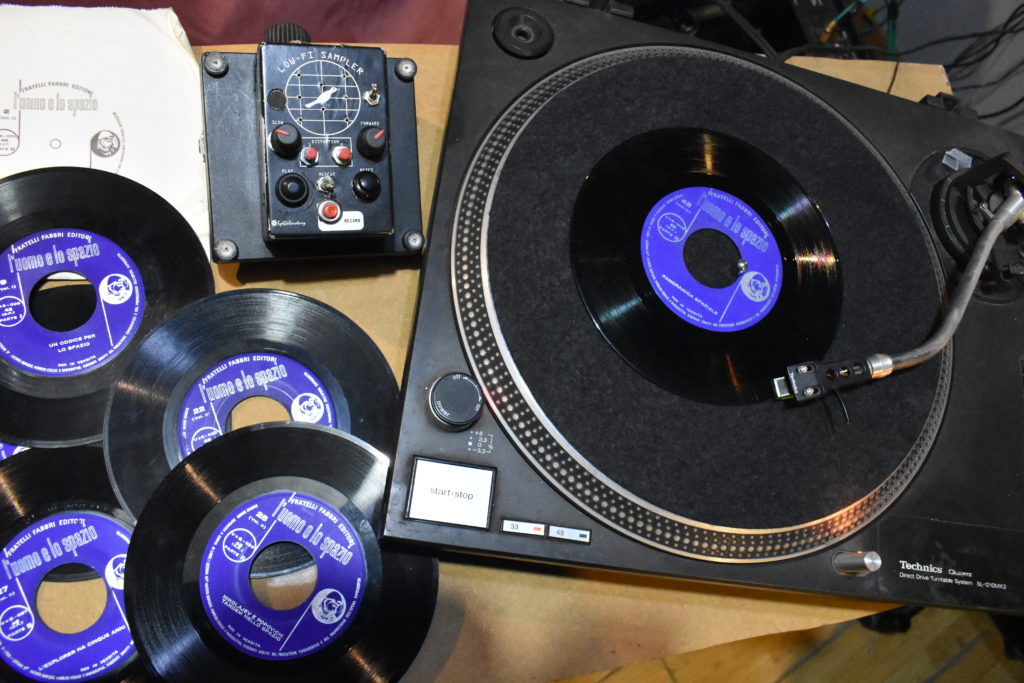
DIY Sampler, Built By Nicola Buono [Retina.it]
We decided to add some personality with a variety of pedal effects and even some more esoteric instruments directly built by Nicola [Buono], like a sampler called the DIY. It’s a really basic sampler based on an ISD1820 microchip. Nicola bought the circuit some time ago via a website specializing in electronic components, and he added some features such as trigger in, CV in, loop mode, and pitch slow and fast. Without trigger and CV, you can’t control it remotely with a sequencer. These simple yet versatile functions were mostly used to compose all of the interludes on the record, so the “4th Dimension” tracks.
As sources, we used a vintage collection of 7” vinyl, a present from a friend of ours, who found it in the trash on the street. Since he had no turntables, he gave the collection to us! The records come from the ‘70’s, and they came attached to an encyclopedia of space missions. At that time, these kinds of releases were common and so many people collected them. Across the collection was recorded radio communication between space missions and NASA, plus some white noise signals and some synths sequences, too. There were also some interviews with scientists and radio programmers. This was the space era, and something about the content and the lo-fi recording stimulated us to use them across the record.
Just for fun, we also sampled Donato’s voice from one of his voice messages. We won’t tell which one it is!
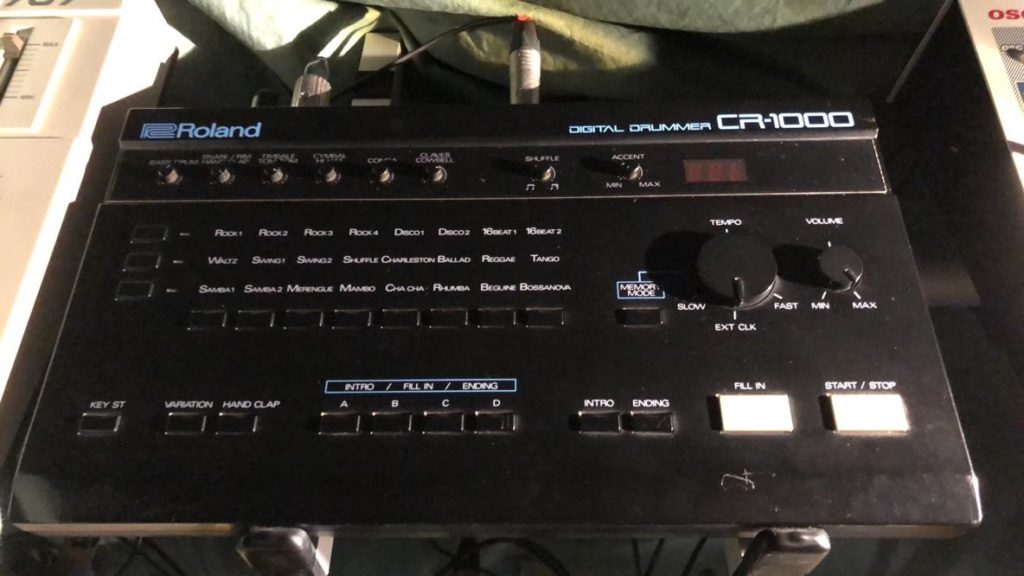
Roland CR-1000 [Donato]
We also used a Roland CR-1000 drum machine, here and there. Released in 1986, it was one of the first digital machines to use sampled sounds. It serves as a strong reminder of Paul Hardcastle’s sound signature, which at the time blew us away; tracks like “19” have the pressure and dynamic we’re been looking for. It’s also easy to use via MIDI, which is good because sometimes you need to be fast! All the groove composed on it was then processed through the VC-10 vocoder to get a result like in the classic Herbie Hancock style!
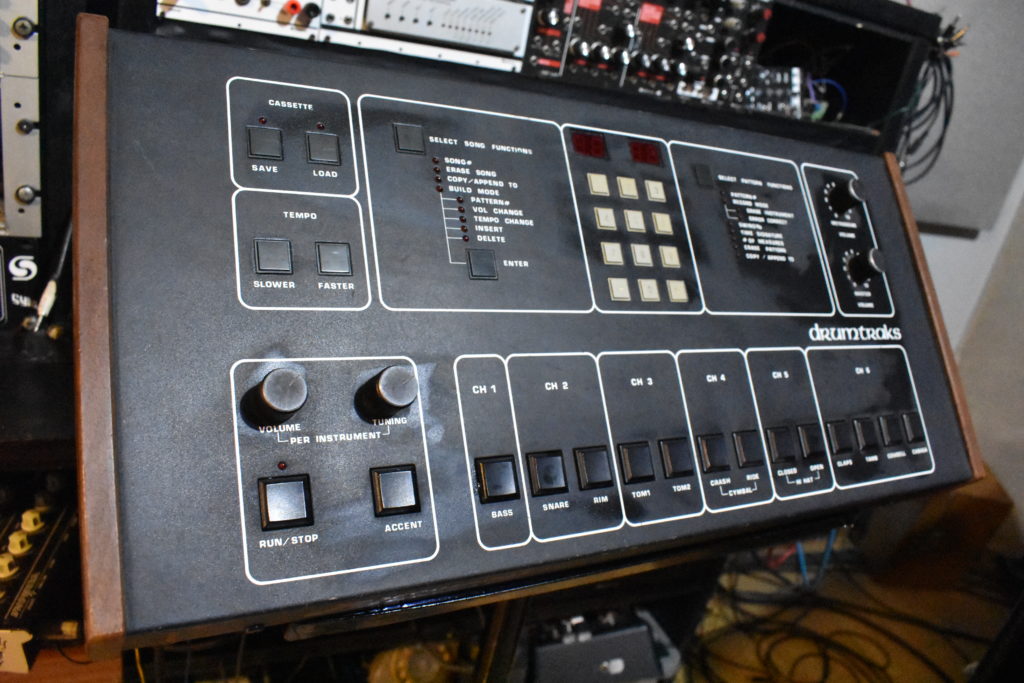
Sequential Circuits DrumTraks [Retina.it]
Lino and Nicola bought this one in the ‘90s. The shop owner had it in a corner full of dust. We just asked if he was interested in selling it, and he replied to us, “You can have it for just 100,000 Lire,” which is now about €50. The ‘90s were a good decade to discover stuff that people were throwing away because more digital stuff was invading the market. We used this machine specifically for “Cabaret Demodè,” combining it with the Roland CR-1000.
This machine was built in the ‘80s and it has the perfect large snare, which you can hear on “Dramatic,” and it fits perfectly in the space of the drumming sequence. However, it hasn’t reached the popularity of the TR 808 or 909, even though it was used a lot by artists like Prince. The major downside is that you have to scroll a lot to reach the various parameters, and there are only four assignable knobs on the panel!
Rodeo 61 GEM [Retina.it]
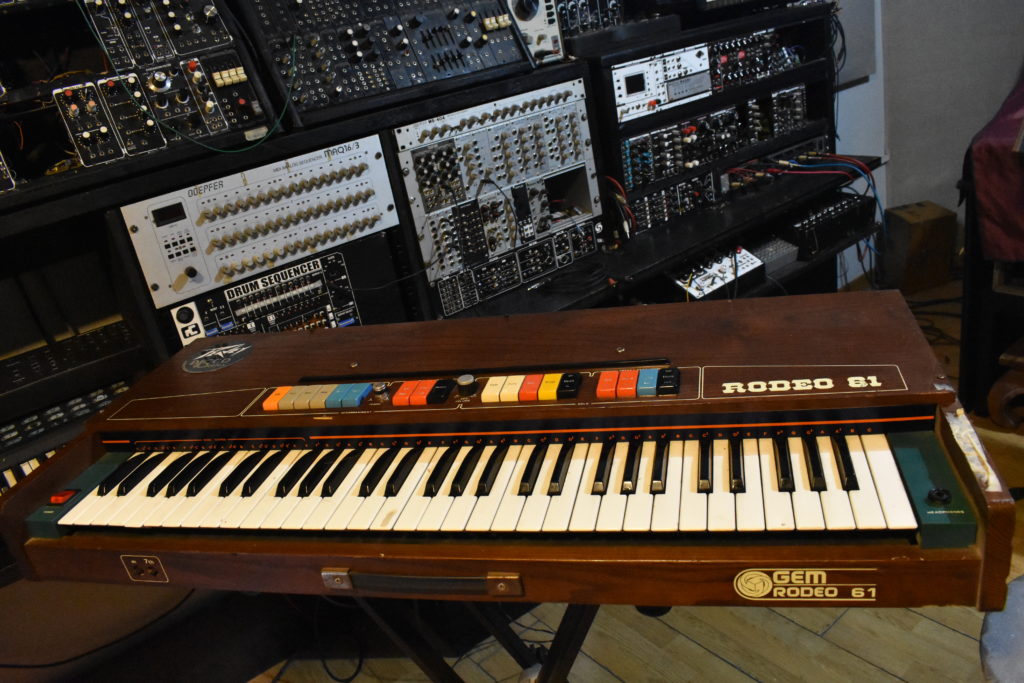
For “Secrets of the Crowd,” we used a Rodeo 61 GEM organ, which we paid just €20 for in a flea market. You should really use all of the stuff you find that’s just lying around; this has always been very important to us all. In fact, in the ‘90s we, Retina.It, started to buy electronic instruments, especially analog stuff. At that time, musicians were being taken by all the new digital stuff, so it was common to find old instruments at really cheap prices. So we set about finding instruments that had been dismissed and we tried to get the best from them; we didn’t mind if it was in perfect condition or not, because we were just searching for old instruments capable of making music. We still have some old stuff in really bad condition, and we will always compose music with it because errors can always be used on a composition. Glitch music shows this!
https://www.youtube.com/watch?v=egLr890tRMM
EFX Outboards
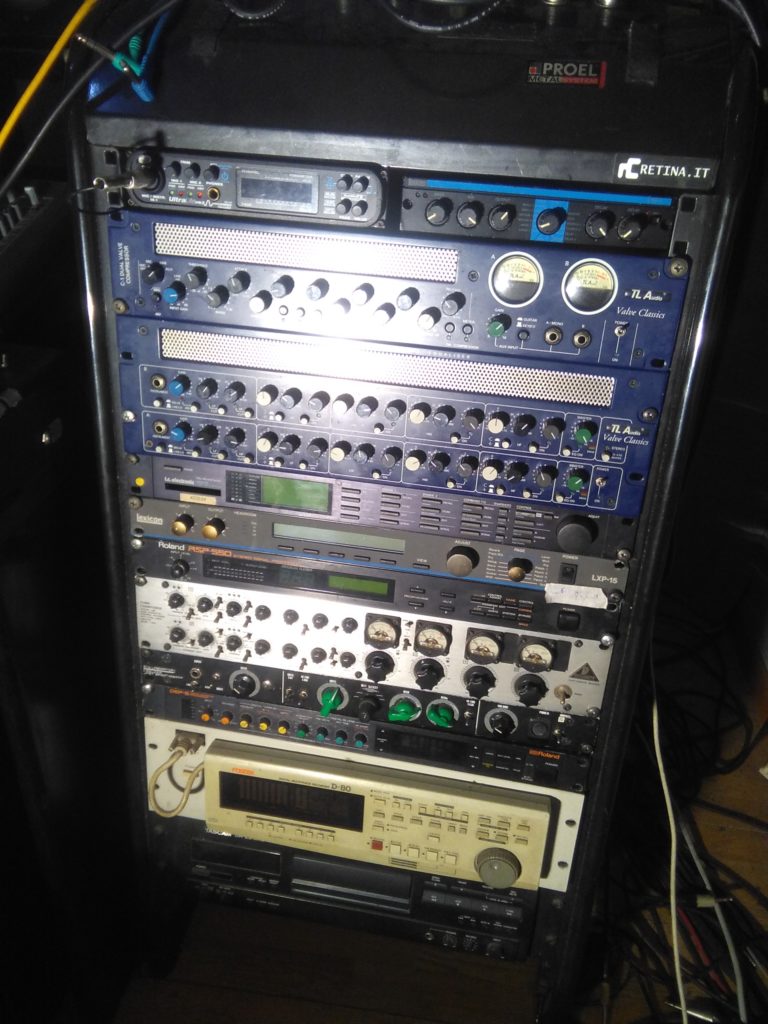
An interesting element of our production is our use of outboard gear for processing sequences. We like to overdub everything with an analog mixer, because sometimes unexpected combinations of results come out. It’s a question of mixing the sounds like an artist would colours. If you know the exact percentage of pigments you want to use, you’ll reach scientific results, but if your approach is driven by senses, you’ll be astonished by the results, and so we always try to be open-minded and welcome new sounds.
We used to go back and forth with signals, sometimes using efx on the results of other signals already processed. Our outboards, as you can see, are pretty old, but we still feel comfortable with them. Here is a list of Retina.it’s outboards: a Lexicon LXP-15 & LXP-1, T.C.Electronic M2000, Sony V77, Roland RSP-550 & DEP-5, along with some DIY projects that Nicola made. On Donato’s side, he added a Korg VC-10 vocoder and a Lexicon PCM 70 Digital Reverb from 1985.
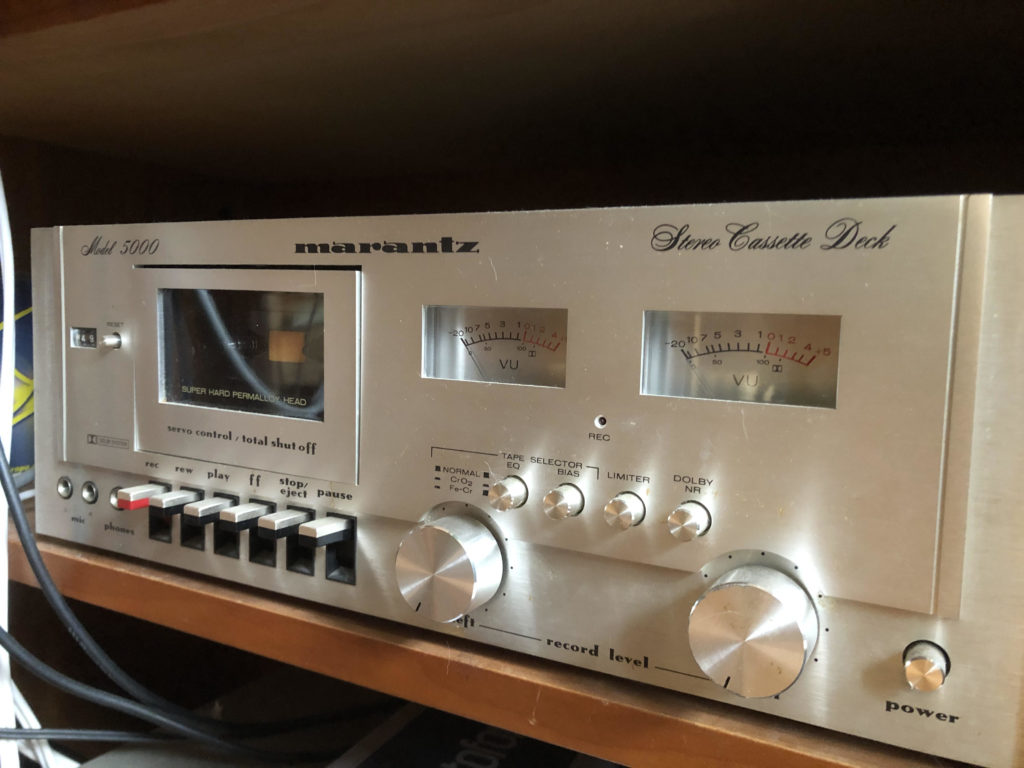
Marantz 5000 [Donato]
This is Donato’s machine, a hi-fi cassette player and recorder that’s not so common now since it’s dated 1978, but it still works well after all this time. Once the tracks were finished, Donato took care of the mixdown and recorded each of these through the Marantz 5000 and that was it! This added a lot of warmth and feeling, and when we listened to the results, we were all astonished at how this machine and the process had impacted the sound. We felt that it was such an old album playing!
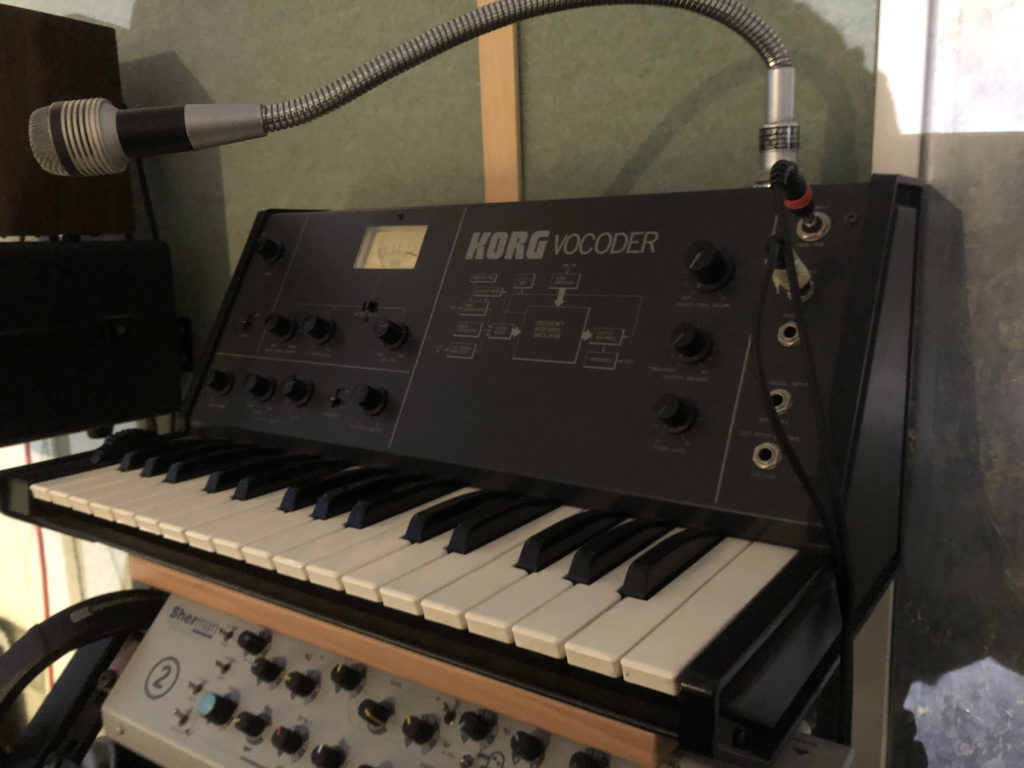
Korg VC-10 [Donato]
We used the Korg VC-10 vocoder on the voice on “Cabaret Demode,” especially at the end, and on some percussion on “Ruins on Ruins.” It works really well for obtaining the sound of a kind of robot singing. Donato purchased it in 2005 because he was interested in that type of sound, and he later added a soviet Elektronika EM-26 and an EMS Vocoder 2000 to his collection.
‘Psycho Romance & Other Spooky Ballads’ LP is out now, with order here.