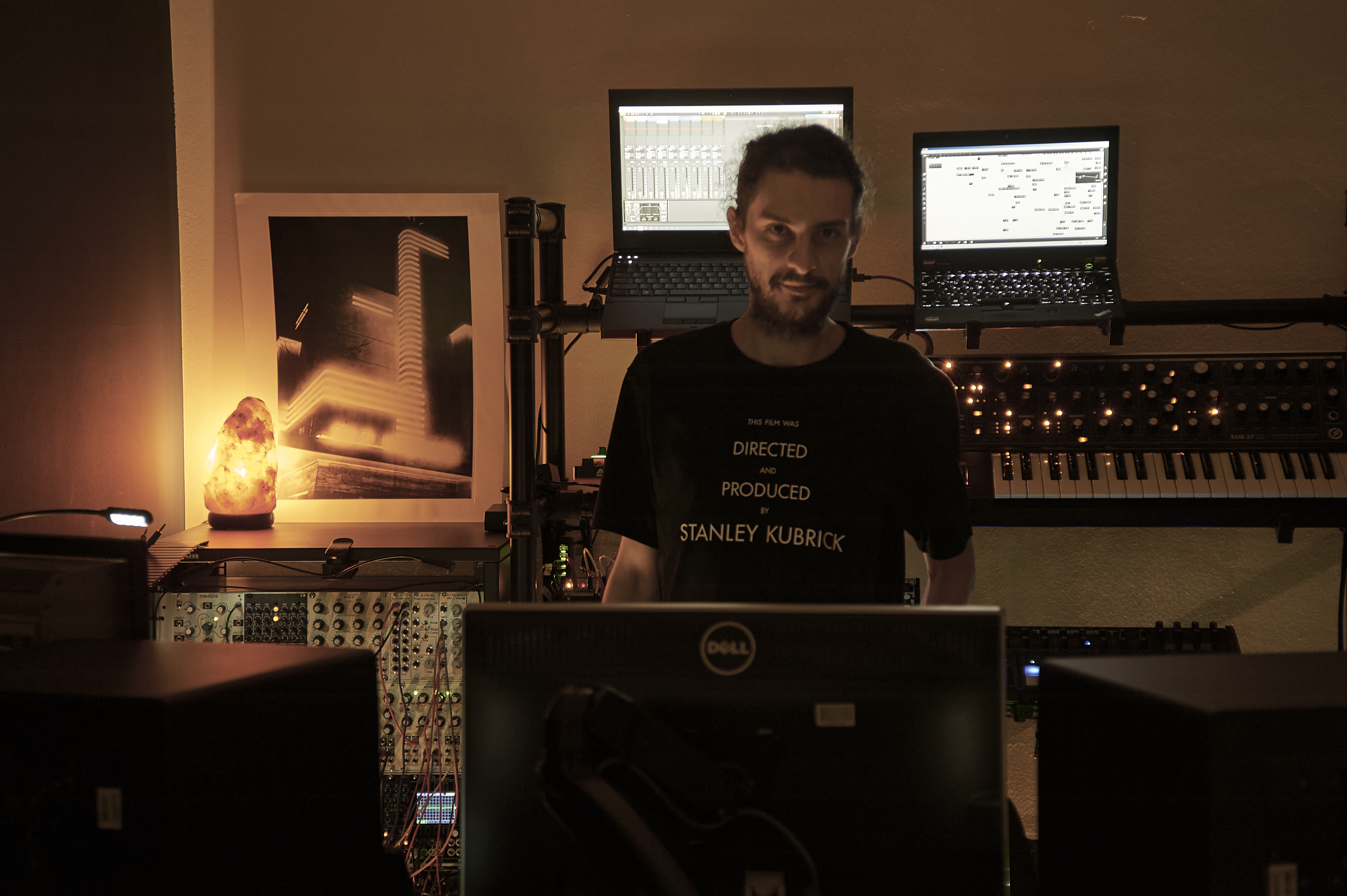
Studio Essentials: Vlad Caia

Editor note: this feature was originally published in October as part of the Romania edition of XLR8R+. XLR8R+ subscribers get fast-tracked editorial, exclusive music downloads, art, mix and podcast downloads, and access to the member’s area where you can further exclusives and submit tracks and mixes to XLR8R. Find out more here.

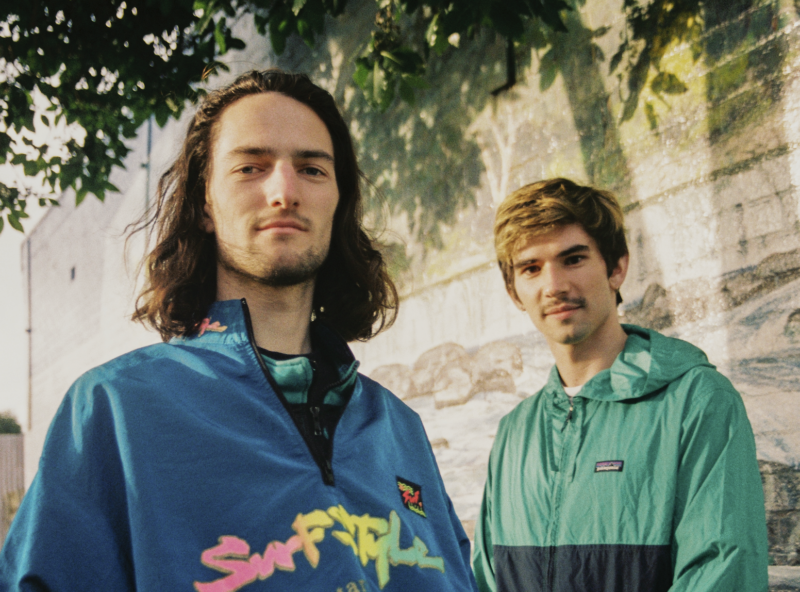
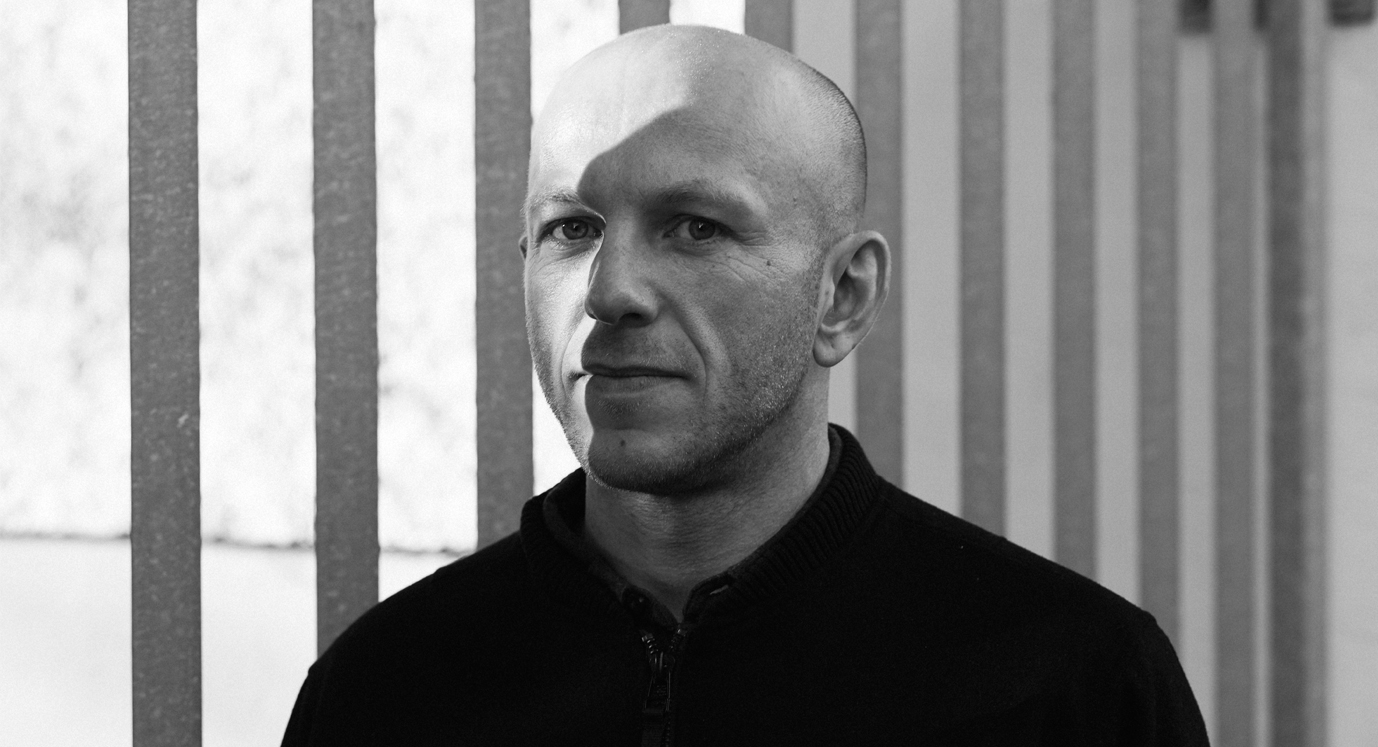
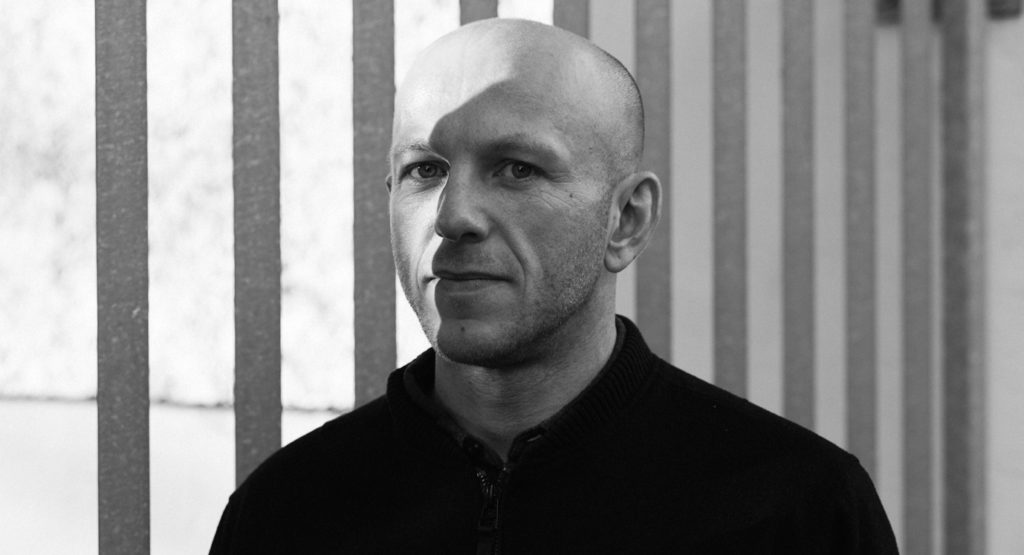
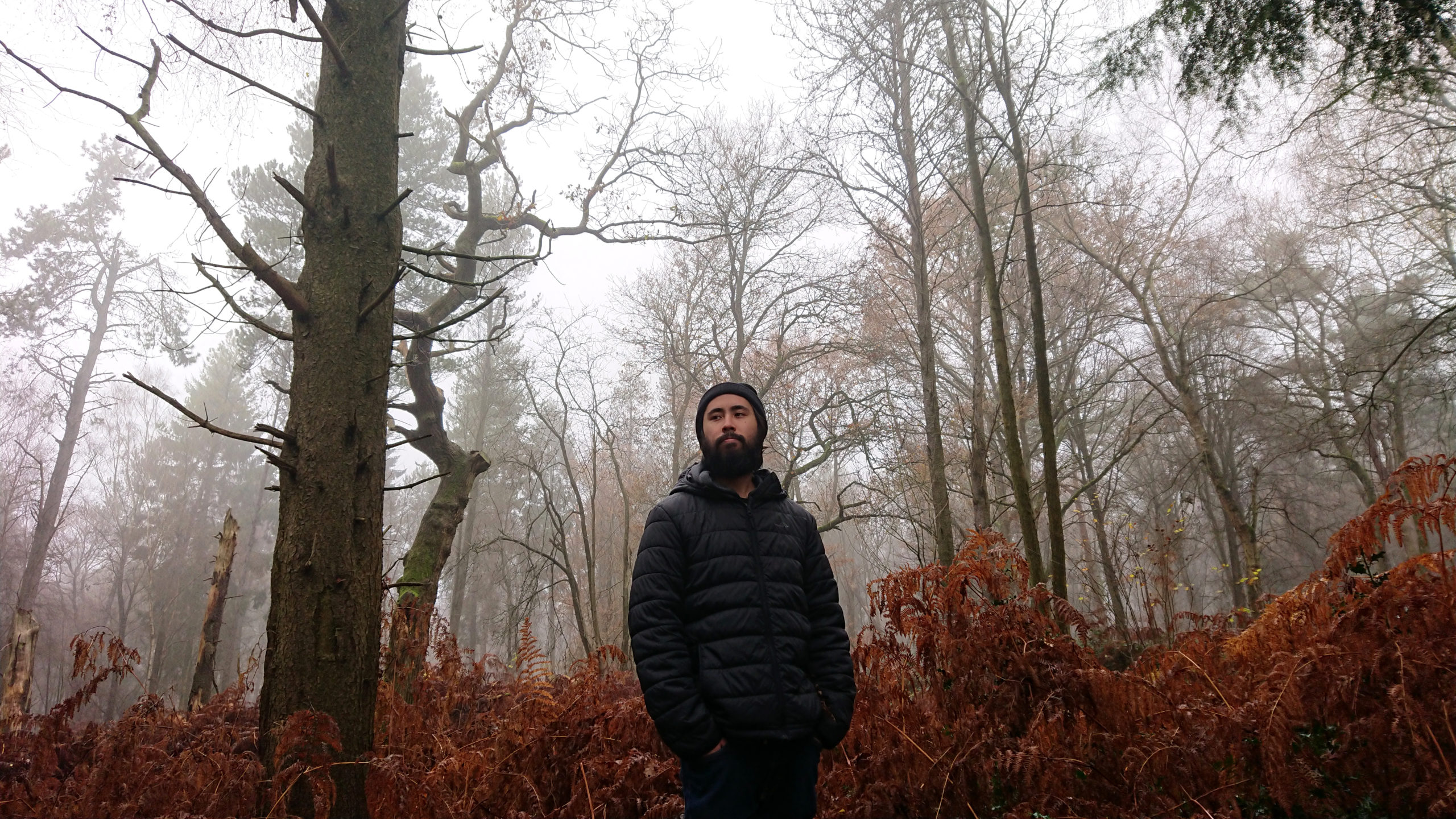
In a Romanian music community known for trippy minimalism and mesmerizing loops, Vlad Caia has been an integral figure, but also one who has evaded the attention that’s landed on some of his peers. Outside of his solo work, he teams up with close friend Cristi Cons to run Amphia Records and as SIT, meaning Sideways Invisibility Theory. Alongside Mischa Blanos, an experiential jazz musician, Cons and Caia form Amorf, who recently released music via XLR8R+ alongside Priku, Sublee, Cosmjn, Dan Andrei, and Orli. Some of you will surely remember their sublime “Blending Light” being played by Rhadoo at Sunwaves.

Caia began his musical experiments in his early teens, equipped with only a MIDI sequencer and a keyboard. With the support of passionate musicians around him, ideas and soundscapes began to form, and he released his first works between 2007 and 2009, out via Next Dimension Music and Dinky’s Horizontal Records. He developed his sound while living in Norway, and he found himself drawn towards sound experimentation, eager to break away from the “standardized” rules of electronic music. This idea formed the basis for Amphia, launched in 2011 with an EP from Cristi Cons. Two years later, Caia released “Swan Lake,” an irresistible record on Pluie/Noir Recordings Division, and then Division, a twopart debut album across 2018 and 2019.

Having just released a new Amorf EP, Caia has continued to shape his Bucharest studio into a space capable of realizing an assortment of musical ideas that encompass jazz rhythms and orchestral arrangements, transcending the dubbed-out sonic grooves the city is recognized for. Versatility, he says, is the priority, and XLR8R decided to visit Caia to learn more about the tools and techniques that cater to this.
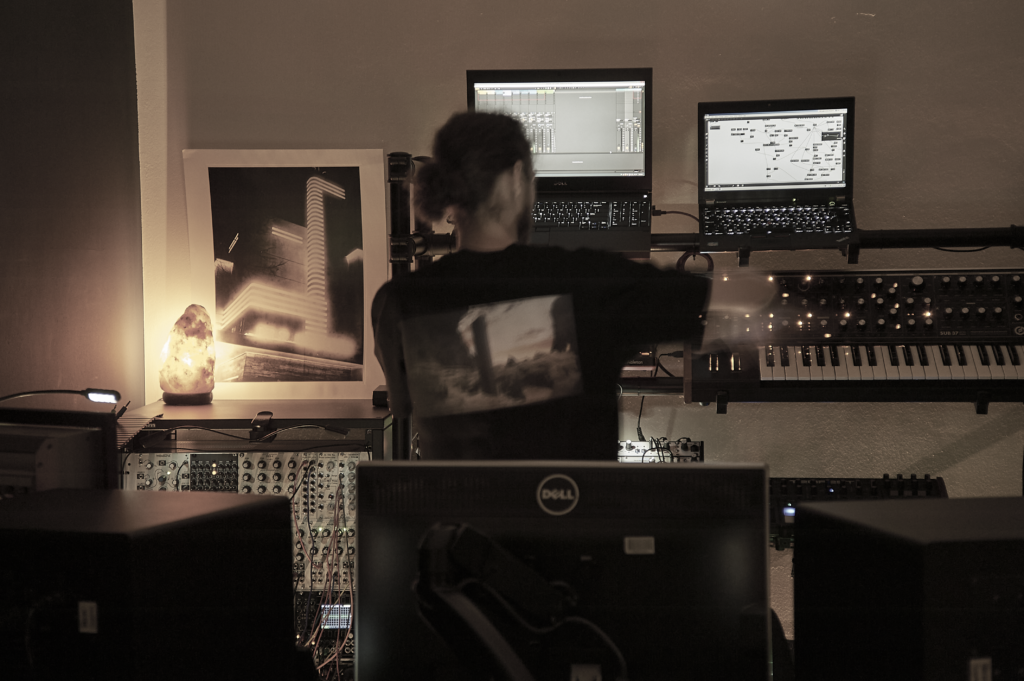
Over recent years, I have come to appreciate a more minimalist studio setup. I’ve realized that I work better when I have the bare essentials rather than lots of gear. Using fewer machines to their full potential allows for a more fluid workflow. It also allows for better experimentation, because you’re forced to use each device in ways that go beyond how it’s supposed to be used, and importantly beyond the magic “preset” buttons. By doing this, you begin to develop a sound that’s individual to you, which is important for every artist.

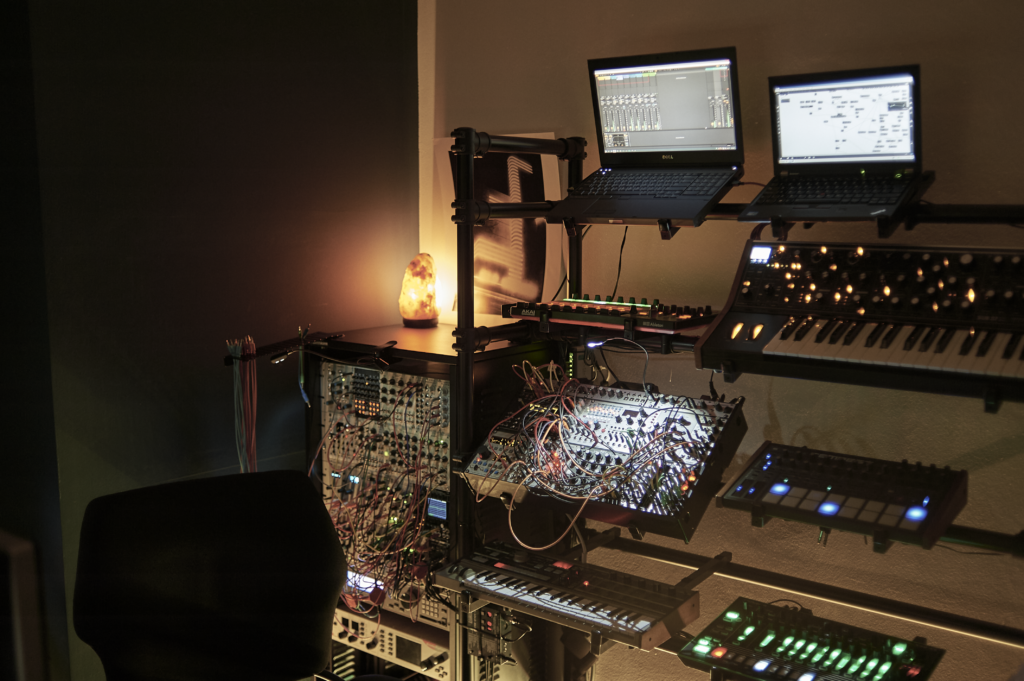
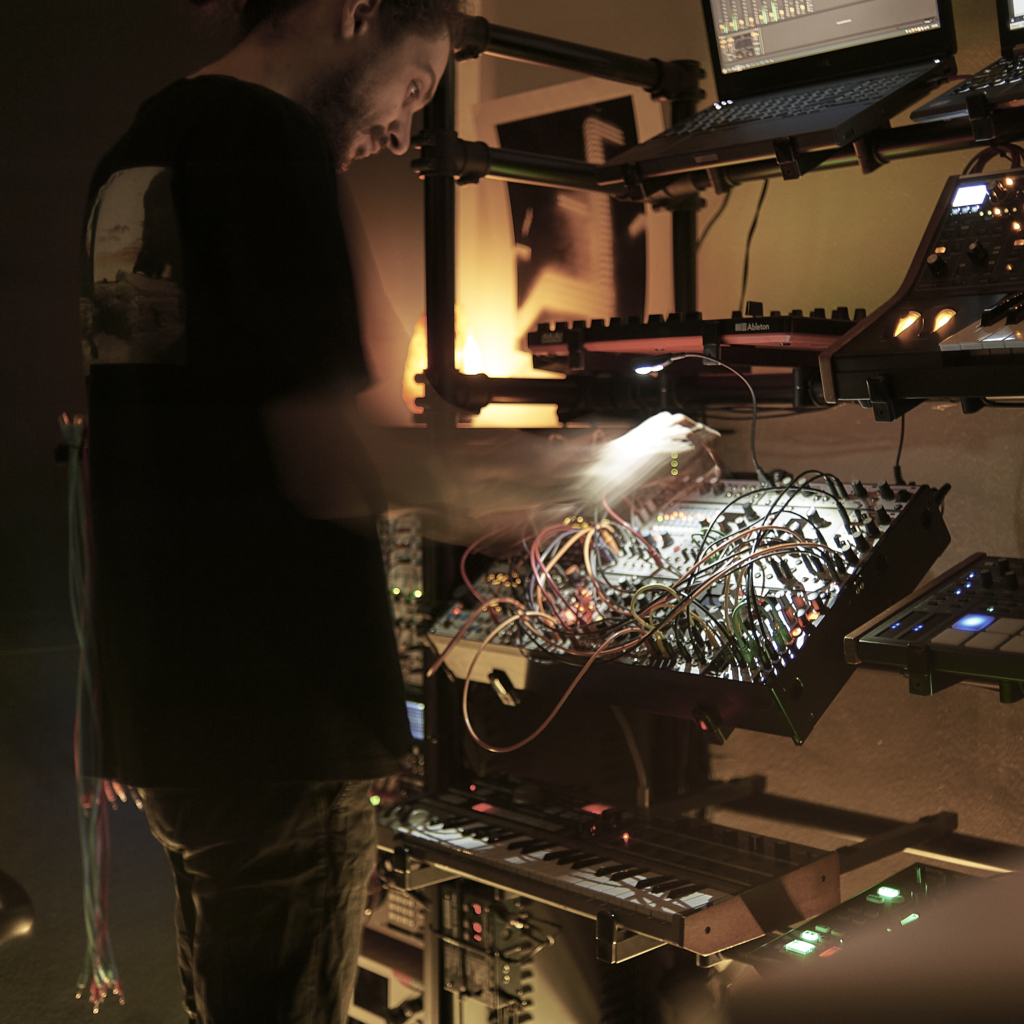
With this in mind, I rely on a hybrid system, which is to say I use both analog and digital instruments, plus three computers that run live effects for manipulation and mangling. These computers have a central role in my studio. Think of them like the beating heart, in that they’re where all the signal paths converge or diverge.

My main computer consists of a server unit housed in the main rack where all the audio/MIDI and digital signals are being received. This unit is used for multi-track recording of live improvised sessions, and it’s also used later for editing and arrangement work. Using the installed patchbays, I can also route audio to different instruments and modules directly from my DAW.

My second computer is a workstation notebook hosted in the instruments rack. I use it mostly for live loop recording and MIDI clips. I also use it to play virtual instruments and run audio effects, much like a guitar pedal. It can do anything I set it up to do, and its job is dependent on the nature of the track I’m working on.

My third notebook acts as an instrument of sorts, and it runs the Max/MSP environment. It’s more like a sketchbook where I try different patches. I synchronize these notebooks using Ableton’s LINK, via wireless to the server unit.
My recordings are all improvised. I program the stuff—my drums, synths, etc.—and then I click “record.” This leaves me with a recording of around 15 to 30 minutes, which I then need to edit. I usually end up doing lots of edits and trying different arrangements of each recording before it becomes a final track.

It’s important for me to take time with this. I’ll always test these versions on club systems and take mental notes. With these in mind, I check, re-check, and adjust the things that are obvious or need to be changed, like re-doing gain automation between the kick drum and the bassline, or working on some more EQing on the synth lines, or maybe taking out some reverb because it’s muddying the mix.

Spending hours on a track can create a bit of a trapped feeling in the auditory sense. It can skew your perception of how it really sounds, and it can also unknowingly move the track in strange directions from an arrangement and mixing point of view. Often these are directions that you didn’t intend for initially. I’ve been countering this by taking a few days off from listening just to clear my mind and have a fresh start. In the meantime, I’ll continue to work on something else entirely, or I’ll even just play around in the studio. Upon return, I have a different perspective on what works and what I’ve been focusing on way too much.

With this in mind, here are some of the key pieces of gear behind my music.
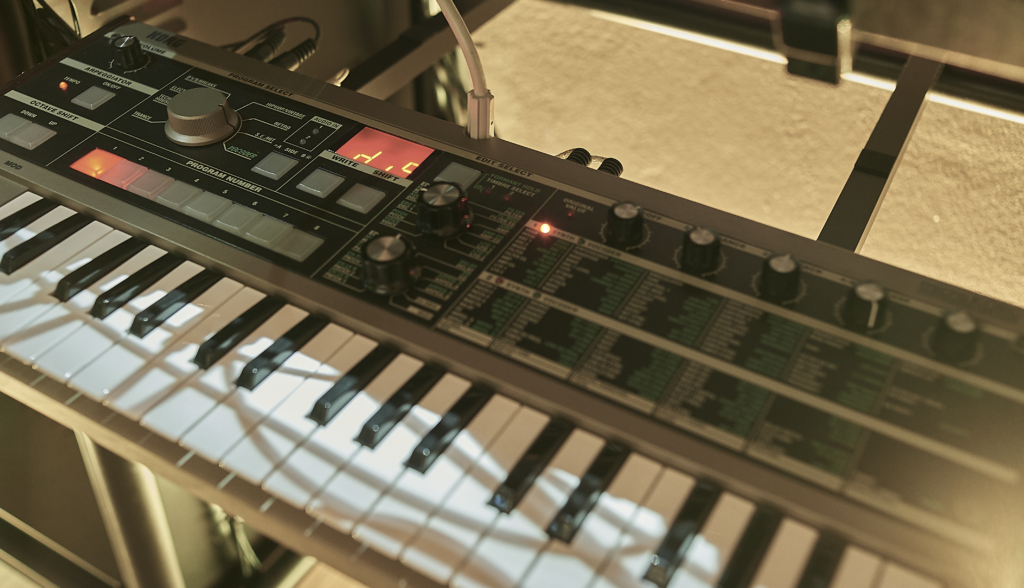
Caia’s microKORG, shot by Vlad Caia

microKORG

I’ll start with the microKORG, which is the first synthesizer that I ever bought. I acquired it around 2007 while I was studying in Norway, from a local music shop.

It’s a curious little device with its little keys. It was meant to be just another virtual analog synth, just like any other synth from that era, but it has a sound that’s specific and discernible in my opinion; that’s what I really like about it. The bass can sound thick or boxy, if you want, and the filter is good enough to make it scream when turning up the resonance. The modulation matrix is extensive and has parallels with any modern modular system. It’s also useful if you’re travelling, because it can run on batteries!

I’ve been using this synth in my own projects, with SIT and also in Amorf. A notable use of this synth can be heard doing the bassline duties in a track called “Connection,” released in 2012. It can also be heard doing an arpeggio synth line in a SIT track called “Come Around,” which is included on Sideways LP, Part I, released in 2016 on Amphia Records.

“Come Around” was a fun track to work on, and I had such a blast using the delay effect that’s built into the microKORG. The synth creates a dynamic mood, especially while using the resonance on the filter coupled with the delay effect on the end.

You can also hear the synth on Amorf’s “Ouverture” from the album Blending Light released on Understand Live Series in 2017. The synth is present throughout the entire track, playing a repetitive sequence of two notes with the delay effect added.

To get the most out of the machine, I create my own banks of presets. It’s capable of harsh tones that work great for electronic music, or lush pads that you can use in the background. Did I mention that it also has a vocoder that’s very usable? Take it a notch further and use the vocoder as an external effects unit patched as an auxiliary send on the mixer. I was surprised when I ran sound through it!

The only downsides are the miniature keybed and the four-voice polyphony. It takes a while to get used to the small keys, and they can be especially tricky when you’re doing fast runs in a live performance. Being able to play just four voices at once takes some planning on the chords you want to hit. Playing elaborate chords one after another can mute previous voices, which is a nuance that becomes noticeable. However, you can cheat this by adding some delay and increasing the feedback. Doing it this way will sustain the previous notes a while longer!
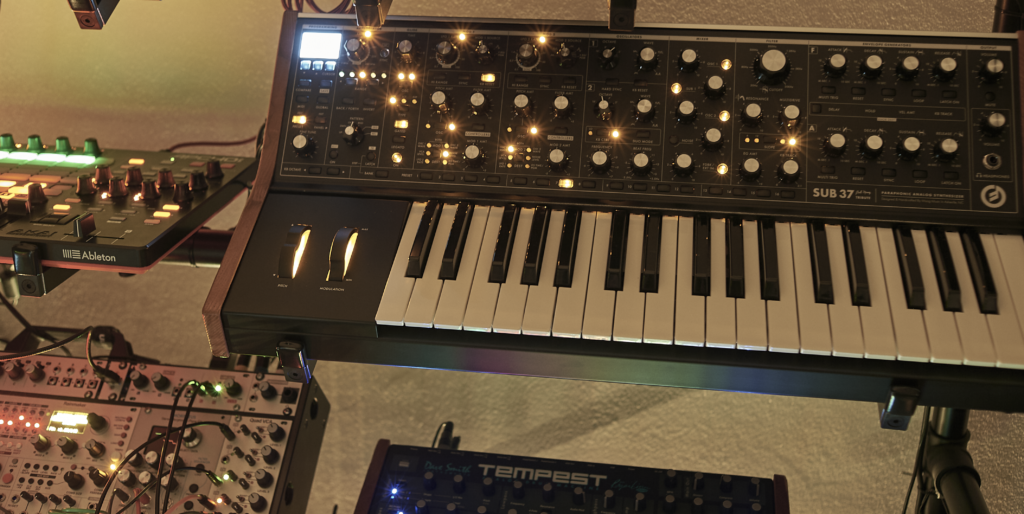
A Moog Sub 37, shot by Vlad Caia

Moog Sub 37

I was excited when news of the Moog Sub 37 started to pop up on discussion boards. Then I saw a NAMM 2014 video with Amos Gaynes and was blown away. This guy really knows how to present a product, and I actually believe he’s one of the lead designers of the synth.

The synth has many modulation possibilities and many types of arpeggio styles, which is handy for live performances. It also comes with its own sequencer and a beefy filter, as is tradition in the Moog world. I managed to buy one just as it hit the stores around 2015, by doing hourly page refreshes on Thomann.de. I was surprised at how heavy and bulky it was when I received it.

I’ve turned to the Moog Sub 37 a lot over the years. It’s present on every track of Amorf’s Blending Light album, responsible for the bass sequences, resonant percussion sounds, and also the noise swooshes. I also used it across my debut album, Division I and Division II, particularly on “Cluster” for the bass and synth lines, and “Border Patrol.”

This latter track was a bit more tricky to do because the Sub37 is paraphonic, which means it can’t play more than two notes at the same time because all the oscillators share the same signal path, and usually the filter will track only the highest note you hit.

To overcome this issue, for the bassline part, I recorded the same sequence twice with a slight variation of the notes, which meant I ended up with two tracks. I transposed one of the sequences one octave higher to complement the lower one and so it would create a full-bodied bass sound. The synth line comes on top of this foundation as a live improvised sequence.

I think this above example, with “Cluster,” is symbolic of what this machine can do and how it can guide you in terms of setting up modulations. I think it’s a really good bridge between a normal synth and the complicated world of patching a modular. It has CV inputs if you want to interact with it, and one of my favorite features is the audio input connection. I can run external audio signals through its filter. If you modulate the filter in a predictable or random way, it can create lots of surprising rhythmical patterns!

Some drawbacks would be the hefty size of this synth, and that fact that you can’t fold the control panel on its back. Even though I’ve built a custom case for air transport, it’s still cumbersome to carry from airport to airport for Amorf’s live shows!
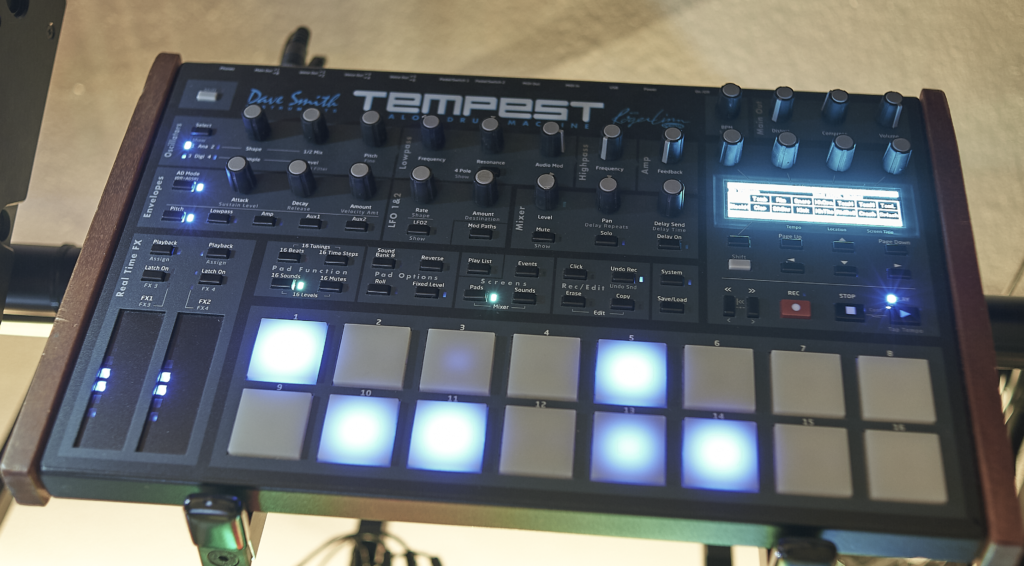
A Tempest, shot by Vlad Caia

Dave Smith Instruments Tempest Analog Drum Machine

I rely heavily on the Dave Smith Instruments (DSI) Tempest for my percussion. It has its own character in regards to the sounds you can come up with, be it percussion or even synths. It’s an instrument that Roger Linn had also worked on, and being an Akai MPC 2000XL enthusiast at that time, it piqued my interest. I did some extensive research and decided to buy a used one from a friend around 2017.

One thing that still surprises me to this day is the built-in compressor and distortion effects. They’re both analog and can really destroy and mush everything together. This is especially handy as a sound design tool when reaching for those aggressive sounds.

The modulation possibilities are extensive and I often use a random LFO to pan the sounds in a sequence. I achieve lots of movement in the stereo field this way. It also has a peculiar “master” page where I can manipulate the entire collection of sounds I’m using in a sequence. For example, I can stretch the sounds or shorten them by modifying all the release envelopes simultaneously. I can create chirpy and glitchy bits with the switch of a button. I can later assign pitch parameters to a ribbon controller on the left side of the instrument and manipulate them on the spot, which is a trick I use during build-ups while recording a live session.
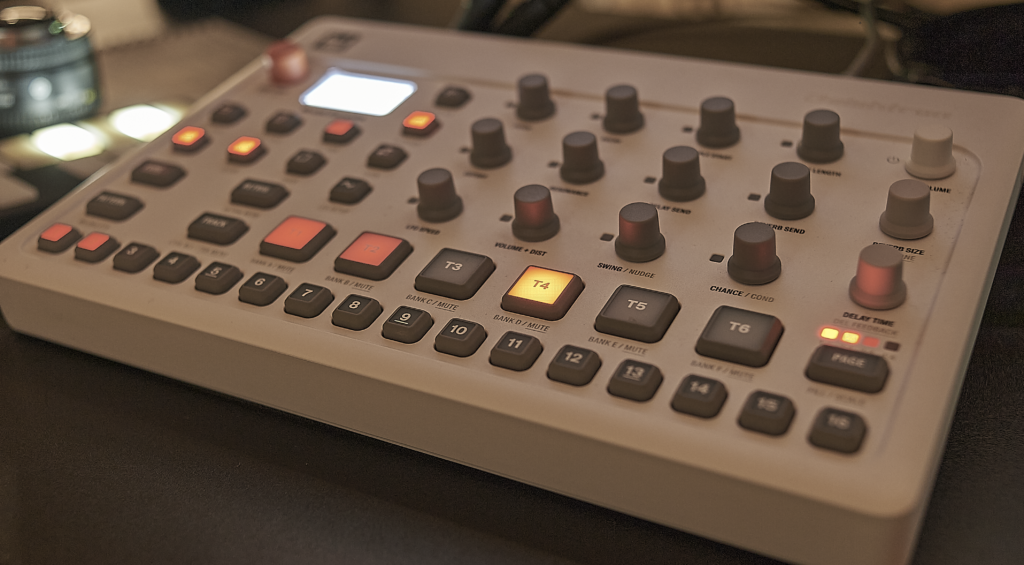
Elektron Model:Samples, shot by Vlad Caia

Elektron Model:Samples

I’ve had my share of samplers over the years. While I loved the way my AKAI MPC 2000XL sounded, I could never fit it in my setup partly due to the way it was designed. For deeper tweaks to what I’m working on, I would have to stop the unit from playing, ruining the workflow and getting the other instruments out of sync.

What I was looking for was an XoX type of rhythm machine with step programming, so I tried the Electribe ESX-1. It got noisy quickly and I could never achieve that punchy sound from the files I was loading from the card. It quickly became a popularity contest; the sound that came with the sampler sounded good, and no matter how hard I tried to load my own stuff it could never compete in sound quality!

It was then, in early 2020, that I came across the Elektron Model:Samples, a simple white box sampler with a what you put in it is what you get kind of attitude. It does a lot of things right, and it has become my mainstay percussion and drum machine. I love that I can modulate most of the buttons on its faceplate and that it can loop short pieces of waveforms called Wavetables. By sequencing bass or synth lines, I can expand my palette of sounds. Also, because I am a fan of using my own synthesized stuff, I’ve built a collection of modular percussion sounds specifically to be loaded on this drum machine!
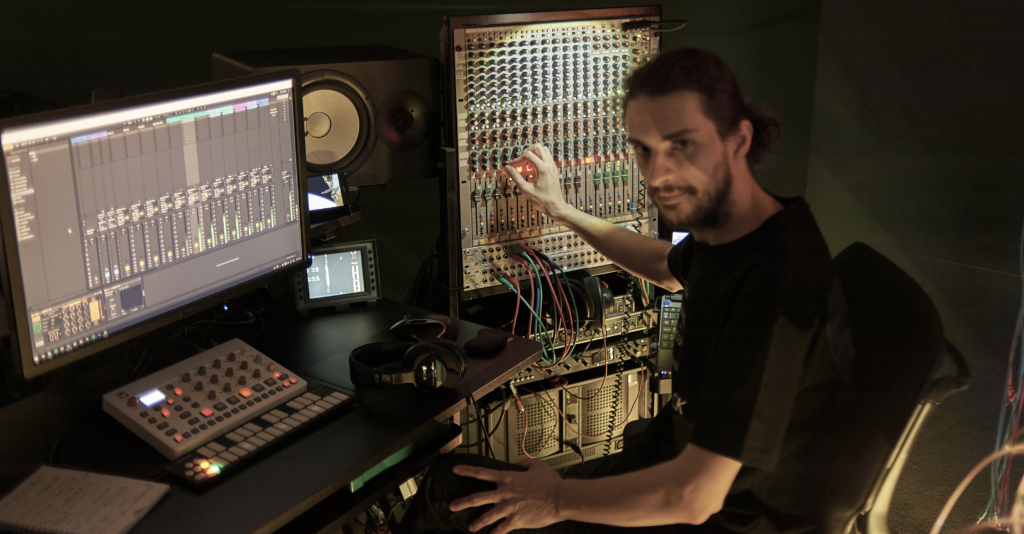
Modular System

My path to a full modular system started many years ago in software with the introduction of Native Instruments Reaktor. I still remember vividly trying this demo of version 2.3 and being so impressed that you could achieve these sounds on a slow, relative to now, computer. I started exploring the way an ensemble is built in this environment and the way these modules were interconnected, much like a real modular system. After some time, as computers became more powerful, these types of software became more accessible.

At this point, the Eurorack was still fresh, and there were far fewer manufacturers than today, so software was much more immediately available. But by 2015 things were moving at a quick pace in the hardware modular world. I actually really wanted to try the Nord Modular G1 first, and so I bought it on eBay. I had scoured forums dedicated to this synthesizer and downloaded around 8,000 patches that I could load onto it. It was an eye-opening experience and had the identical building blocks and modules you could find in a real modular. You had to use its own program to interact with it, but it was unfortunately unstable and would crash badly.

With these new lessons, I set out to build a system that could be flexible to what I need, be it a classical synthesizer architecture with extra modulation and sequencing, an external audio effect with lots of modulation, or for just patching it as a random drone generating source.

One of my favorite modules that I use often is the Orthogonal Devices ER-301 sound computer. It’s designed to work as a modular inside a modular, and I can set it up to any type of job, be it a sampler, oscillator, CV, or audio mixer. There’s an active community around this module and the firmware is constantly worked upon and improved with new features. For now, I use it as a sampler, so I’m triggering different loops and pads to play in sync with other synths. You can hear it doing glitchy drum hats in a recent remix I did for my friends from Alsi, “Scene Hero.” I also have it set up to use as a drum machine, if it’s needed. It’s perfect for traveling as you only need to take a small modular case and you pretty much have everything you need.
Intellijel Rainmaker is another favorite module I use extensively for sound design. I feed audio from my ER-301 sampler and modulate it to create extremely long delay lines by dividing the clock signal. For example, I can divide the 126 BPM by 16 and I end up with delays that change and react once every eight beats. If I change the pitch of these delays I end up with a sort of slow harmonizer effect.

Regarding VCA modules, I’m particularly fond of my Doepfer A-132-4. It’s compact and cheap, and you can change the VCA chips on the back. It has four inputs and two of those have different chips that I’ve installed. The sensitivity of each VCA can be easily trimmed on the back of the module. By adjusting it, you can distort the output volume into distortion territory, which is extremely useful for thick and solid bass sounds.

Make Noise Phonogene is another flexible module and I use it as a sample player and for live recording and playback of sequences. It’s my go-to module if I need to use bits of vocals or short bursts of percussion; stuff that is simple and that I have to do fast. I send these sources from my DAW and record it into the Phonogene.

From then on, I patch the module to play this sample in sync or at random times. I’m also experimenting on feeding it the entire output of my modular on set intervals of time. For example, every 32 bars it should record one bar of sequence and play it after 16 bars. After this is done, I can erase the memory and prepare for a new cycle, and so on. By doing this, I’m trying to achieve a controlled behavior of the sound that’s being synthesized.

Finding new modules is an intense process because I have to research exactly what’s needed at that time in my system. As of now, I’m looking for interesting sounding filters, both analog and digital, saturation modules, and utilities like the Expert Sleepers Disting modules, where you have lots of functionality in a small package.

You can hear some of the modules at work in “Expand,” released on Shahr Farang in 2018.

Australia’s Logic1000 Announces Euphoric New EP

Photo: Xiaofu Wang

Logic1000 will release her new EP, You’ve Got the Whole Night to Go, out January 22 via her own imprint, Therapy.

Alongside today’s announcement, the Berlin-based Australian, real name Samantha Poulter, has released “I Won’t Forget,” the lead single. The track works understatedly, with a murmuring vocal sample looped over a steady house beat.

“There was no doubt in my mind that ‘I Won’t Forget’ would be the lead track,” says Poulter. “I love its slow build up and how euphoric the vocal is.”

Poulter wanted to create a mood that was “hopeful for a brighter future.”

You’ve Got the Whole Night to Go came about during lockdown, when Poulter took to her studio, sharpening her sound. That sound contains the euphoric rush of Berlin juxtaposed against Poulter’s more restrained sensibilities. We’re told to expect a collection of four “driving yet understated” tracks.

Poulter emerged in the wake of her debut, self-titled EP, released in 2018 via Aussie label SUMAC. This release attracted the attention of Four Tet, DJ Python, and Annie Mac, to name a few. Soon after, she was enlisted to remix Caribou, Christine and the Queens, and Låpsley.

Tracklisting

01. Like My Way
02. I Won’t Forget
03. Medium
04. Her

You’ve Got the Whole Night to Go is scheduled for January 22 release. Meanwhile, you can stream “I Won’t Forget” below and pre-order here.

Illustration: Jos Hurt, Design: Tom McAllister

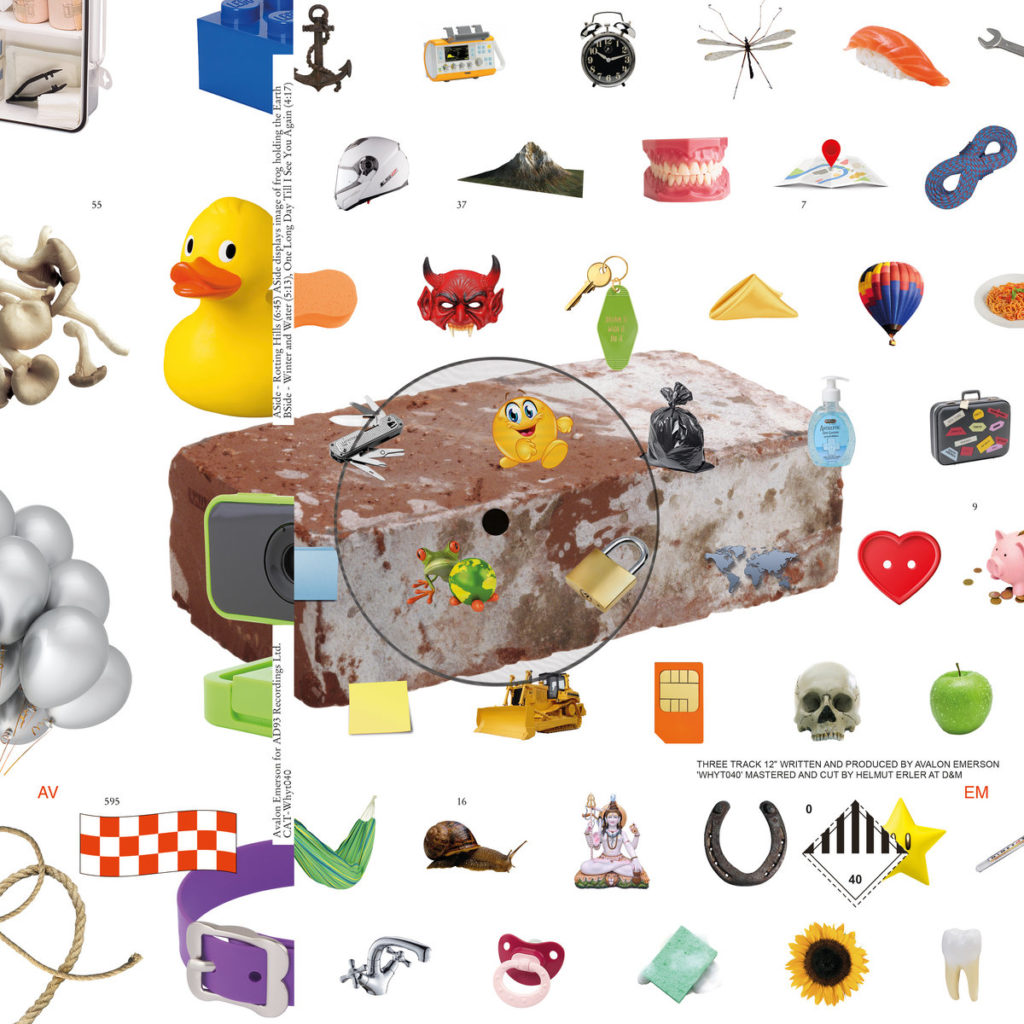
Avalon Emerson Next on AD 93 (f.k.a Whities)

Avalon Emerson is next on AD 93, formerly known as Whities.

040 follows a standout year for Emerson in which she released the 72nd instalment of the DJ-Kicks series back in September. The mix saw American at the top of her game as both a producer and a DJ, and two of her own tracks were particular highlights, including “Rotting Hills,” which is included on this release.

“Rotting Hills” is a “study in contrasts,” Emerson explains, both tonally and emotionally. It mixes feelings of hopelessness, while also trying to enjoy what we have right now in the present.

Sleeve design is by Alex McCullough and Noah Baker, and the release is mastered by Helmut Erler at Dubplates & Mastering.

Emerson released Whities 006 in 2016, and Whities 013 in 2017, her last release.

Tracklisting

01. Rotting Hills
02. Winter and Water
03. One Long Day Till I See You Again

040 EP is scheduled for December 11 release on vinyl and digitally. Meanwhile, you can stream “Rotting Hills” below and pre-order the record here.

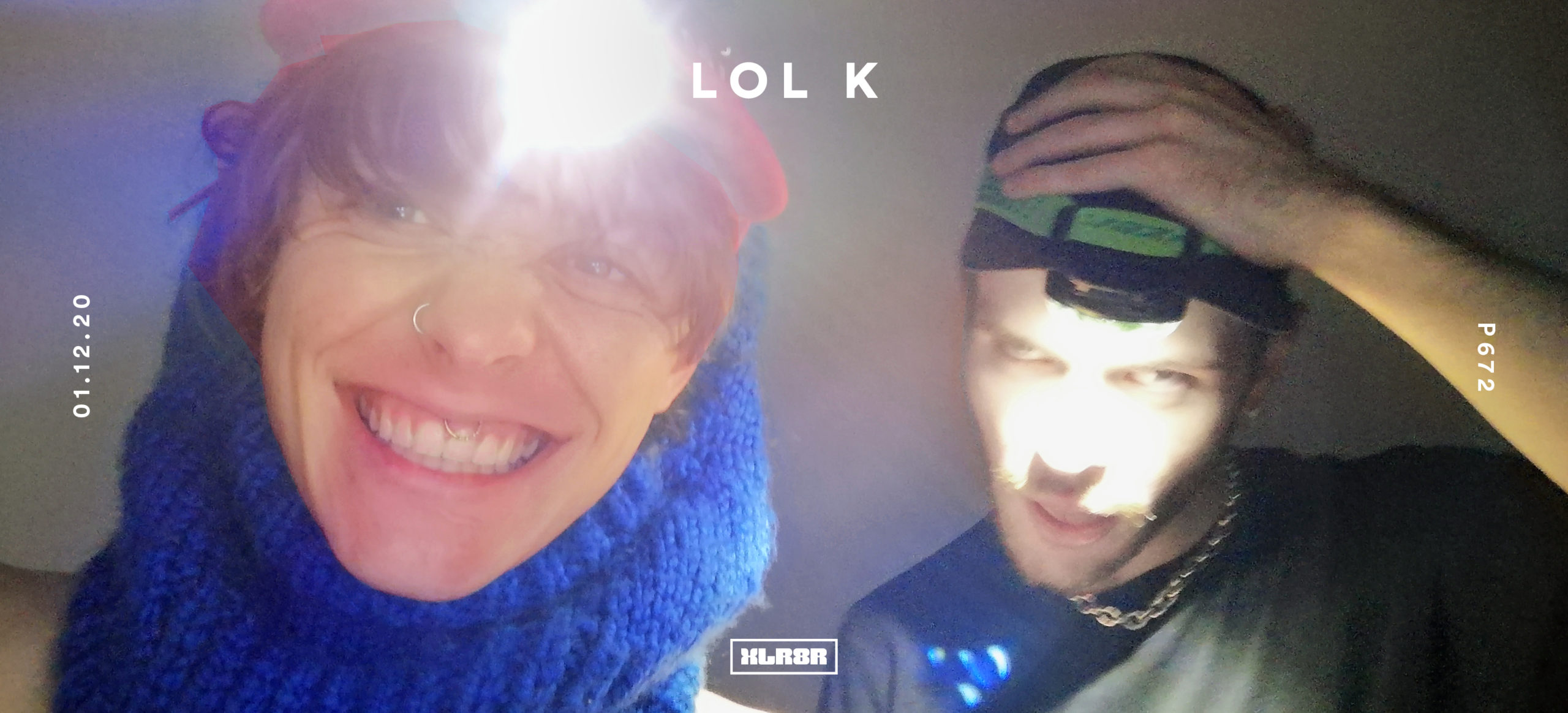
Podcast 672: Lol K

Lol K is the collaboration of Louis Milner, better known as Junior XL, and CJ Calderwood, a multi-instrumentalist recognized for their work as Good Sad Happy Bad with Mica Levi. The British pair have been been making music together for six years, having come together at art school in London, but it’s only more recently that they’ve been releasing it. After a 2018 debut on Levi’s Curl Recordings, they signed to Rabit’s Halcyon Veil, putting out a five-track album featuring guest vocals from LA Timpa in October.

While Milner and Calderwood have been coy on the directions that drive Lol K, it’s a project shaped by the musical styles the pair have been exposed to as part of London’s rich musical tapestry. A chaotic concoction of grime, garage, drill, and rampant bass broadly encompasses their catalog, but these foundations are embellished by wailing saxophone, piano, and other means of traditional instrumentalism. While the music bangs out, it’s also melancholic, with a “richer sort of emotional nuance,” Calderwood explains. It’s a music style that seeks to both challenge and entertain, and finds home among the likes of Vegyn, Tirzah, or Yves Tumor.

Recorded last month in south London, Lol K’s mix is typically hard to categorize. While it’s not short of tracks you’ll recognize, its eclecticism and penchant for surprises makes it feel unsettling, as it sharply changes tack across its one-hour playtime. Besides bass, grime, and Calderwood’s studio experiments, there are obscure, vocal-laden pop cuts and even an indie rock power ballad. By the time Actress’ closing track comes in, it’s easy to bathe in its familiarity.

01. What have you been up to recently?

CJ: Personally, not a lot. I tried to go running this morning but got embarrassed and ran home! With Lol K though, we’re just finishing a new session video for PAF Festival which is out in December. They always have great lineups so we’re happy to be on there.

02. How did you come together to form Lol K?

CJ: We met time ago at art school. We were in the same year and even ended up getting the exact same mark, I think? It was back then that we started making music together. I had no idea how to record but was doing weird live shows at exhibitions and parties where I would pair lots of sax, drone, and noise cuts with emotional vocals. Junior had a better grasp on electronics, beats, and the technicals of software, so he introduced me to that side of things and together we started recording songs that became Lol K. There were some really silly gigs along the way though. We were also making art shows together and there was a lot of overlap.

03. How has the lockdown period been for you?

Junior: It’s made me feel even more confused about time and how it moves. Before lockdown one, we had a lot planned and, like everyone, had to come to terms with how the year wasn’t going to go the way we’d thought. It’s made me feel grateful for the facilities I have access to.

04. What music have you been listening to?

Junior: I’ve recently been listening to less club music and more music with lyrics, and older albums. I’ve been thinking a lot about how an album presents a moment in time for that artist and a set of decisions regarding what music is at that time. I like ones where those decisions are bold but somewhat obscure, so it’s not immediately obvious how you’re supposed to listen, but you want to go deeper. Elysia Crampton’s recent release on PAN did that for me, and Voldy Moyo’s Tale of Red Star.

CJ: The new LA Timpa on repeat.

05. What are the specific inspirations that inform the Lol K project?

Junior: I think we got started via our mutual love of various sounds. In our music I feel there’s always like some grungy, screeching element mixed with moments of bliss or harmony or togetherness. “Wrong and strong” is often the vibe. Also, we recently have talked a lot about “pop” and how we feel what we do interacts with that form. On The Breeze, we deliberately left things quite raw and simple, but I feel eager to make something a bit different and expand in new directions now we have done that.

CJ: Yes, agreed. I think a general motivation for me has been to make tracks that bang out but are also kind of melancholic or have a richer sort of emotional nuance. Embracing the physicality of being in a club and that gut-punching sensation, but using it to generate something that isn’t necessarily euphoric at all.

06. Where did you record this mix?

CJ: Our housemates recently moved out so we’ve just finished turning their old room into a studio. We mostly make things there now. It’s easier with lockdown, etc. I also make tattoos in there, and my wife was using it as a gym for a bit. It looks kind of like when you play “The Sims,” but your house sucks so you just cram it all in one random place.

07. How did you go about choosing the tracks that you’ve included?

CJ: I always start these things by going through my hard drive to remember what I’ve been working on recently. It’s a nice chance to air some little sections that haven’t turned into anything proper yet. Friends have sent me some new unreleased stuff as well. I like a bit of rawness next to some more polished material.

Junior: I listened to music from friends and music from previous Bandcamp Fridays to find stuff that fits how I’m feeling now.

08. What can we expect with it?

CJ: It’s very eclectic! It changes direction about every five minutes or so, but maybe all roads lead to Rome? Maybe I just like a lot of surprises.

Junior: There’s a bit of beat-matched mixing, but a lot of it was made in Logic and we thought about how to make interesting transitions that feel a bit different to us. I’ve also been interested in stacking more than two tracks on top of each other and the feeling of different sonic space coexisting at same time.

09. What’s up next on your horizon?

Junior: Making more music and video and material in general. Staying connected to and engaged with other people and the world. We would love to play live again so I’m hoping that 2021 holds that.

XLR8R has now joined Mixcloud Select, meaning that to hear the podcast offline you will need to subscribe to our Select channel to listen offline, or subscribe to XLR8R+ to download the file. The move to Mixcloud Select will ensure that all the producers with music featured in our mixes get paid. You can read more about it here.

Full XLR8R+ Members can download the podcast below. If you’re not an XLR8R+ member, you can read more about it and subscribe here.

Tracklisting

01. Lol K “Oilseed Stone” ft. Coby Sey (Halcyon Veil)
02. Swarmm “Xylem” (Laminar Flow)
03. Jennifer Walton “Crisis of Confidence” (All Centre)
04. NIN “intro” (live at Woodstock 94)” (Klondike)
05. Voldy Moyo “Memories R lemures” (Self-Released)
06. BFTT “AppleTV” (Unreleased)
07. GRANDMIXXER & Scratcha DVA “Free Gaza Remix” (Self-Released)
08. LSDXOXO “To The Gods” (Self-Released)
09. Slikback “Lei” (Self-Released)
10. Saint Caboclo “Meet Me at Baile” (Tormenta)
11. GoMikeGip “Back To The Crib 2K11” (Self-Released)
12. INTENTIONALLY COLD “Crossroads VIP (Angel Mix)” (HMRC)
13. Voldy Moyo “Red Star has Fallen!” (Self-Released)
15. Elysia Crampton “Homeless (Q’ara)” (PAN)
16. Rubie “Whole” (Syd Nukuluk Quarantine Remix) (Self-Released)
17. Ben Vince ft. JB Glazer “Horizon” (Unreleased)
18. CJ “Clarinet and Troye” (Unreleased)
19. Lol K “Then I Knew” (Unreleased)
20. Meeks “Salloon” (unreleased)
21. Georgia “24 Hours Danny L Harle remix””(Domino)
22. Toxe “Honey Island” (PAN)
23. Pop-O-Pies “Fascists Eat Donuts” (Very Safe Music)
24. Charles Verni “Tom” (extract) (Unreleased)
25. Suitman Jungle “Brush It Off” (Unreleased)
26. LEECH “In The Mood” (Anonymous Club)
27. Carl Stone “Banteay Srey” (New Albion Records)
28. Ta-Ra “Backwards Crystals” (Self-Released)
29. Ryuko Fatoi “Untitled 2” (Self-Released)
30. Mori “Aisle B” (Self-Released)
31. Haich Ber Na “0594 Help” (Self-Released)
32. Actress “Walking Flames” (feat. Sampha) (Self-Released)

Palestinian Songwriter Rasha Nahas Shares New Single

Rasha Nahas has released “Desert,” the first taste of her upcoming debut album.

Nahas wrote “Desert” during her move from Palestine to Berlin, Germany. It features her poetic vocalization over delicate, evocative passages of guitar and wailing violins. The verses are punctuated by foreboding instrumental interludes, awash with sweeping orchestration that slips in and out of the musical overtones of her native Middle East.

The music video, streaming below, was shot in Haifa, Israel, with Nahas’ close friend Elizabeth Kroglov and a local team in Palestine producing and acting in the video.

A classical guitarist since the age of 10, Nahas has long been crafting a sound that moves seamlessly between the resonances of early rock and free jazz, complemented by her distinctive approach to songwriting and performance. Her debut album is due for release on January 29, 2021 on her own label, Rmad Records, and will be available worldwide in all formats via Cargo Records.

Tracklisting

01. Desert

Desert is available now.

Katie Drover Joins Lawrence, Leafar Legov, and More on Dial’s Final Anniversary Compilation

Dial Records will release DIAL 2020 (IV), the fourth and final part of the label’s 20th anniversary compilation series. It features tracks from Katie Drover, Leafar Legov, Jordan GCZ, Lawrence, Siarem + Estrato Aurora, and Bachelor Kisses (a.k.a Jörn Elling Wuttke), who is also on mastering duties.

The work of David Lieske (a.k.a Carsten Jost) and Peter Kersten (a.k.a Lawrence), who founded it in Hamburg, Germany around the turn of the millennium, Dial is established as one of electronic music’s most singular record labels, championed for its enduring commitment to quality.

To mark the milestone, the pair wanted to “take it to the streets again,” celebrating the history and future of Dial as the experiment that it still is, and the community they’ve built around it.

Part of the celebration has included a series of various artist compilations to document Dial’s musical journey through the years, while sketching out its path into a possible future. The third part of the compilation landed in September, featuring exclusive material from Tracey, Lerosa, Siamak Amidi, and more. The first part landed in May, and the second in July.

Dial’s anniversary year will come to an end with the digital re-issue of Something is Missing by Efdemin. First being released on Dial in 2006, the album consists of six intriguing drone recordings.

Tracklisting

01. Leafar Legov “Melting”
02. Jordan GCZ “Tongue Twister”
03. Katie Drover “Something Other”
04. Lawrence “Pinches”
05. Siarem + Estrato Aurora “Acacio”
06. Bachelor Kisses “Brighter Than The Sun”

DIAL 2020 (IV) is scheduled for December 11 digital release. Meanwhile, you can hear Katie Drover’s sublime “Something Other” in full below.

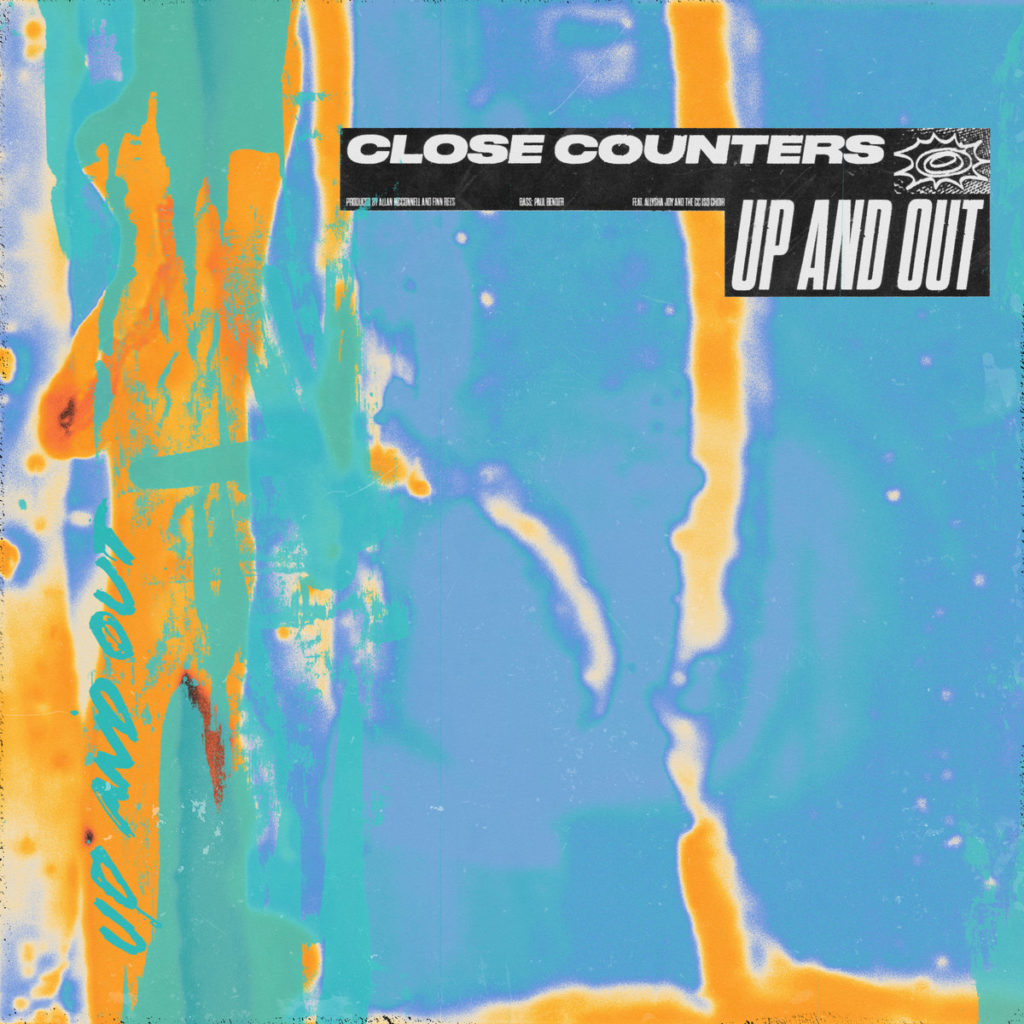
Download: Close Counters “Up & Out”

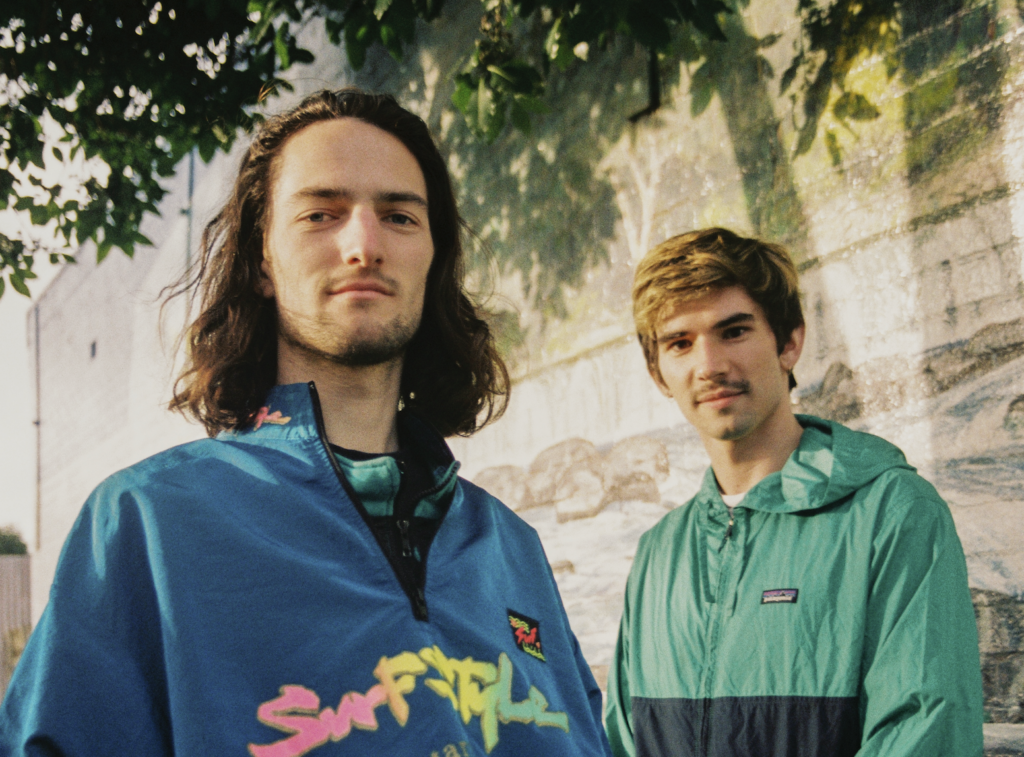
Melbourne, Australia-based duo Close Counters (namely Allan McConnell and Finn Rees) have offered up their latest single, “Up & Out,” as one of this week’s free downloads to full XLR8R+ members.

Painstakingly crafted during lockdown, the sublime, sun-drenched “Up & Out” features the feel-good beauty of an eight-person choir, featuring Abbey Howlett, Tiana Khasi, Tram Cops, Warrigo Tyrell (a.k.a WAARI), Allysha Joy, and Chloe Sanger, which the duo chop and sample throughout the track.

“Everyone recorded their vocals from their makeshift studio setups and let us piece together the puzzle,” the McConnell explains.”We think of this song as a bit of a celebration and maybe it was ironically yet appropriately titled in 2019 before any of this went down. It’s a fun, throwback tune to the early 2000s. Enjoy and we’ll see you on the dancefloor soon enough!”

Hiatus Kaiyote’s Paul Bender provided the hip-moving bassline, which compliments the duo’s swinging percussion and swirling synths.

The track lands with a visualizer created by Close Counters’ Rees, which you can stream in full below.

Tracklisting

01. Up & Out

“Up & Out” is available on Bandcamp now, and it’s available for pre-save “Up & Out” on streaming services here. Meanwhile, it’s available as a download to XLR8R+ members below.

For those unfamiliar, XLR8R+ is a member-supported music community and curated music experience. Every month, you will get at least three exclusive tracks—sometimes more—by a wealth of amazing artists that XLR8R has supported over the years, as well as access to the member’s area where you can submit tracks and DJ mixes to be showcased in this feature series and to the XLR8R+ community, as well as exclusive editorial content, mixes, playlists, weekly downloads such as these, and more. You can find out more here.

DVS1 Releases Album via Jeff Mills’ Axis Records

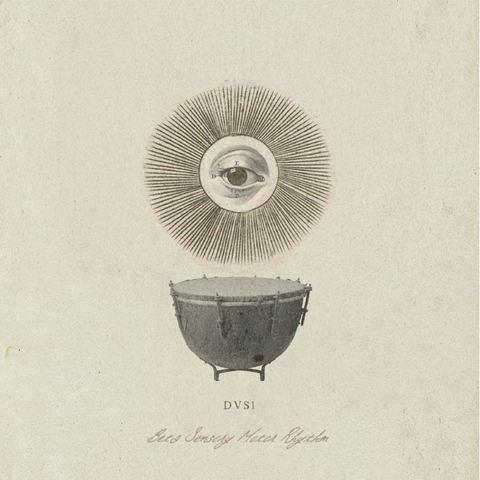
DVS1 has a shared an album on Jeff Mills’ Axis Records.

Beta Sensory Motor Rhythm is DVS1’s first full-length effort, and it follows EPs on Klockworks and his own Mistress and HUSH. Last year, he contributed a single on XLR8R+ with Vladislav Delay and Convextion.

The album is made of eight tracks, all previously unheard, and we’re told that it activates “paradigm shift” in the mind. “

We’re also told that “hypnotic hallucinations reveal detailed layers, oscillating from the back to the forefront of the dream,” and that “synth programming yields abstract ideas into concrete images.”

DVS1, real name Zak Khutoretsky, is a techno artist based out of Minneapolis, and one of the prominent voices in the preservation of true club culture. His sets, powerful and high-energy affairs, honor his roots while evidencing a versatility, sensitivity, and understanding for making people dance that comes only with years of commitment in pushing the boundaries of sound.

For more information on DVS1, check out his XLR8R features here and here.

Tracklisting

01. Alpha-Theta
02. Drifting
03. Delta Wave
04. Inertia
05. Hypnagogia
06. Transient Response
07. The Five Aggregates
08. Solfäge’s Framework

Beta Sensory Motor Rhythm LP is available digitally now. You can hear it over at the Axis Records page, where it’s also available for order.

XLR8R & SHAPE Wrap Up: Watch a Banging Audio-Visual Club Set by LYZZA

LYZZA completes XLR8R‘s partnership with SHAPE, a European platform for innovative music and audiovisual art, with a new live audio-visual set.

For her contribution, which is presented by Rokolectiv Festival, the Brazil-born London-based artist delivers a 37-minute set, with all tracks produced and performed by herself. Paired with fittingly tripped-out 3D visuals by Pepapuke, it’s an exhilarating set of forward-thinking club cuts and futuristic grooves that signals LYZZA as an artist to watch over the coming year.

You find the full stream of the video below, along with a tracklisting, with more on LYZZA here.

Tracklisting:

1. AN SYSTEM “Torture” (LYZZA Remix)
2. LYZZA “OK GRL”
3. Jaymie silk “Nomadism” (LYZZA Remix)
4. LYZZA X Niki Istrefi “Bad Armor Blend”
5. LYZZA “Fraud” (Varg2tm Remix)
6. LYZZA “Get what U Got” (Extended Version)
7. LYZZA “Sleeve” (Extended Version)
8. LYZZA “No Love”

LYZZA is a 2020 artist of the SHAPE platform for innovative music and audiovisual art, co-funded by the Creative Europe program of the European Union. This online premiere is presented by XLR8R in collaboration with Rokolectiv Festival.

XLR8R is also featuring a package of exclusive music and content from a selection of SHAPE artists for the latest edition of XLR8R+, including tracks and a sample pack from Jay Glass Dubs, Poly Chain, and Rian Treanor. Check it out here: https://bit.ly/XLR8Rplus_SHAPE

Yilan Unveils Mini-Album on Mexico’s Infinite Machine

Yilan will release Suddenly I Am Falling, a new mini-album on Mexico’s Infinite Machine label.

Suddenly I Am Falling is Yilan’s second release on Infinite Machine, following his Regression EP with Amazondotcom and Superfície. The rising producer, from Leeds, northern England, has previously released on Jelly Bean Farm.

The title cut opens with polyrhythmic kicks, electric hats, and cataclysmic atmospheres that are “set to send the dancefloor into a frenzy,” we’re told. Up next is “Static Void,” a dancehall track with a sharp snare dancing around a syncopated pulse.

The release includes a collaboration with Ren, which sees the duo lurking in 90 bpm territory for an unstoppable groove with razor-sharp percussive brutality. “AFADS” features collaborator Ebb.

Closing the record is an ambient work called “‘Lost Signals,” which portrays softer timbres of birdsong and synthesised wind-chimes.

The release is mastered by Fausto Mercier, and the artwork comes from Benfika.

In October, Infinite Machine released DÆMON and Hyperdub’s affiliate ENDGAME’s DXE EP.

Tracklisting

01. Suddenly I Am Falling
02. Static Void
03. Niffler (feat. Ren)
04. Underwater Construction
05. AFADS (feat. Ebb)
06. Lost Signals

Suddenly I Am Falling is scheduled for January 29 release. Meanwhile, you can pre-order here and stream “Static Void” below.

Page 113 of 3781
1 111 112 113 114 115 3,781